
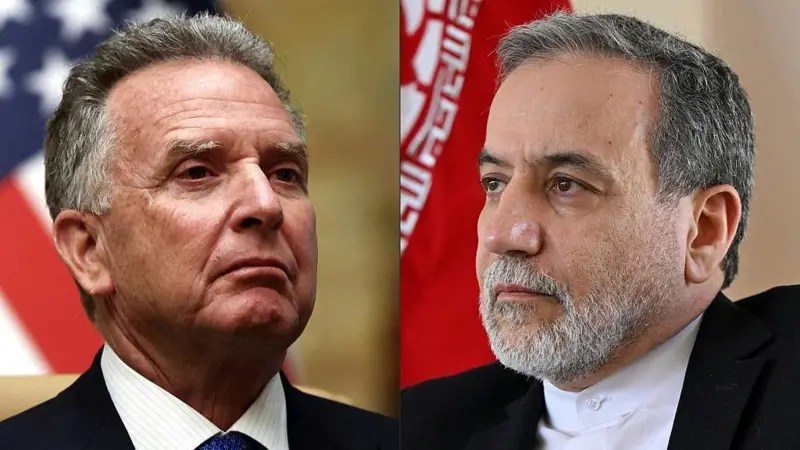
The second round of US-Iran talks is taking place in Rome on Saturday. Both sides described the first meeting in Oman as “constructive.” What will Washington and Tehran bring to the Italian capital and how close are the parties to concluding a new nuclear deal? The BBC Russian Service answers these and other key questions about the talks.
The BBC Russian Service has covered in detail in several articles how the first round of Washington-Tehran talks in Oman went and what each side said following the talks.
What will the US bring to Rome?
In the week since the US-Iran talks in Oman, Donald Trump administration officials have sent somewhat conflicting signals about what they want from the Iran nuclear deal.
Initially, Trump’s National Security Advisor Mike Waltz said that Iran should completely dismantle its uranium enrichment program as part of the deal with Trump. However, after the talks in the Omani capital of Muscat, US Special Envoy Steve Witkoff, who represented Washington at the talks, said in an interview with Fox News that Iran could continue to enrich uranium at a low level — necessary for peaceful energy.
At the same time, according to him, it will be necessary to create a system of “verification” of the production of enriched uranium and “ultimately control over militarization, including missiles, their types and launchers for the bomb.” He did not use the word “dismantling.”
From these words of Witkoff, it seemed that the Trump administration was discussing and preparing to bring to the next stage of negotiations a slightly modified version of Barack Obama’s 2015 nuclear deal — from which Trump withdrew the United States in 2018, calling that agreement a “disaster.”
Skip WhatsApp channel ad and continue reading. WhatsApp
BBC channel on WhatsApp
Here we publish only the main news and the most interesting texts. The channel is available for non-Russian numbers.
Subscribe
End of story WhatsApp channel advertising
However, a day later, Witkoff changed his mind. On the social network X, he wrote that Iran should stop and eliminate its nuclear enrichment and weapons program. What happened?
According to sources of the Axios publication, on Tuesday morning, Trump and his top national security advisers met to discuss policy towards Iran.
Vice President J.D. Vance, Witkoff and Pentagon chief Pete Hegseth insisted that the demand for a complete dismantling of Tehran’s nuclear program would fail the negotiations, since the Iranians have already stated that they will not abandon it. Vance even believes that the US should be ready to compromise.
Another group, led by Mike Waltz and Secretary of State Marco Rubio, is suspicious of Iran and skeptical about the possibility of a deal. They believe that Iran is weaker than ever and the US should not make concessions, and if Tehran refuses Washington’s conditions, it should strike or support an Israeli strike.
“There is a world of difference between ‘Iran should not have nuclear weapons’ and ‘Iran’s program should be completely dismantled, like in Libya.’ There is a risk that the American side, lacking expertise and a clear plan, will lose to a more experienced Iranian delegation,” warns Karim Sadjadpour, an analyst at the Carnegie Endowment.


 EURO ASIA NEWS INTERNET NEWSPAPER