
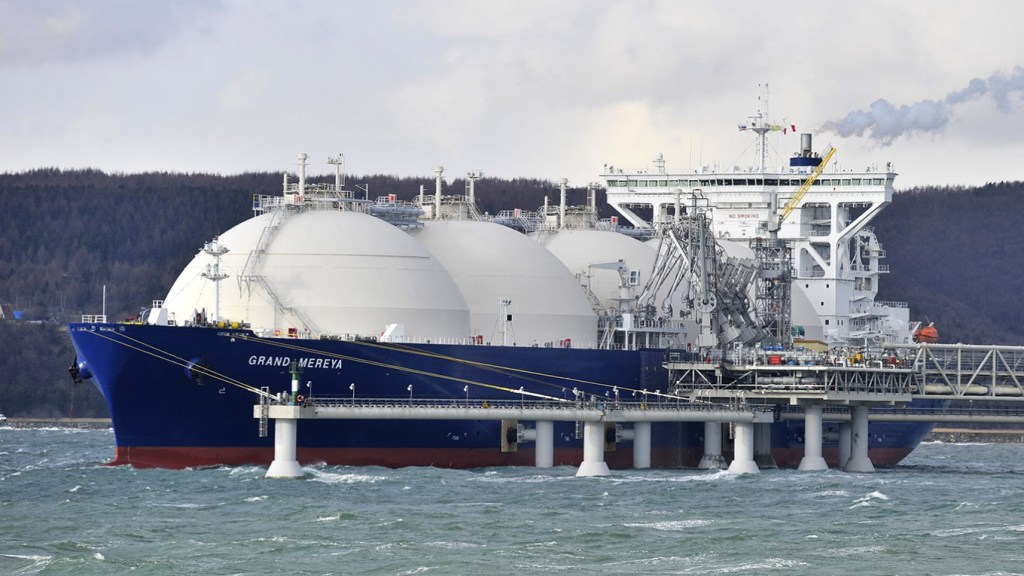
German state energy company SEFE has ordered about 50 batches of liquefied natural gas (LNG) for 2025 from Russia’s Novatek. The total amount of deliveries is estimated at about 2 billion euros, German broadcaster SWR reported.
The journalists cite data from the German government, transmitted in response to a parliamentary inquiry from the opposition Left Party. As SWR writes, sea tankers-gas carriers leave the port of Sabetta on Yamal, from where they deliver LNG to Dunkirk, Zeebrugge, Bilbao. There, the gas is liquefied and fed into the EU gas transportation system, through which it reaches Germany.
Bundestag member of the Left Party Christian Goerke called LNG deliveries from Russia “a plague and cholera, in fact a license to print money for the Russian military-industrial complex.” The legislator called for sanctions and a ban on Russian LNG deliveries to Europe.
“SEFE makes a significant contribution to Russia’s growing income from LNG trade, which pumps more money into the Russian military coffers than Ukraine receives in humanitarian aid,” the German environmental organization Deutsche Umwelthilfe told SWR. They also called for a ban on Russian LNG.
The Yamal LNG project, from where Russian LNG is supplied to Europe, is a joint venture between Novatek (50.1%), the French concern TotalEnergies (20%), the China National Petroleum Corporation (20%) and the Chinese Silk Road Fund (9.9%). It is an international consortium in which foreigners own almost half of the shares and, accordingly, the profits. The Russian authorities have given the project extensive tax breaks: zero export duty and zero mineral extraction tax.
“SEFE purchases Russian LNG exclusively under the current, non-cancellable old contract,” the company explained in response to SWR’s request. They admitted that they could stop imports if a ban is introduced at the EU level.
SEFE (Securing Energy For Europe) is the former Gazprom Germania, a German subsidiary of the Russian Gazprom. In November 2022, the company was nationalized by the German authorities. Then Moscow imposed sanctions against it. But in order not to disrupt gas supplies, the Russian authorities made an exception and allowed exports until 2040.


 EURO ASIA NEWS INTERNET NEWSPAPER