
A new report by Transparency International–Georgia is raising questions about whether a recent shipment of Russian crude to Georgia may be linked to a broader sanctions-evasion network.
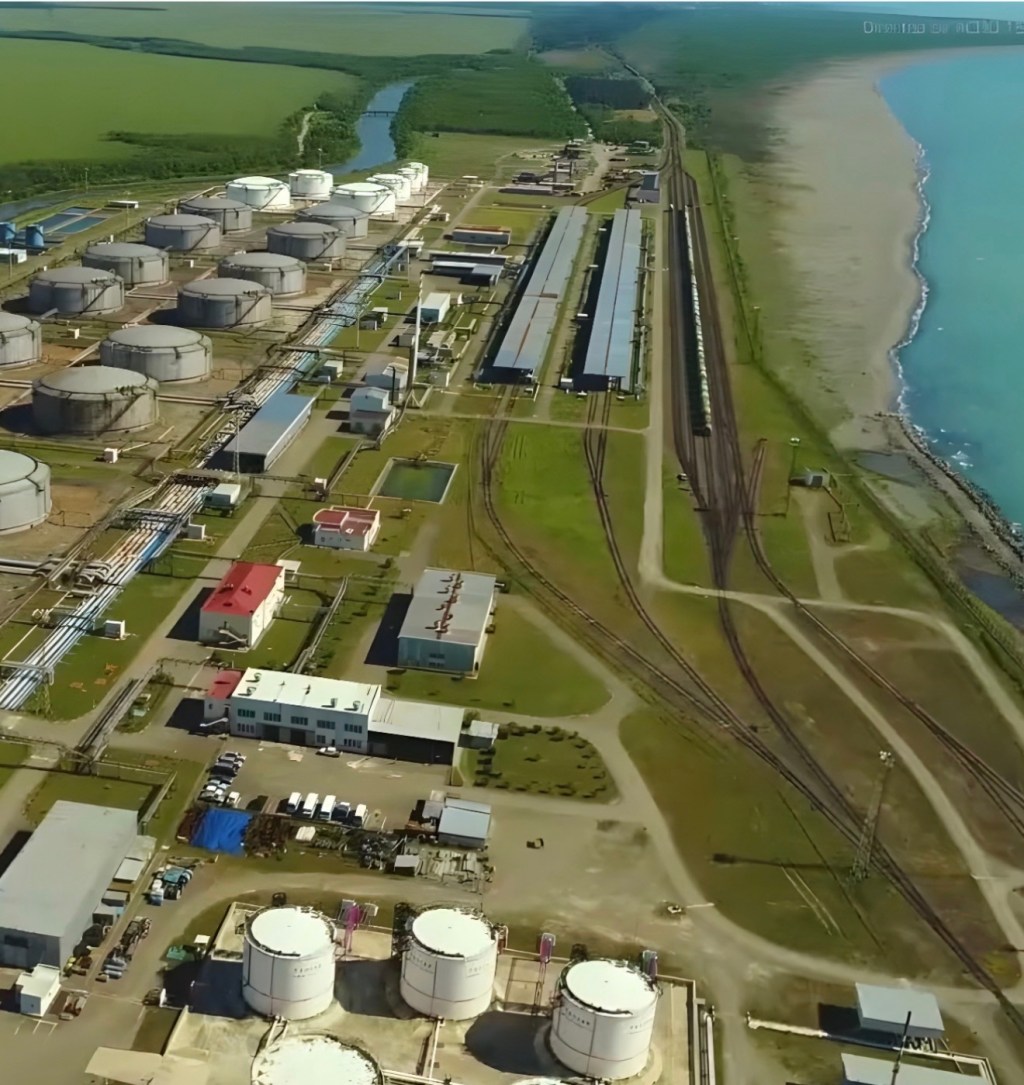
The backgrounder, titled “Kulevi Oil Refinery – Part of a Sanctions Evasion Scheme?”, focuses on the tanker Kayseri, which departed from the Russian port of Novorossiysk and delivered more than 105,000 metric tons of Siberian Light crude to the Kulevi terminal on Georgia’s Black Sea coast in October. The shipment was first reported by Reuters.
At the time, Georgian officials defended the transaction, insisting that neither the vessel nor its owner was under international sanctions. But, as TI-Georgia notes, circumstances changed almost immediately.
Three weeks after unloading in Kulevi, on October 24, 2025, the Kayseri was added to the EU sanctions list, becoming one of more than 560 vessels suspected of belonging to Russia’s “shadow fleet” — ships used to conceal the origin and ownership of Russian oil amid tightening Western restrictions.
The report argues that the shipment “raises concerns over why Georgia is purchasing Russian oil and transferring payments to Moscow during the ongoing war in Ukraine.”
According to TI-Georgia, the Kulevi delivery was organized by RussNeft, a private Russian oil company whose founder, Mikhail Gutseriev, is under EU sanctions and maintains longstanding business ties with Georgian billionaire Bidzina Ivanishvili, the founder of the ruling Georgian Dream party. In 2012, shortly after entering Georgian politics, Ivanishvili sold $1 billion worth of assets in Russia to a group of investors that included Gutseriev.
TI-Georgia further cites Ukrainian military intelligence in identifying the tanker’s nominal owner as Kayseri Shipping S.A., a company allegedly linked to Panamanian businessman Héctor Varela De León. According to a U.S. Treasury Department statement, De León was previously involved in a large-scale sanctions-evasion network operated by Iranian traders. The network uses a vast fleet of vessels, front companies, and ship-management firms to launder billions of dollars in proceeds from Iranian and Russian oil sales, primarily to China, while employing extensive methods to obscure its operations.
The Kulevi refinery is operated by Black Sea Petroleum, owned by Maka Asatiani, who has close ties to the ruling party. Her husband operates fuel terminals in the Russian cities of Murmansk and Novorossiysk, and her son reportedly co-owns a Russian firm with the son of a senior GRU official.
TI-Georgia points out that Georgia’s rapidly rising re-exports of oil and petroleum products—despite having little domestic production—raise broader concerns. Official data shows that re-exports have grown exponentially since 2021, the year before Russia launched its full-scale invasion of Ukraine.
According to the report, the Kulevi refinery may allow Russian crude to be processed or simply re-labeled as Georgian, before being exported onward. TI-Georgia warns that Western governments may view this practice as a potential scheme to circumvent international sanctions imposed on Russia’s oil industry.


 EURO ASIA NEWS INTERNET NEWSPAPER
Leave a comment