
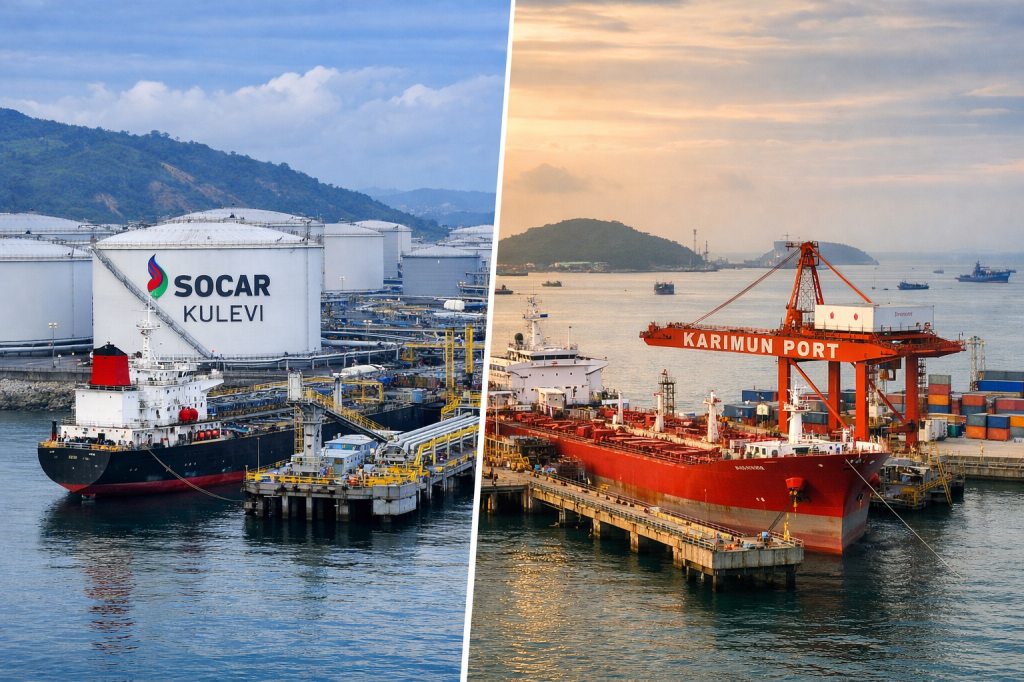
The European Union is preparing a new round of sanctions against Russia that would, for the first time, target port facilities located outside the bloc, according to a draft proposal seen by Reuters on February 9.
The measures would place the ports of Kulevi in Georgia and Karimun in Indonesia on the EU sanctions list, prohibiting European companies and individuals from engaging in any financial or commercial dealings with the two facilities. Both ports are accused of playing a role in the handling and transshipment of Russian crude oil.
These steps form part of the EU’s 20th sanctions package in response to Russia’s ongoing war in Ukraine. The package was jointly prepared by the European Commission and the EU’s diplomatic service and presented to member states this week. All EU sanctions require unanimous approval before they can take effect.
European Commission President Ursula von der Leyen said last week that the upcoming package would include broad sectoral measures and signal a move away from the G7 oil price cap toward a comprehensive ban on maritime services linked to Russian crude exports.
The draft also outlines new import bans on a wide range of metals and raw materials, including nickel, iron ore, copper, aluminium scrap, silicon, salt, ammonia, pebbles, and furskins.
In another unprecedented move, the EU plans to use its anti-circumvention mechanism to restrict exports of metal-cutting machinery and communications equipment—such as modems and routers—to Kyrgyzstan, citing concerns that the goods could be redirected to Russia.
The proposal further recommends sanctions against several financial institutions, including Kyrgyz banks Keremet and Capital Bank of Central Asia, as well as banks in Laos and Tajikistan, for allegedly providing crypto-related services to Russia. At the same time, two Chinese banks would be removed from the sanctions list.
Additionally, asset freezes and travel bans are proposed for 30 individuals and 64 companies, among them oil producer Bashneft, a subsidiary of Rosneft, and eight Russian refineries, including the Rosneft-controlled Tuapse and Syzran plants.
Meanwhile, India’s Coast Guard recently detained three tankers previously sanctioned by the United States for transporting Iranian oil. The vessels—Stellar Ruby, Asphalt Star, and Al Jafzia—were intercepted approximately 160 kilometers west of Mumbai.


 EURO ASIA NEWS INTERNET NEWSPAPER
Leave a comment