
The state oil company of Azerbaijan SOCAR, together with the Turkish holding Cengiz, is creating a consortium for negotiations on the purchase of the Lukoil oil refinery in Burgas, Bulgaria.
Judging by the information from two sources at once, the chances of success of this alliance, supported by powerful lobbying resources in Bulgaria and Turkey, are very high. However, the final decision remains with the management of Lukoil, which has been under political pressure in Bulgaria since 2022 against the backdrop of the Russian-Ukrainian war.
Success in Burgas for SOCAR and Cengiz will strengthen Azerbaijan and Turkey’s energy presence in Europe, or the oil trading companies unofficially managed by Adnan Ahmedzade (former corrupt official of SOCAR), who already secretly markets Lukoil oil in Turkey, have been secretly competing with SOCAR on this path for many years. We also know very well who secretly registered the name of the sanctioned yacht of Lukoil president Vahid Alakbarov.
It should be noted that other major players are also interested in the Burgas refinery, in particular, Kazakhstan’s national oil company KazMunayGas, which is ready to invest about $ 1 billion, international trader Vitol, Turkey’s Oyak pension fund, Hungary’s MOL… Nevertheless, the favorites in Sofia are the SOCAR and Cengiz alliance. As is known, SOCAR has been among the contenders for more than a year and a half, and its partnership with Cengiz, one of Turkey’s leading construction and energy holdings, has significantly strengthened the positions of the Azerbaijani state company.
The denouement of the situation has accelerated due to new risks of US sanctions, which may be imposed not only on Lukoil managers, but also on the company itself. Until now, the company had postponed the sale of its asset in Burgas, believing that the conflict between Russia and Ukraine would be resolved in 2025. However, the threat of American restrictions pushed the Russian company to force the deal.
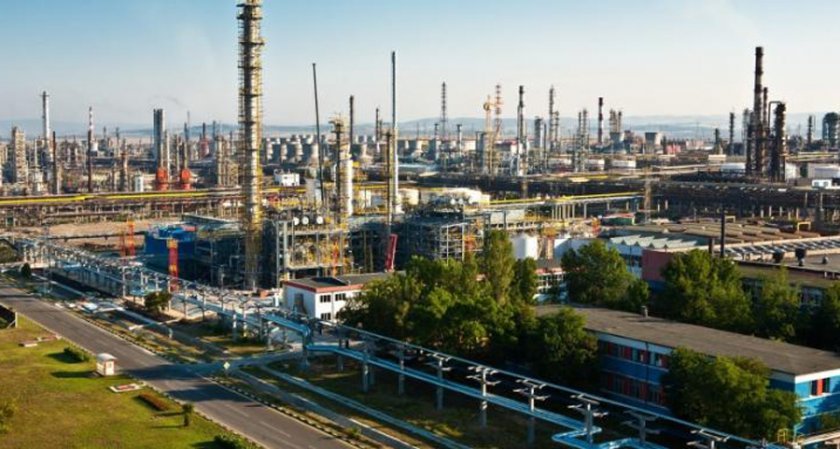
The Burgas refinery is Lukoil’s largest oil refining asset in Bulgaria with an annual turnover of 8.6 billion leva (about 9 billion manat according to 2023 data). The plant is also the country’s leader in wholesale and retail fuel sales (6.3 billion leva), and therefore the fight for its acquisition is of a strategic nature.
At the same time, certain obstacles remain in the path of the Azerbaijani-Turkish consortium. In particular, the recent instability in relations between Moscow and Baku complicates the picture, although for Lukoil, the refinery in Bulgaria is only a small part of its asset portfolio compared to the company’s resources in the Middle East, Africa, Asia and Russia itself.
For Baku, this opens up a chance to restore the Baku-Supsa oil pipeline, which has been idle since the spring of 2022
Cengiz Holding, which owns 35 companies and has annual revenues of $5 billion, positions itself as a key partner of SOCAR. The holding is known in Bulgaria for the construction of the Lyulin highway, as well as the Elin Pelin-Kostenets railway line. In addition, Cengiz Holding has close ties to Turkish political circles and Bulgarian business, including Delyan Peevski, the leader of the Movement for Rights and Freedoms (MRF), whose electorate is based on the country’s Turkish minority, a factor that strengthens the consortium’s opportunities on the Bulgarian market.
The geography of supplies also plays an important role. Due to sanctions, Lukoil has not been able to use Russian oil for the refinery in Burgas for a year and a half, while Turkey and Azerbaijan are able to provide this enterprise with a stable supply of raw materials. For Baku, this opens up a chance to restore the Baku-Supsa oil pipeline, which has been idle since the spring of 2022, and thus regain some of its transit influence on the Black Sea.
Ultimately, the outcome of the deal will be determined not only by financial offers and market calculations, but also by geopolitical considerations.
For SOCAR and Cengiz, success in Burgas will strengthen the energy presence of Azerbaijan and Turkey in Europe, for Bulgaria – an opportunity to reduce dependence on Russian capital, and for Lukoil – a chance to minimize the risks of the introduction of American sanctions and convert a problematic asset into liquid assets.


 EURO ASIA NEWS INTERNET NEWSPAPER
You must be logged in to post a comment.