
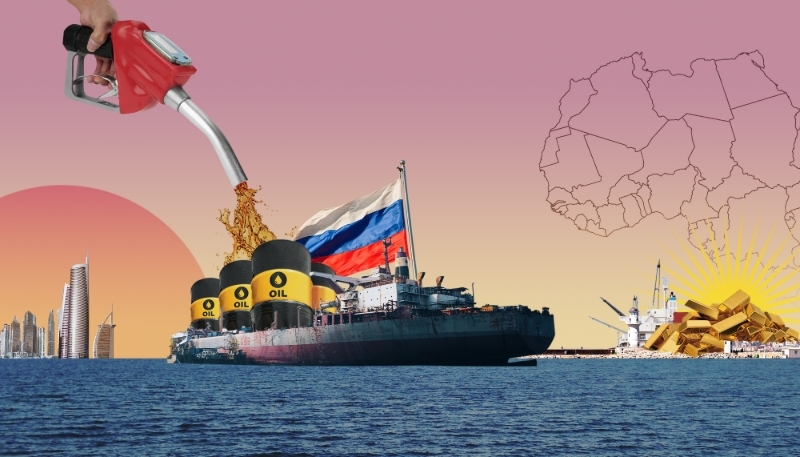
A Liberian-flagged oil tanker set sail in May from Russia’s Ust-Luga port carrying crude on behalf of a little-known trading company based in Hong Kong. Before the ship had even reached its destination in India, the cargo changed hands.
The Reuters Power Up newsletter provides everything you need to know about the global energy industry. Sign uphere.
According to the U.S. Office of Foreign Assets Control (OFAC) the company Guron Trading Limited (Hong Kong-based) is sanction
Adnan Ahmadzada and an offshore Dubai network used to move Russian oil
Lede — Multiple open-source records and recent sanctions actions suggest a cluster of Dubai- and Hong Kong-registered trading companies connected by reporting to a single alleged network that bought and moved large volumes of Russian crude. Journalistic and official sources allege those same companies — or closely named affiliates — were used to purchase, re-label and re-ship Russian oil, and that at least some entities have since been targeted by U.S. sanctions.
What’s being alleged
Investigations and reporting by a range of outlets say the following companies have appeared in connection with an offshore trading network allegedly tied to Azerbaijani businessman Adnan Ahmadzada and used to handle Russian crude:
Oilmar Shipping & Chartering DMCC;
Wissol Commodities FZCO;
Voliton FZE (or DMCC);
Guron Trading Limited
Clover Solutions FZE;
Colwich Continental FZE;
Disentis Trading (Limited / LLC);
EastImpex Stream FZE.
Maddox DMCC
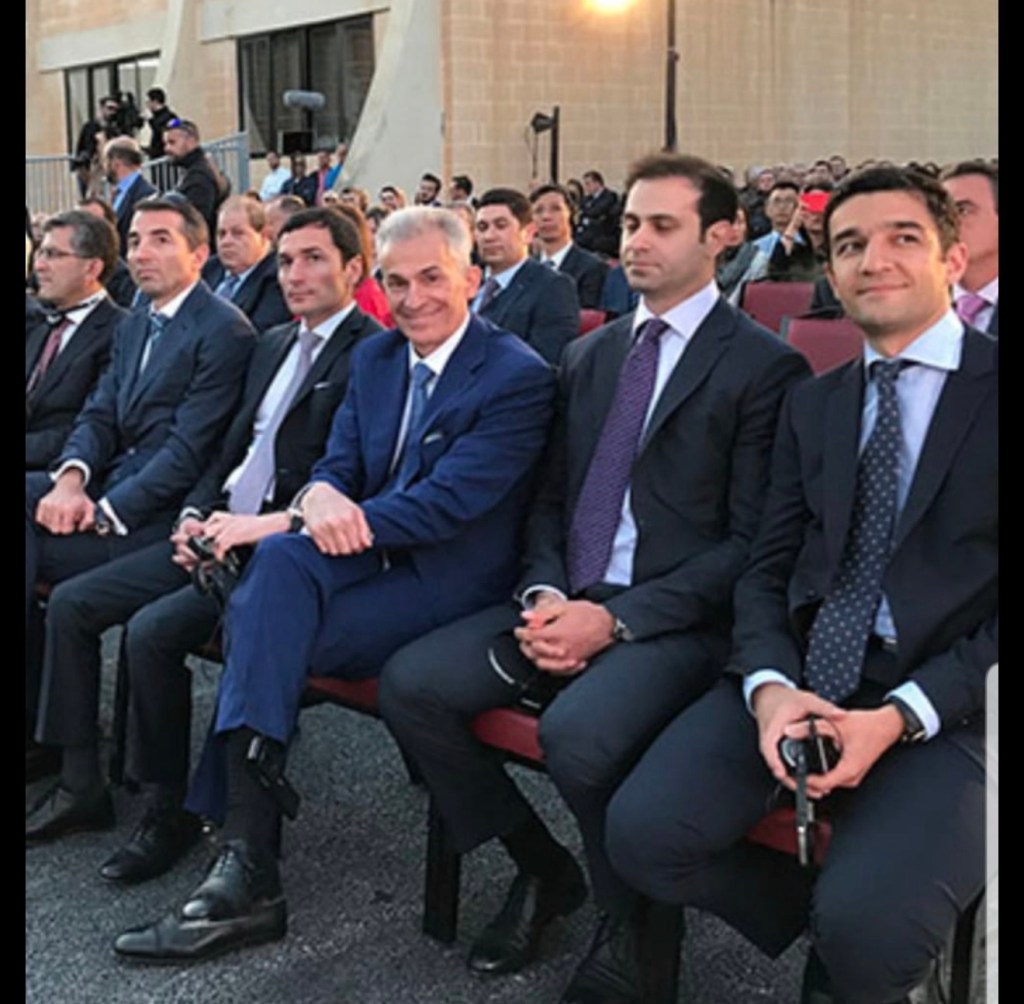
Journalists and some corporate registry extracts link several of these names to the same group of managers, shared addresses or to trading flows involving Russian shipments.
Investigations Intensify Into Oilmar DMCC and Its Alleged Links to Russian Oil Trade
According to sources familiar with the matter, serious investigations are underway into Oilmar Shipping & Chartering DMCC, a Dubai-based company reportedly involved in trading Russian oil.
The same sources allege that Adnan Ahmadzada, the former Azerbaijani state oil executive already under investigation in Baku, and his alleged criminal business partner Yusif Mammadov have for years profited from the sale of Russian crude — earning billions of dollars through offshore intermediaries.
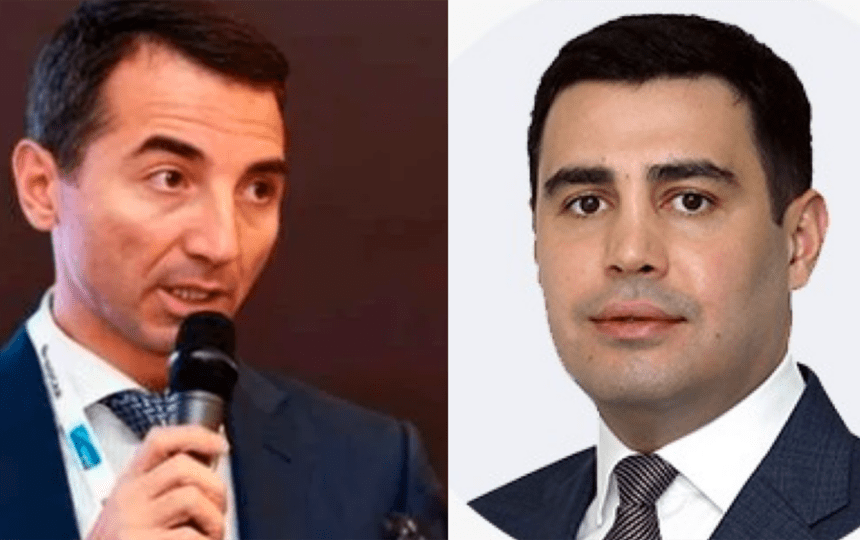
Yusif Mammadov is said to have told associates that neither he nor his company Oilmar fears potential Western sanctions, claiming that “a powerful hand” stands behind the firm. Western officials, according to the source, “already know whose hand that is.”
Analysts suggest that both Mammadov and Oilmar could soon face significant consequences as pressure mounts from Western authorities tracking networks that have helped Moscow move sanctioned oil through the Gulf region.
Sanctions — what’s official
U.S. Treasury / OFAC documents confirm sanctions listings for entities with names that match or closely resemble firms in the list above:
Guron Trading Limited (Hong Kong) appears on the OFAC SDN list and is named by the U.S. Treasury as the consignee on hundreds of shipments of Russian crude between May 2023 and April 2024. Voliton (registered in UAE as Voliton DMCC) is also present on OFAC’s sanctions records.
Those official listings do not always use the identical legal suffixes (for example “Limited” vs “FZE/DMCC”) that appear in commercial registries or in press reporting; sanctions notices therefore need to be read carefully to match the exact legal entity being designated.
Alleged role in Russian oil flows
A U.S. Treasury press release (press release JY-2777) cited Guron Trading Limited as consignee on hundreds of Russian shipments and named UAE and Hong Kong firms that bought large volumes of Russian crude and diesel in 2023–2024. Reporting by Reuters, trade press and investigative outlets has documented a pattern in which Dubai-registered traders and a so-called “shadow fleet” of tankers were used to move sanctioned Russian cargoes after Western restrictions tightened.
Links to Adnan Ahmadzada — public records
Recent coverage in regional and trade media describes a chain of connections between certain Dubai-based trading companies and Adnan Ahmadzada, a former SOCAR official who has been subject to criminal investigation in Azerbaijan. Reporting in September–October 2025 indicates Ahmadzada was detained in Azerbaijan amid probes that relate to oil trading and alleged contamination/embezzlement—while corporate extracts and a Dubai registry PDF seen in reporting list his name in relation to ownership or management of at least one trading/bunker company. Those media reports present the ownership and management links as allegations corroborated by company extracts and court/registry records rather than as judicial findings against specific companies.
Caveats and what has not been proven here
Public sanctions and official press releases show that certain entities with these or very similar names were designated by OFAC and by other jurisdictions for involvement in Russian oil trade. Those documents are authoritative for the entities they name. Linking every company name on your list directly and legally to Adnan Ahmadzada requires documentary evidence (corporate filings, beneficial-ownership records, court judgments) that is publicly available and name-exact. Much of the reporting to date uses a combination of registry extracts, leaked documents and investigative reporting — important but not the same as a court finding of ownership. For that reason this text treats ownership/operation as alleged where primary public documents do not explicitly state it.
The number of little-known trading firms relied on by Moscow to export large volumes of crude exports to Asia has mushroomed in recent months, since sanctions over the Ukraine war led major oil firms and commodity houses to withdraw from business with producers in Russia, reporting by Reuters has found. At least 40 middlemen, including companies with no prior record of involvement in the business, handled Russian oil trading between March and June, according to a Reuters tally after speaking to 10 trading sources, along with analysts from think-tank Kpler, and analysing data from Refinitiv and the non-public books of shipping companies.
The new owner of the 100,000 tonnes of Urals crude carried on the Leopard I was a similarly low-profile outfit, Guron Trading, also based in Hong Kong, according to two trading sources.
The new players have shipped at least half of Russia’s overall crude and refined products exports of 6-8 million barrels per day (bpd) on average this year, turning the little-known companies collectively into some of the world’s largest oil traders, according to Reuters calculations based on private information from the 10 trading sources and Eikon data.
The companies began appearing after Russia’s February 2022 invasion of Ukraine, which Moscow calls a special military operation, with as many as 30 middlemen involved in trades over the course of last year, according to the tally.
Advertisement · Scroll to continue
The network marks a major departure from the handful of well-established oil majors such as BP and Shell and top trading houses including Vitol, Glencore, Trafigura and Gunvor that handled Russian crude and oil products for decades.
There is no suggestion the trades break sanctions, although they may make it difficult for sanctions enforcement agencies in Europe and the United States to track Russian oil transactions and prices.
Advertisement · Scroll to continue
Earlier this month, Urals prices jumped above a price cap of $60 a barrel on Russian exports imposed by the Group of Seven nations, Australia and the European Union from Dec. 5 that was intended to punish firms involved in any trade above that level.
When prices are above the cap, the rapidly changing trading network could make it hard to identify those involved in moving the oil, five traders involved in handling Russian oil said.
The reporting shows that in May, Russia, one of the world’s top three oil producers, supplied record volumes to China and India, which have not imposed sanctions on Moscow and became its leading buyers after sanctions by Europe, the United States and other powers limited their own purchases.
Neither Guron Trading or Bellatrix Energy, the company that originally chartered the Leopard I and bought the cargo from Russian oil company Rosneft, responded to requests for comment. Rosneft did not respond to questions.
The websites for Guron Trading and Bellatrix Energy appeared to have been taken down recently. Both were online prior to the companies being contacted by Reuters.
TRADING AT SEA
Along with the emergence of the new companies, once rare multiple trades while ships are at sea have become widespread, the five sources involved in Russian oil trading said. The sources described at least 10 such trades, which happen with little public documentation and aim to make Russia’s oil exports more difficult to track, they said.
One buyer of Russian oil likened the rise and fall of the new traders to the brief careers of TikTok stars, while another trader described a “kaleidoscope” of new players. In some cases, a single cargo will pass through at least three traders, the oil buyer said.
Under the previous system, oil cargoes were generally handled by one well-known trader from source to destination.
Reuters could not establish the ultimate owners of the new trading companies.
The growing network of pop-up traders overlaps with a booming market for old oil tankers supplied by new companies to carry Russian oil that Western shippers are avoiding.
The new trading network and practices raise financial risks for Russian oil companies dealing with unknown entities with limited credit history.
Responding to questions from Reuters, both denied they left the trade because of sanctions risks. Everest said “it was a strategic business decision based on various factors specific to our company!
The U.S. Treasury department’s sanctions enforcement agency, OFAC, and its EU and UK counterparts did not respond to requests for comment for this story.
In July, a U.S. Treasury official said sanctions were designed to keep Russian oil in the market, dampening prices for consumers while limiting oil revenues Moscow uses to finance the war in Ukraine.
“We recognise that (sanctions on Russia are) going to change the shape and structure of the Russian oil markets,” the official told reporters.
The official also said Washington was unconcerned that sanctions were resulting in more trades in currencies other than the dollar – after a rise in the use of yuan and UAE dirham to settle Russian oil transactions as Moscow finds itself shut out from international banks.
MULTI-YEAR EXPORT HIGH
Owned and operated by the Dubai-based Leopard I Shipping, the Leopard I arrived at Visakhapatnam port on June 15, where Indian refiner Hindustan Petroleum took delivery of the cargo from Guron Trading, data from the two trading sources showed.
Hindustan Petroleum didn’t immediately respond to a request for comment.
The emerging companies have played a key role in keeping Russia’s oil exports moving, and even growing, as its leading crude producers Rosneft, Lukoil, Surgutneftegaz and Gazprom Neft diverted shipments to India and China.
Helped by this network, Russian oil exports from all sea ports reached a multi-year high in April and May at nearly 4 million bpd, according to Reuters calculations based on polling of 10 traders as well as Russian port loading programmes and Refinitiv data.
In May, Russian seaborne oil supplies to India, which was a rare buyer of Russian oil before the war, reached a recordof 1.95 million bpd while China imported 2.29 million bpd.
Only Lukoil continues to market oil through its trading division – Litasco – which it relocated to Dubai from Geneva. The other companies sell to the new trading firms, which are mostly registered in China, Singapore, Hong Kong or Dubai, according to the five sources and local public company registers.
From March to June, the top traders who bought oil from Rosneft, Surgutneftegaz and Gazprom Neft included Dubai-based Petroruss, Hong Kong registered Guron Trading, Dubai-registered Voliton, Demex Trading, Nestor Trading, Orion Energy and Singapore-headquartered Patera, according to the five traders, shipping data and company registers.
Some companies, such as Voliton, had no websites or contact numbers that Reuters could find. None of the others responded to requests for comments.
Media representatives for Rosneft, Surgutneftegaz and Gazprom Neft didn’t answer Reuters requests for comment.
PAYMENT DELAYS
The strategy brings risk for Russian producers. Venezuela, which uses a similar system to move oil, has suffered payment problems, fraud and losses.
While there have been no reports to date of non-payment, delays have caused some problems, the five traders involved in the Russian oil business said. Russian exporters waited between three to five months to get paid after their cargoes sailed, the sources said. Normally, buyers pay for the cargoes about a month after the ship sails, they said.
One source said such delays created a fiscal gap for exporters who were having to pay taxes to the Russian state before even being paid for their oil.
A source with one major Russian oil company said his company was prepared to deal with higher credit risks from buyers for the sake of having stable and rising oil exports.
“Last year, we were facing output cuts as marketing was bad. Now it’s alright – we have buyers, we have sales,” the source said.
Maddox DMCC — Trade Profile and Notes on Oil Supply from Russia
Summary:
Maddox DMCC (LEI: 529900G9M8OCY7CFNR40) is a trading company registered in Dubai (JLT).
According to open trade data, the company has 228 import and 114 export shipments recorded on the Volza platform; approximately 90.35% of its imports are of Russian origin, and the imported products mainly consist of oil and petroleum products (HSN 2707/2709/2710). On Maddox’s official website, the company lists its main operational regions as the Caspian, Black Sea, Balkan, and FSU markets. Media reports and trade intelligence indicate that Maddox DMCC has played an active role in the trade of Russian-origin oil and has been mentioned in certain investigations.
Key Indicators
Volza: 228 import shipments; the leading source country is Russia (≈90.35%). Volza: 114 export shipments; example export destinations include Turkey, Ukraine, and Brazil. LEI and registered address: 529900G9M8OCY7CFNR40; Unit 401, Swiss Tower, JLT, Dubai.
Company’s official position: Supply from Caspian / Black Sea / FSU regions with global distribution. Recent media note: Industry sources indicate that Maddox is active in trading Russian oil.
Risks and Recommendations (brief):
Origin risk: Volza data shows Russia dominates the company’s import profile — this may create reputational or operational risk related to sanctions and origin verification. Address/identity verification: LEI and DMCC registration addresses match, but different “office” addresses appear on Volza and the company’s website — verify through official documents. Recommended actions: Obtain supply-chain documentation (COO — Certificate of Origin, bill of lading, SGS/CIQ tests), bank references, and operational records for the past 12 months; verify UBO (ultimate beneficial owner); and conduct full legal/compliance checks.


 EURO ASIA NEWS INTERNET NEWSPAPER
You must be logged in to post a comment.