
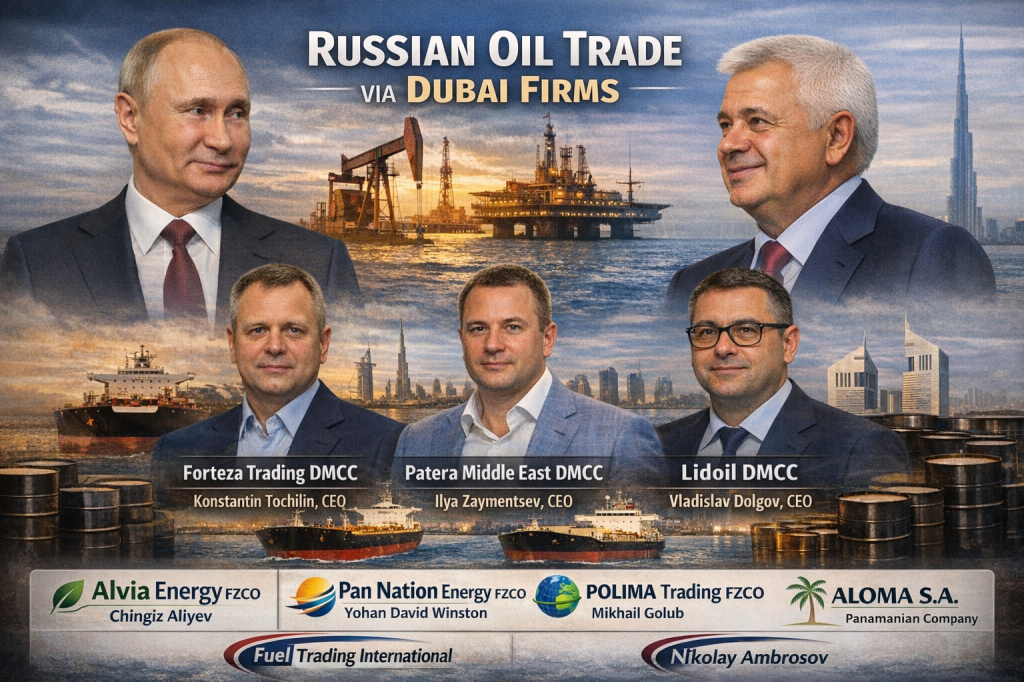
The global oil market is actively discussing a newly formed trading structure allegedly set up by former employees of Litasco, the trading arm of Lukoil. According to multiple industry insiders, the new entity is expected to exclusively trade Lukoil crude and oil products, effectively replacing Litasco’s role following its decline.
However, the key concern is not merely the emergence of a successor entity — but the individuals behind it, many of whom appear to be linked to sanctioned networks, offshore structures, and previously reported cases of fraud.
Although the name of the new company remains undisclosed, numerous insiders link it to several recently established Dubai-based firms: Alvia Energy FZCO, founded by Chingiz Aliyev; Pan Nation Energy FZCO, created by Yohan David Winston; and Polima Trading FZCO, founded by Mikhail Golub. Notably, all three companies were established almost simultaneously in mid-December 2025, suggesting a coordinated restructuring effort rather than coincidence.
Some traders also associate the structure with Alexey Nemkov, a UK passport holder and senior crude trader at Omega Trading, as well as a former Shell trader. Nemkov is considered to be closely connected to acts as the right hand of the company’s Chief Commercial Officer Sergey Dobrinov — all of whom are reportedly subject to various sanctions regimes.
Expanded Background: Mursekaev Family Connections
Nikolay Ambrosov is not only reported to have close ties with Russian fraudsters but was also allegedly directly involved in fraudulent schemes.
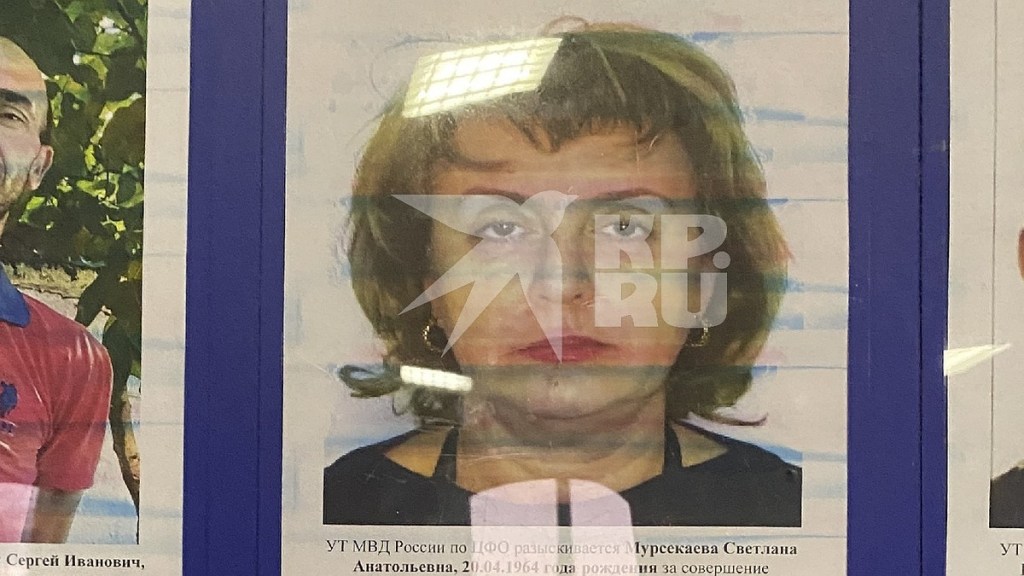
His wife, Anna Mursekaeva, is the daughter of Svetlana and Rashid Mursekaev, who are known to be close associates of Nikolay’s father, Evgeniy Ambrosov. The Mursekaev family were the owners of the now-bankrupt Russian airline VIM-Avia, which was accused of large-scale fraud, declared bankrupt, and whose owners were reportedly placed on international wanted lists.
Nikolay Ambrosov has been identified as a beneficiary of offshore companies through which funds from VIM-Avia were allegedly transferred abroad, including the Panamanian company ALOMA S.A..
Furthermore, together with his wife, Ambrosov co-owned Fuel Trading International, a company that supplied petroleum products to VIM-Avia at inflated prices.
These connections suggest a deeper integration between family ties, offshore financial structures, and previously reported fraudulent activities.
Chingiz Aliyev: Rapid Rise, Sanctions, and Failed Expansion
At the center of the network is Chingiz Aliyev, a relatively low-profile figure whose rapid career progression has drawn attention. It is widely rumored that he is a nephew of Vagit Alekperov, the owner of Lukoil, which may help explain his rise to CEO of Litasco before the age of 35.
He is also the grandson of Yashar Aliyev, Azerbaijan’s Permanent Representative to the United Nations since 2014.Currently, Yashar Teymur oglu Aliyev is the Ambassador Extraordinary and Plenipotentiary of the Republic of Azerbaijan to the Czech Republic.
More information: https://en.wikipedia.org/wiki/Yashar_Aliyev_(diplomat)
Chingiz Aliyev is an individual associated with Geneva, Switzerland, who was sanctioned by the UK in December 2025 due to his roles as a director at Litasco SA and Litasco Middle East DMCC, entities involved in the Russian energy sector. He is identified with Azerbaijan citizenship.
Key details regarding Chingiz Aliyev:
- Location: Listed with an address in Geneva, Switzerland, according to OpenSanctions and Lursoft Sanctions.
- Sanctions: Subject to UK financial sanctions (asset freeze, travel ban) imposed on 18 December 2025 under the Russia sanctions regime.
- Role: Involved with Litasco SA and Litasco Middle East DMCC, and linked to overseeing Dubai-based Teruva.
- Identity: Azerbaijani citizenship
https://assets.publishing.service.gov.uk/media/6943ce9336f089d38be1f2ac/Notice_Russia_181225.pdf
On 18 December 2025, Aliyev was sanctioned by the United Kingdom for supporting the Government of Russia through his role as CEO of Litasco. His identity and designation are confirmed via official UK sanctions listings and OpenSanctions records:
https://www.opensanctions.org/entities/NK-dLKdh67aVJqB6oVzuBT55f/
Notably, this designation came just one week after he established his own company, Alvia Energy FZCO, following his resignation from Litasco in November 2025.
Further reporting by Bloomberg indicates that Chingiz Aliyev was also involved in a separate Lukoil-linked project in Dubai aimed at entering the global grain trading market. A company named Teruva FZCO was reportedly created as part of this strategy:
https://www.bloomberg.com/news/articles/2026-02-06/sanctions-sank-lukoil-linked-grain-trader-before-it-got-started
In December 2025, the UK imposed sanctions against Aliyev. London noted that he held a senior position at Litasco Middle East DMCC and Litasco SA, a company of strategic importance to Russia.
According to Bloomberg, Chingiz Aliyev oversaw the creation of Teruva in Dubai, with Omar Dbab appointed head of the trading department. Dbab represented Teruva at a commodities conference in Berlin in October 2025. According to his LinkedIn profile, before joining Lukoil in June 2025, Dbab was a senior trader at Louis Dreyfus Co. in Geneva.
The Russian oil and gas corporation also hired Leandro Racedo as a senior agricultural commodities trader in Dubai. According to his LinkedIn account, Rasedo previously worked as a trader at Al Ghurair Investment LLC, Hartree Partners LP, and Bunge Global SA.
Lukoil did not comment on the information.
Notwithstanding these close ties to the political establishment, the circumstances surrounding Chingiz Aliyev suggest a more complex reality. His designation under United Kingdom sanctions, reportedly in connection with activities involving the illicit trade of Russian oil, raises significant concerns. In this context, such developments may be viewed as having adverse reputational implications for the Azerbaijani leadership at the highest level.
For the avoidance of doubt, Chingiz Aliyev is not an isolated case. According to available information, more than 30 individuals of Azerbaijani origin have been subjected to sanctions by the United Kingdom, the European Union, and the United States under comparable circumstances. Such designations collectively risk undermining the international standing of the Republic of Azerbaijan and may be construed as detrimental to its state reputation.
However, the project collapsed before it could begin operations due to tightening US sanctions against Lukoil, which made banking and international transactions effectively unworkable. This case illustrates how sanctions can directly disrupt newly created trading structures.
Nikolay Ambrosov: Shipping Networks and Offshore Exposure
Nikolay Ambrosov, previously affiliated with Sovcomflot , was rapidly promoted within Litasco to become commercial director of its shipping arm before the age of 35.
https://offshoreleaks.icij.org/nodes/13013107
He is the son of Evgeniy Ambrosov, a senior executive at Sovcomflot, a company sanctioned by the US, EU and others in 2022:
- https://www.tradewindsnews.com/gas/novatek-poaches-sovcomflots-evgeniy-ambrosov-for-top-maritime-job/2-1-900143
- https://www.marketscreener.com/insider/EVGENY-NIKOLAYEVICH-AMBROSOV-A11ADR/
Ambrosov is known for his extensive relationships with Greek, Turkish and Russian shipowners, providing access to tanker fleets — a critical component in opaque oil trading operations.
However, his background has been linked to multiple controversial cases. He is reportedly connected to offshore structures associated with the bankrupt Russian airline VIM-Avia, which was accused of fraud and whose owners are internationally wanted.
Ambrosov has been identified as a beneficiary of offshore companies through which funds were transferred abroad, including the Panamanian entity “ALOMA S.A.”. Additionally, he co-owned Fuel Trading International, which supplied petroleum products to VIM-Avia at inflated prices.
Sources:
- https://nebohod.media/nashi_smi/moscow_post_su/offshore-wings-of-vim-avia-what-does-the-mursekaevs-daughter-and-son-in-law-have-to-do-with-it-184226/
- https://rusecrets.com/articles/co-owner_of_vim-avia_flew_away_from_the_investigation
Market participants widely describe Ambrosov as a high-risk operator with a track record of failed ventures despite access to significant financial and political backing.
Ilya Zaymentsev: Links to Sanctioned Financial Networks
Ilya Zaymentsev, previously a senior manager at Avestra Chemical (linked to Petroruss FZCO), is expected to play a key role in trading and business development within the new structure.
He is widely known for his connections to Roman Spiridonov, who was sanctioned by the UK government in December 2023. Spiridonov is reported to have ties to Russian state structures, including the FSB, as well as organized criminal networks.
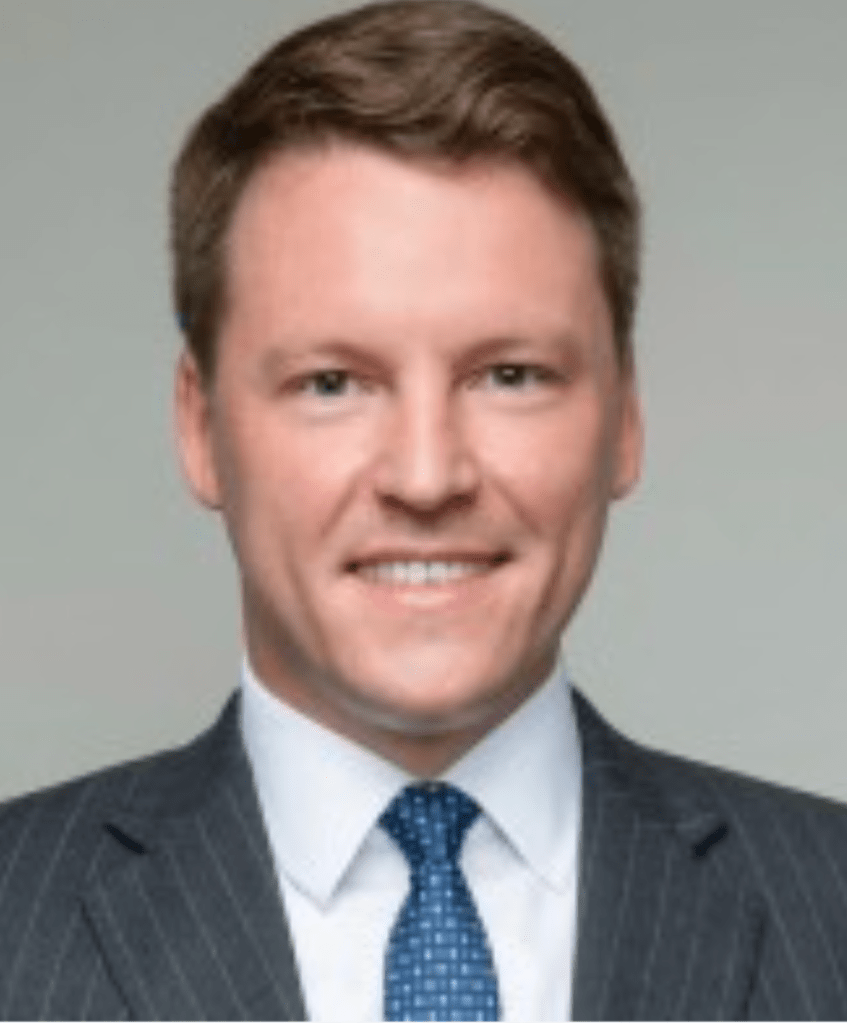
These connections allegedly provide opportunities for money laundering through offshore companies and the illegal export of Russian oil products, including via so-called “shadow fleet” operations.
Sources:
- https://ruskompromat.info/news/person/_Roman_Spiridonov
- https://www.rosneft.com/press/releases/item/176079/
- https://rocketreach.co/ilya-zaymentsev-email_34824575
Mikhail Golub: Offshore Schemes and Bashneft Case
Mikhail Golub has a long-standing reputation linked to offshore financial schemes. In the mid-2010s, he was associated with operations that allegedly extracted millions of dollars from the state-owned oil company Bashneft.
Through a network of shell companies — including Trade Nafta, Exim Group, Arctic Bunker, Trubond Ltd and Minco Enterprises — crude oil and petroleum products were reportedly purchased at below-market prices and resold, with profits diverted into offshore structures.
More details:
His re-emergence following Litasco’s decline and the establishment of Polima Trading FZCO raises further concerns among market observers. https://www.polimatrading.com/
Conclusion: A Test for Global Sanctions Enforcement
Taken together, the formation of this network highlights broader systemic challenges in enforcing sanctions within the global oil trade. The overlap of individuals, offshore structures, and newly created entities suggests a potential continuation of Russian oil trading operations under a restructured framework.
The European Union sanctions authorities and the UK National Crime Agency should urgently review and verify these connections, including the Teruva FZCO case linked to Lukoil. If necessary, appropriate measures should be taken.
Further investigation into this network is ongoing.


 EURO ASIA NEWS INTERNET NEWSPAPER
Leave a comment