

By Journalist Andrey Tomashevski Euro Asia News
At the center of this international scandal is Romania’s Black Sea coast. The Port of Constanța and the state-owned company Oil Terminal, through which petroleum products are imported, represent the zero ground of Russian oil trafficking.
Source: Romania TV : Click and read it https://www.romaniatv.net/exclusiv-cutia-neagra-mafia-petrolului-rusesc-in-tara-noastra-caractita-de-firme-care-ar-putea-trece-portul-constanta-pe-lista-neagra_9171787.html
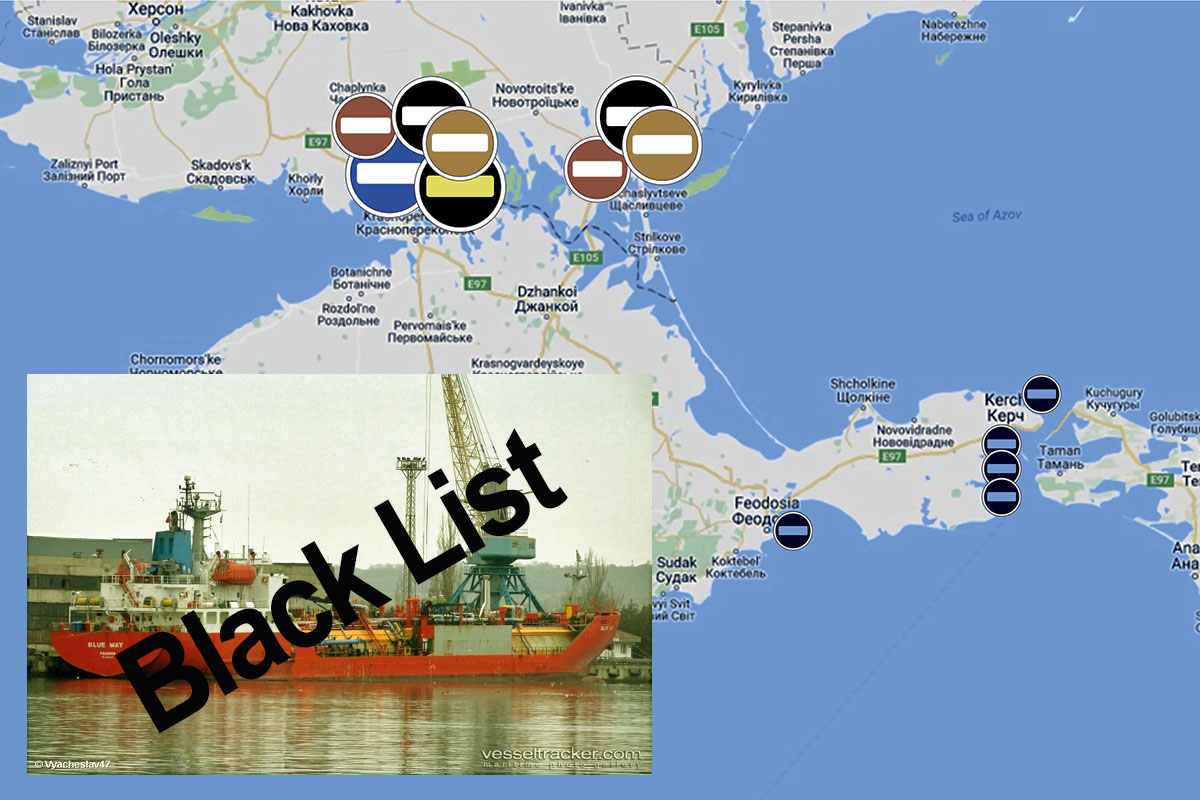
This phenomenon has generated enormous profits for various networks of tax evaders but has placed Romania in an unprecedented situation that endangers national security: The Port of Constanța is expected to be placed on the international blacklist of Russian fuel trafficking.
Click and read it
EXCLUSIVE – THE BLACK BOX –
The investigation begins in 2022, when the company Alkagesta Ltd, an anonymous entity registered in Malta, signed service and storage contracts with Oil Terminal Constanța, Romania’s strategic company through which petroleum products are imported.
Alkagesta Malta is a trading company used by the Azerbaijani state oil company SOCAR as a front for transactions involving Russian petroleum products.
The Azerbaijani mafia in Malta and the threat of Russian oil were “baptized” in Romania. Behind the scenes of the ARREST of former SOCAR vice-president oligarch Adnan Ahmadzade https://www.gandul.ro/actualitate/mafia-azera-din-malta-si-pericolul-petrolului-rusesc-botezat-din-romania-culisele-arestarii-oligarhului-adnan-ahmadzada-ex-vicepresedinte-socar-20640824/amp
Officially, Alkagesta was importing diesel and crude oil from Azerbaijan, Malta, or Turkey.
In reality, international journalistic investigations show that the company was used as a vehicle for “laundering” Russian oil, through forged certificates of origin and ship-to-ship (STS) transfers in international waters off Constanța, at Midia Năvodari, or near the Bulgarian port of Burgas.
The “ship-to-ship” procedure meant that a tanker belonging to Russia’s shadow fleet would transfer diesel or crude oil to a vessel chartered by Alkagesta in international waters. The vessel would then unload the Russian cargo into Oil Terminal’s tanks and depots or at Midia Năvodari, mixing the product with other petroleum products of different origins.
Those responsible for verifying documents and performing laboratory analyses to determine the origin of the oil were employees of the Constanța North Customs Directorate.
For three years, Romanian customs officers did not request any laboratory analyses and allowed tens of thousands of tons of “straight-run gasoil” — a typical Russian product — or diesel refined from Russian crude to enter Romania under newly declared origins such as “Azeri,” “Turkmen,” or “Uzbek.”


Once inside the European market, these products were either re-exported to Ukraine by barges, trains, and tankers, or integrated into Rompetrol’s production chain through the Midia terminal, appearing in documents as products of Kazakh or Romanian origin.
Another significant portion of illegal oil imports made by Alkagesta was directed to Romanian companies known for belonging to tax evasion networks.
Some of this oil reached the Denisrom petroleum storage facility in Cluj or the Jetfly Hub warehouse in Ploiești.
The company Alkagesta, controlled by SOCAR of Azerbaijan, pursued an aggressive commercial policy, as it benefited from Russian oil sold illegally at dumping prices.
Along the distribution chain, offshore companies or entities with illicit fiscal behavior were introduced, through which black money was extracted from circulation and redirected to criminal organizations.
Furthermore, Alkagesta became a supplier of petroleum products for Rompetrol KazMunayGas, which — although it owns its own crude oil resources in Kazakhstan — preferred to purchase, through the Midia terminal, petroleum products supplied by Alkagesta.
These acquisitions were carried out through an extremely complicated document circuit, which allowed for very attractive prices and commissions for all those involved.
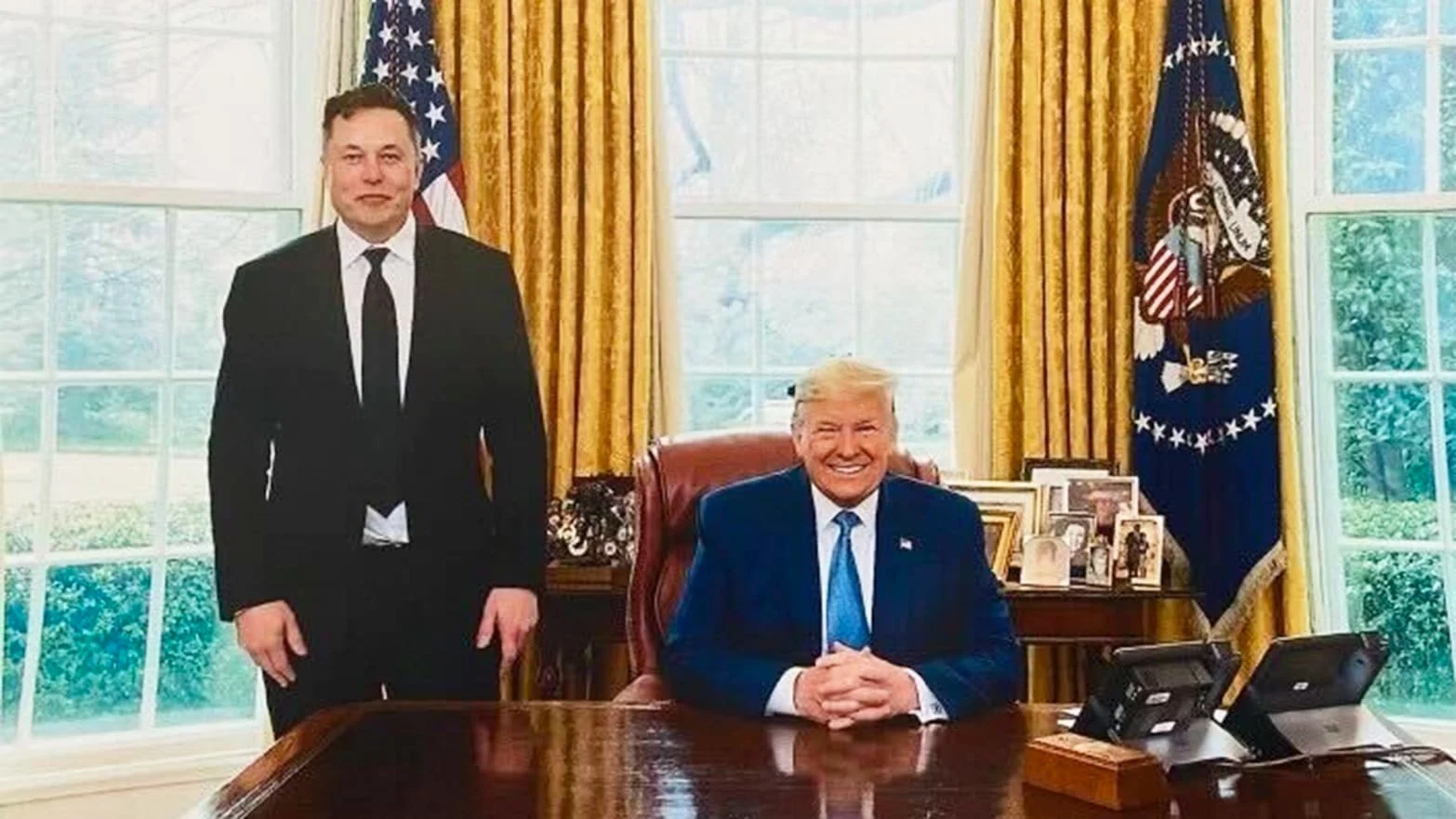
On September 20, 2025, under pressure from U.S. President Donald Trump, the Azerbaijani authorities arrested Adnan Ahmadzada, a British-Azerbaijani businessman and former director of the company SOCAR, accused of coordinating the entire network behind Alkagesta.
Ahmadzada, described by investigators as the “mastermind of the operations,” allegedly used the company Alkagesta, officially headed by one of his relatives, Kamran Agayev, to introduce shipments of Russian oil with fraudulent certificates into the European market.
Meanwhile, EU and UK authorities are investigating Alkagesta as the largest bunkering operator in Malta, also suspected of involvement in the smuggling of Libyan oil.
In Romania, however, the responsible institutions — the Prosecutor’s Office, the Ministry of Internal Affairs, the National Fiscal Administration (ANAF), the Romanian Customs Authority, and the Ministry of Energy — have shown no reaction.
Sources within the Ministry of Finance told CUTIA NEAGRĂ that it is “a well-known fact at the highest level” that Romanian customs officers accepted fuel origin certificates without cross-border verification and without requesting laboratory analyses.
As the international situation worsened after the U.S. President denounced the Russian oil trafficking, Ukrainian officials warned Romania to stop the illegal imports.
Romania was given a deadline for compliance, failing which the Port of Constanța would be placed on the international blacklist of oil hubs, which would be a disaster for Romania’s energy security.
Even more serious is the fact that Romanian authorities were aware of the phenomenon, and there are indications that they covered up the smuggling of Russian oil out of fear of an international scandal.
In August of this year, the OMV Petrobrazi refinery was forced to suspend operations after receiving crude oil contaminated with organic chlorides from Alkagesta — these chlorides being a clear marker of Russian oil.

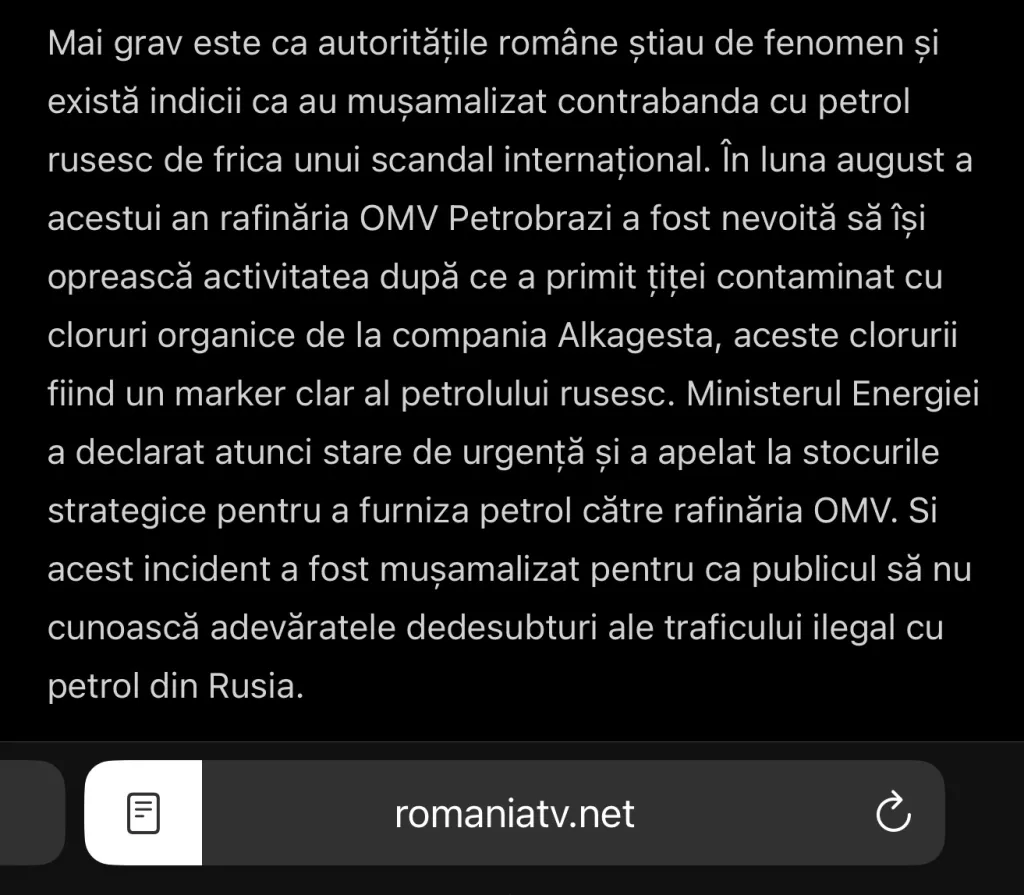
The Ministry of Energy then declared a state of emergency and resorted to strategic reserves to supply oil to the OMV refinery.
This incident, too, was covered up so that the public would not learn the true details behind the illegal trafficking of Russian oil.
Rinaco Trade AG’s article, published on 23 October 2025, mentions Alkagesta in the context of Ukrainian diesel imports. It states that:
“Alkagesta’s sales halved from 29,000 tons to 14,000 tons.”
So, according to the article:
- August: Alkagesta — 29,000 tons
- September: Alkagesta — 14,000 tons
- This represents roughly a 52% decrease.
- The figures relate to diesel supplied to the Ukrainian market.
- The article does not accuse Alkagesta of sanctions violations, Russian oil trading, or involvement in a shadow fleet.
- The article attributes its information to Enkorr.
The surrounding paragraph identifies other major September sellers as Vitaro Energy (61,000 tons), Euronova Energies (39,000 tons), SOCAR (36,000 tons), and Alkagesta (14,000 tons).











4 responses to “Romania TV accuses Alkagesta LTD of supplying Russian-contaminated crude that halted OMV Petrobrazi refinery”
https://www.7news.az/az/adnan-ehmedzadenin-xeyanetinde-sa-eli-hemze-kerimovun-da-rolu-var-milyonlar-menimsenilib/
Why you’re spreading false information about SOCAR being behind Alkagesta?
Information about Alkagesta is public. Why you spread deliberately inaccurate information?
We don’t have the phrase “Socar is behind Alkagesta”, but Socar trading and participating in dirty operations with Alkagesta are another topic.
[…] EURO ASIA NEWS is the multi language news web site This multi language news site aims to present readers an extensive coverage of globally significant news stories on a daily basis. From politics to economy, science and technology to arts, culture and media, with our in-depth content design, you will be at the heart of the news beat . From Europe to America, Middle East to Russia and Asia Previous Post […]