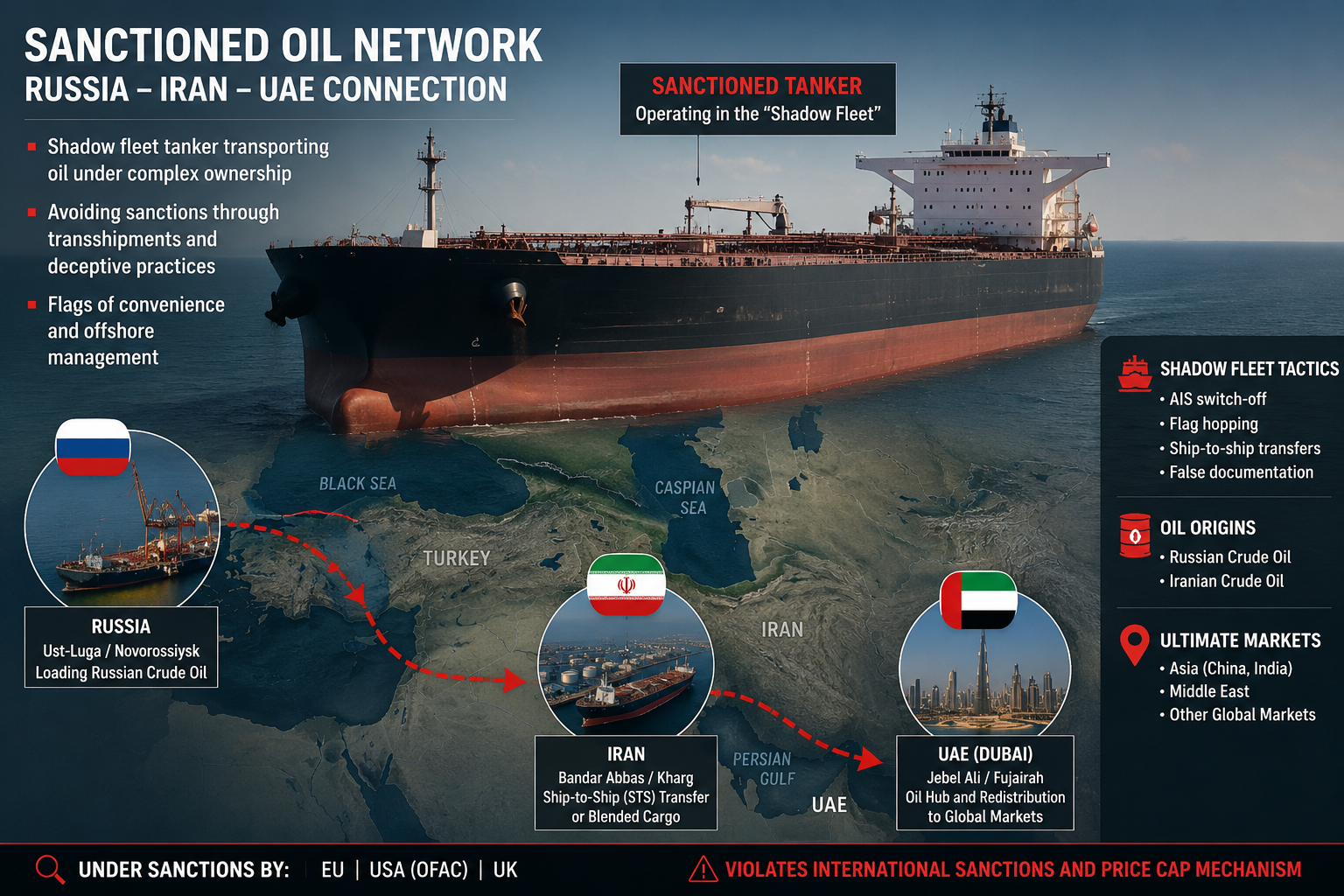
In Iran, a network of intermediaries entrusted by the state with selling oil owes the government between €10bn and €11bn. This was stated in September by the country’s judiciary spokesperson. The sum is equivalent to approximately half of the planned oil revenues in Iran’s budget for the current financial year, Al Jazeera reports.
Oil sales through intermediaries
Tehran introduced a scheme involving private sellers in 2012 in response to US and European sanctions against Iranian oil exports and the receipt of revenue from their sale. Unable to sell oil through the Ministry of Oil and receive proceeds through the Central Bank, the government sold it to domestic buyers or used it to settle debts owed to institutions and organizations.
This created a network of so-called trusted intermediaries. Institutions, companies and individuals were to sell the oil transferred to them and remit the proceeds to the state treasury, after which they could recover agreed expenses and receive payments due to them from the state. Some recipients sold the oil independently, while others engaged private trading companies.
Among the first institutions to receive oil for sale was the Oil Industry Pension Fund. Oil was also transferred to the Khatam al-Anbiya construction headquarters, which carries out major infrastructure projects. According to the outlet, the municipal police received state payments due to it in the form of crude oil.
More current news is available on the UA.News Telegram channel Telegram.
Sanctions and unreturned proceeds
Even at the beginning of the use of this model, discrepancies emerged between expected sales proceeds and the amounts that sellers actually remitted to the state treasury. According to the outlet, this became the basis for some of Iran’s largest economic corruption cases.
After the JCPOA nuclear deal was concluded in 2016 and sanctions on the sale of Iranian oil were lifted, the government was able to return sales to greater state control. People who had sold Iranian oil but did not return the proceeds were imprisoned.
After the United States withdrew from the JCPOA in 2018, Iran was again forced to rely on private traders. The expansion of US sanctions to accounts, currency exchangers, companies and individuals made it more difficult to return funds, as sanctioned traders lost access to accounts, assets and companies. Iranian officials also accused intermediaries of using sanctions schemes for personal enrichment. Iran’s judiciary chief warned that sellers who refuse to return proceeds may be held legally liable.





Leave a Reply