
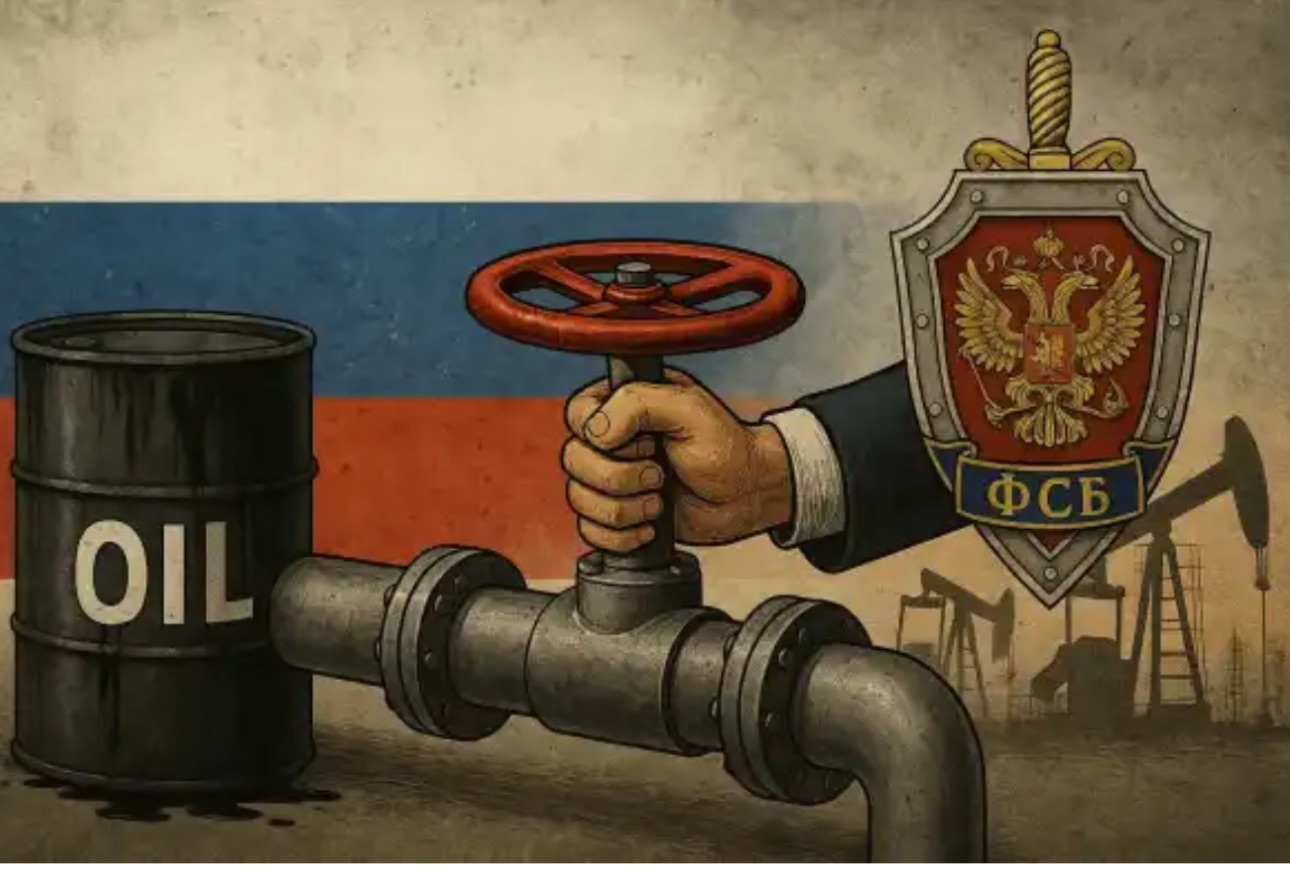
The Romanian Ministry of Energy has declared a state of emergency in the energy sector after two tankers delivered contaminated oil from Azerbaijan.
“OMV Petrom accepted a vessel with Azerbaijani crude oil (92,000 tons) loaded in the port of Ceyhan (Turkey). This batch was contaminated with organic chlorides present in the loading port. In addition, after an analysis, Petrom decided to refuse another batch of 92,000 tons. Thus, 184,000 tons of imported crude oil became unavailable for delivery to the Petrobrazi refinery,” the Romanian Ministry of Energy reported.
The reason is the contamination of several tanks of the terminal of BTC Pipeline Company, the operator of the Baku-Tbilisi-Ceyhan oil pipeline, with a corrosive substance.
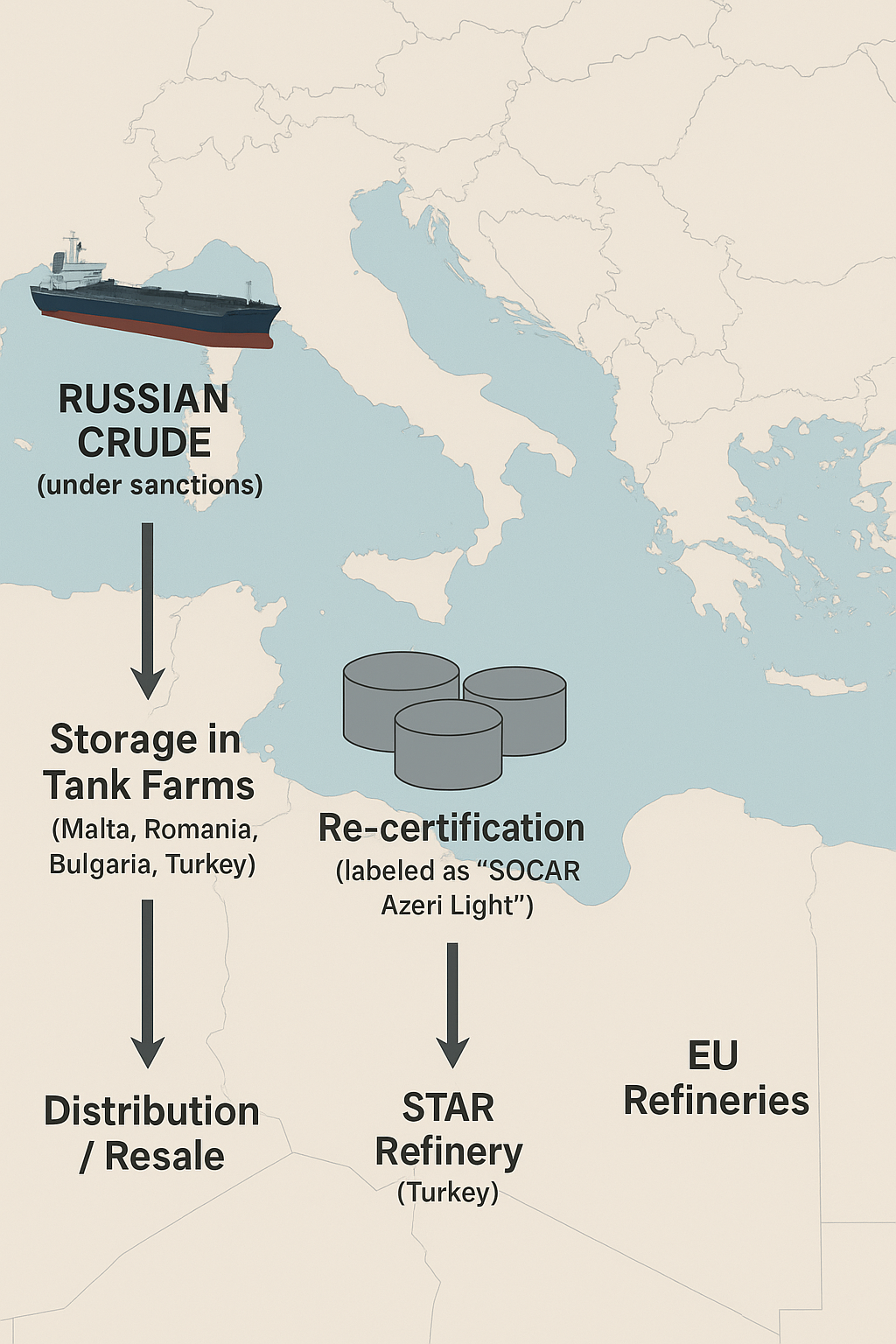
Moscow uses oil contamination and FSB port controls to restrict Kazakh and Azerbaijani exports, leveraging market disruption for geopolitical and economic gain.
At the Turkish terminal marking the final destination of the Baku–Tbilisi–Ceyhan (BTC) pipeline — used to transport Azerbaijani crude to the Mediterranean market — oil with a high content of organochlorine compounds, hazardous for refining, was discovered on 22 July. Under normal circumstances, this would have drawn attention only from industry specialists.
In this regard, the Romanian company asked the authorities to immediately open the strategic state reserve and allocate 80,000 tons of oil and 30,000 tons of diesel fuel. However, in order to open up the reserve, Romania must declare a state of emergency, which it has notified the European Commission about.
Russian Ural brand oil has increased levels of organochlorine compounds. SOCAR does not respond to complaints.

The Russian Oil Trail: Alkagesta, the Shadow Fleet and the Route to Ukraine
A network of vessels, commodity traders and offshore companies is raising new questions about the movement of Russian-origin petroleum through Turkey and European trading hubs and, ultimately, into markets supplying Ukraine.
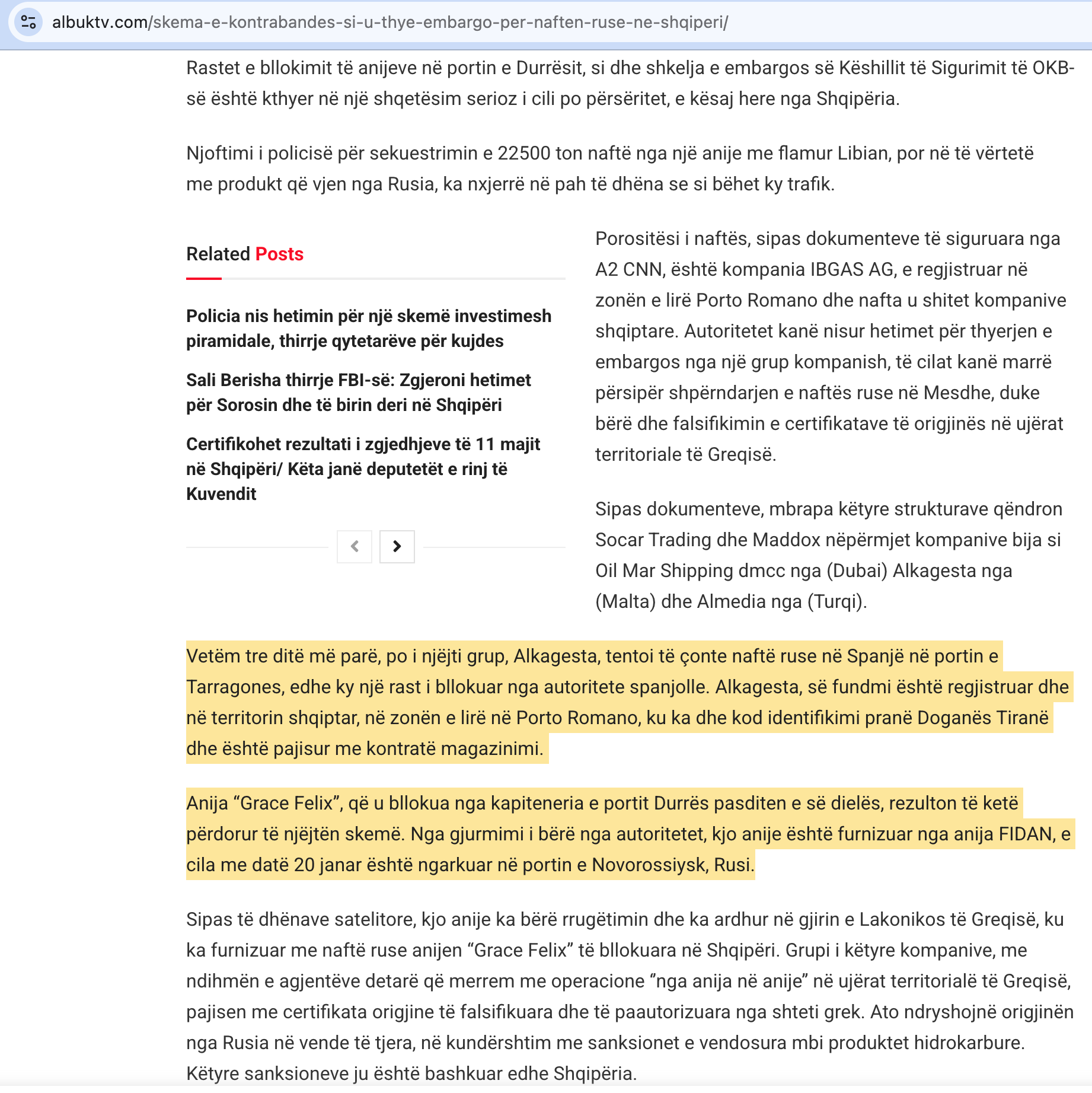
At the center of the questions is Alkagesta, a Malta-registered trading company associated with the tanker Blue Rose.
Shipping records, AIS tracking data and previously published investigations reviewed in connection with the company’s activities point to a pattern of movements across Turkey, Malta, the Caspian region and Russia. The records do not, on their own, establish the origin of every cargo. But they raise questions about whether Russian petroleum may have entered regional supply chains through intermediaries and documentation identifying cargoes as originating elsewhere.
The issue takes on greater significance because Ukraine has become heavily dependent on imported fuel since Russia’s full-scale invasion in 2022.
A trading network spanning multiple jurisdictions
Alkagesta is registered in Malta and has been linked in public records to other companies involved in the international petroleum trade.
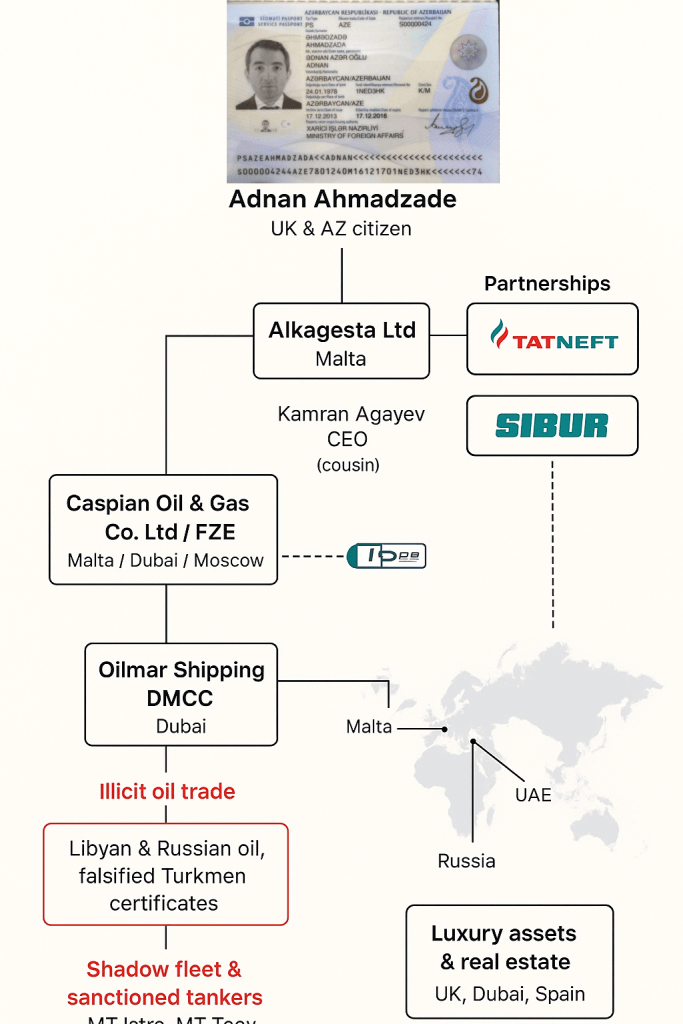
Among the entities appearing in the broader corporate and maritime picture is Caspian Oil & Gas Ltd, which has been associated with business interests connected to Russian energy companies including Sibur and Tatneft.

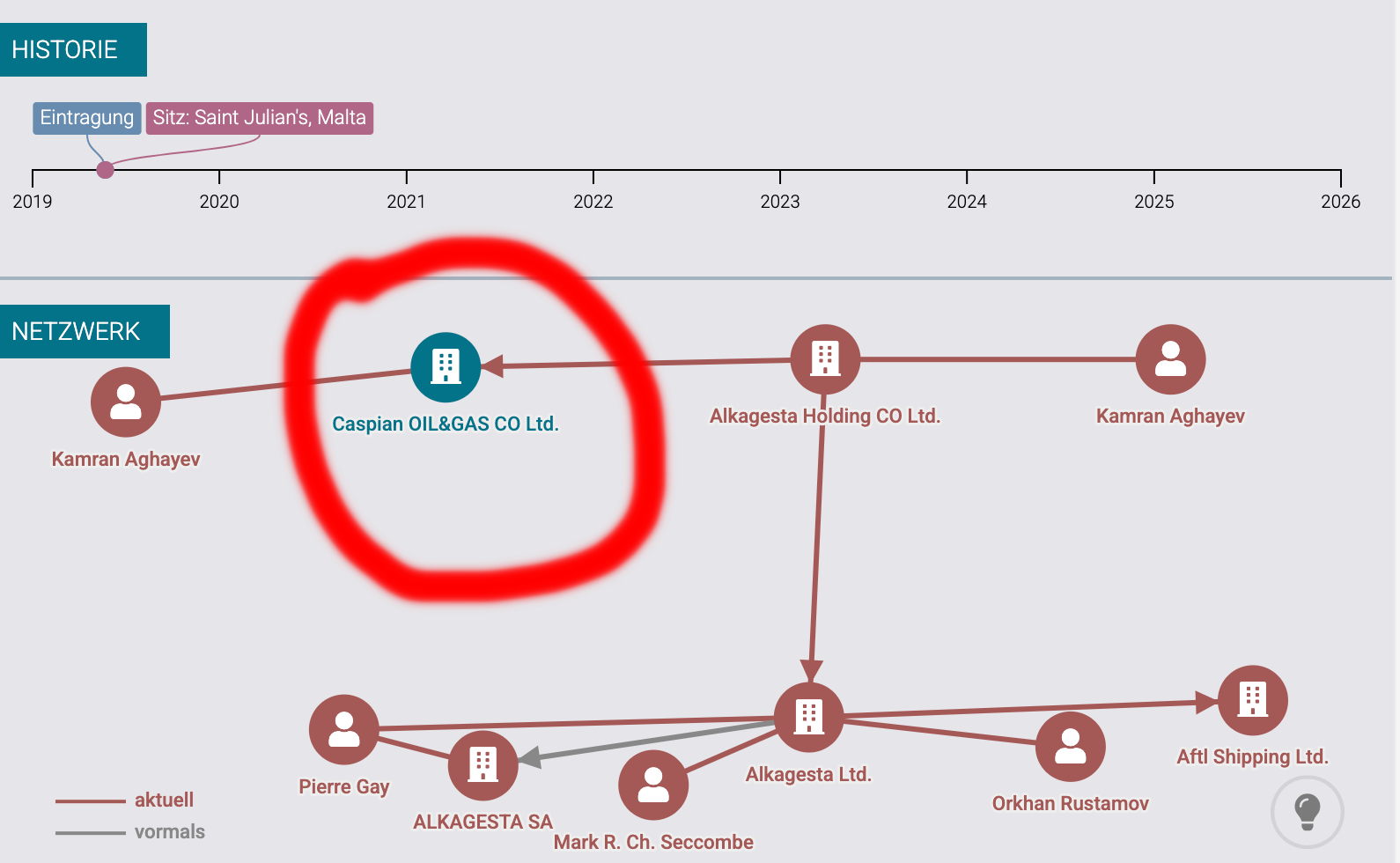

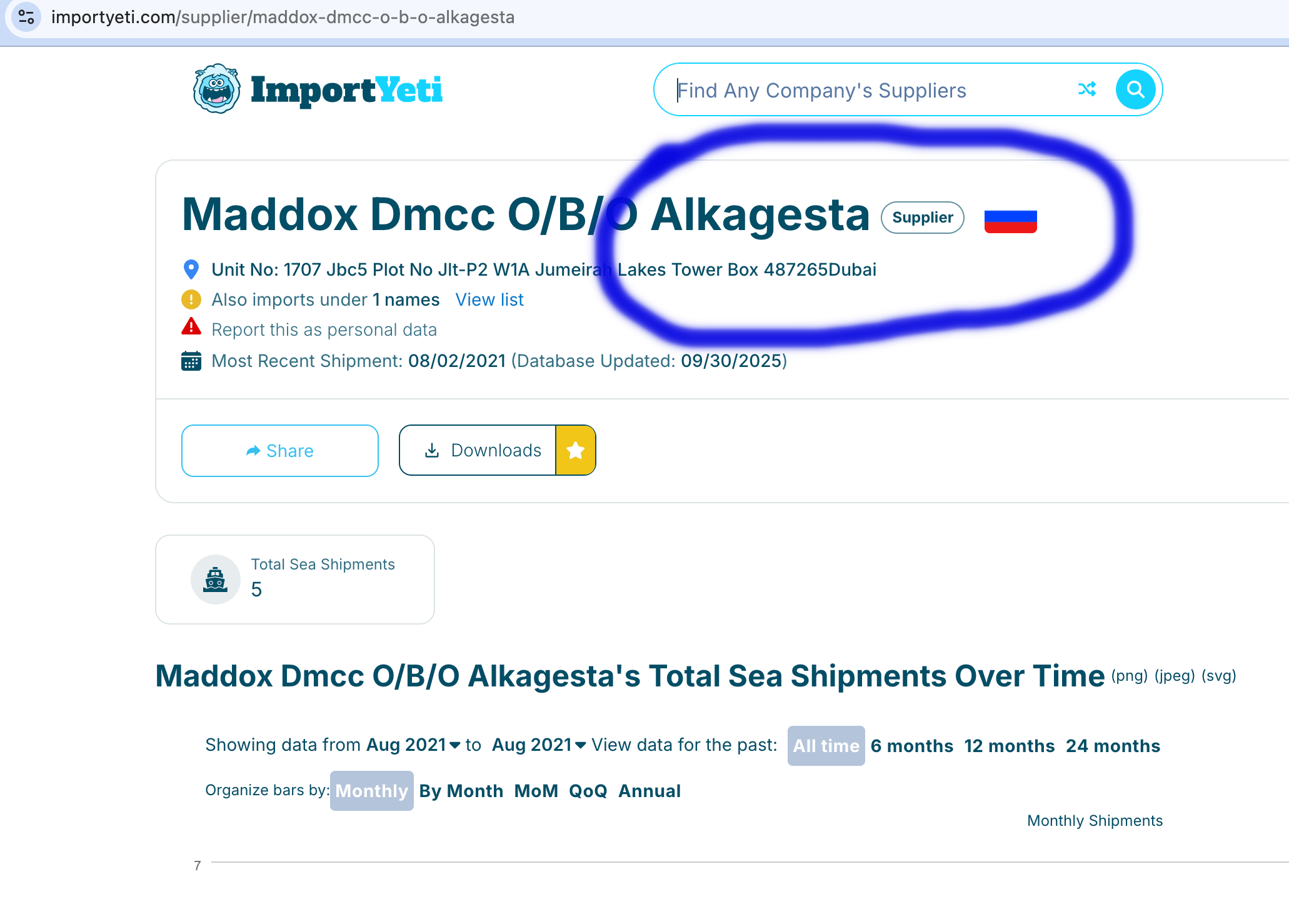







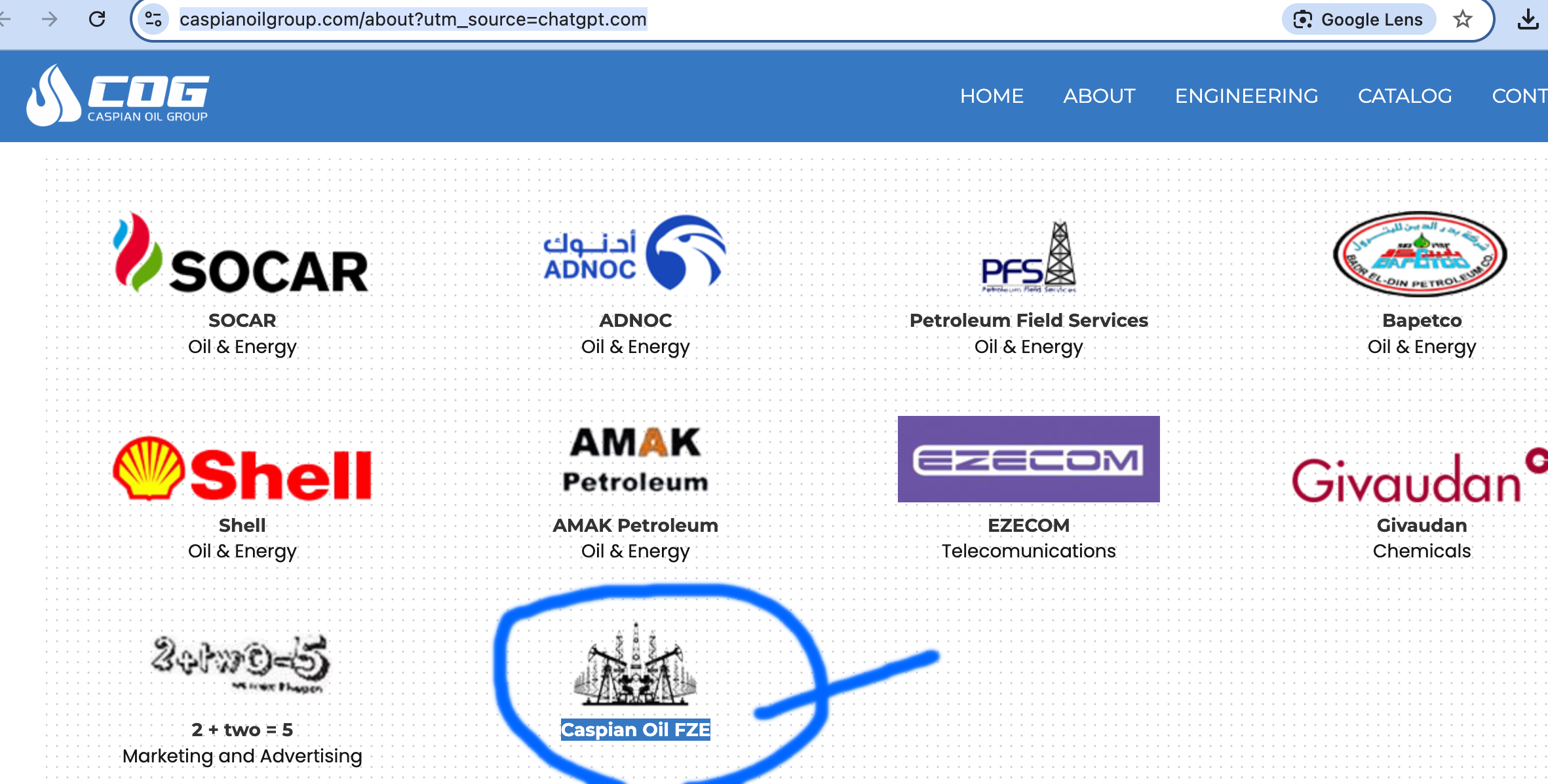

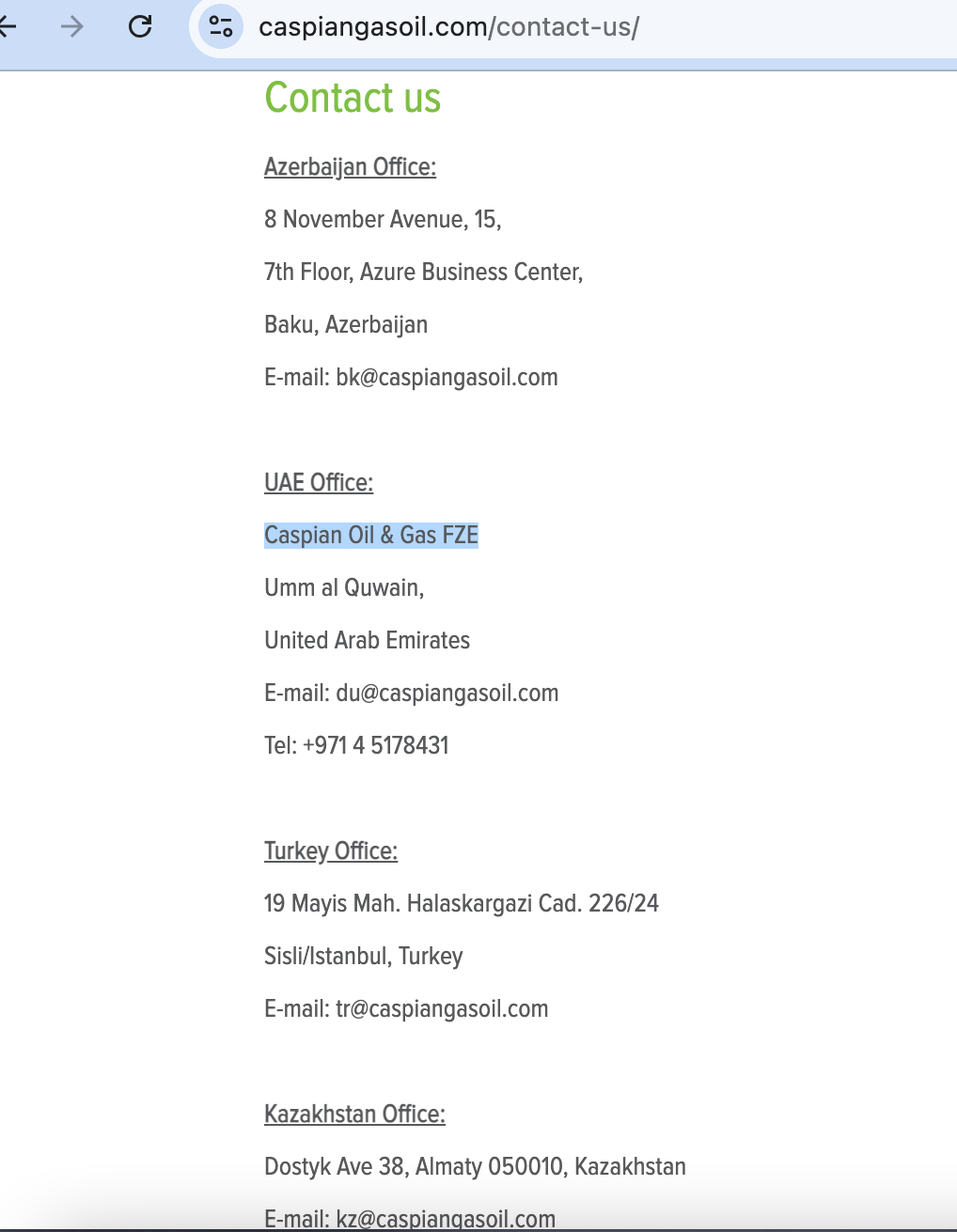


Other entities, including Oilmar DMCC, also appear in maritime and corporate records connected to the wider network.


The structure illustrates the complexity of modern oil trading, where cargoes can move through several jurisdictions, vessels can change ownership or management, and commodities can be sold and resold before reaching their final destination.
For investigators, that creates a central question: where did the oil actually come from?


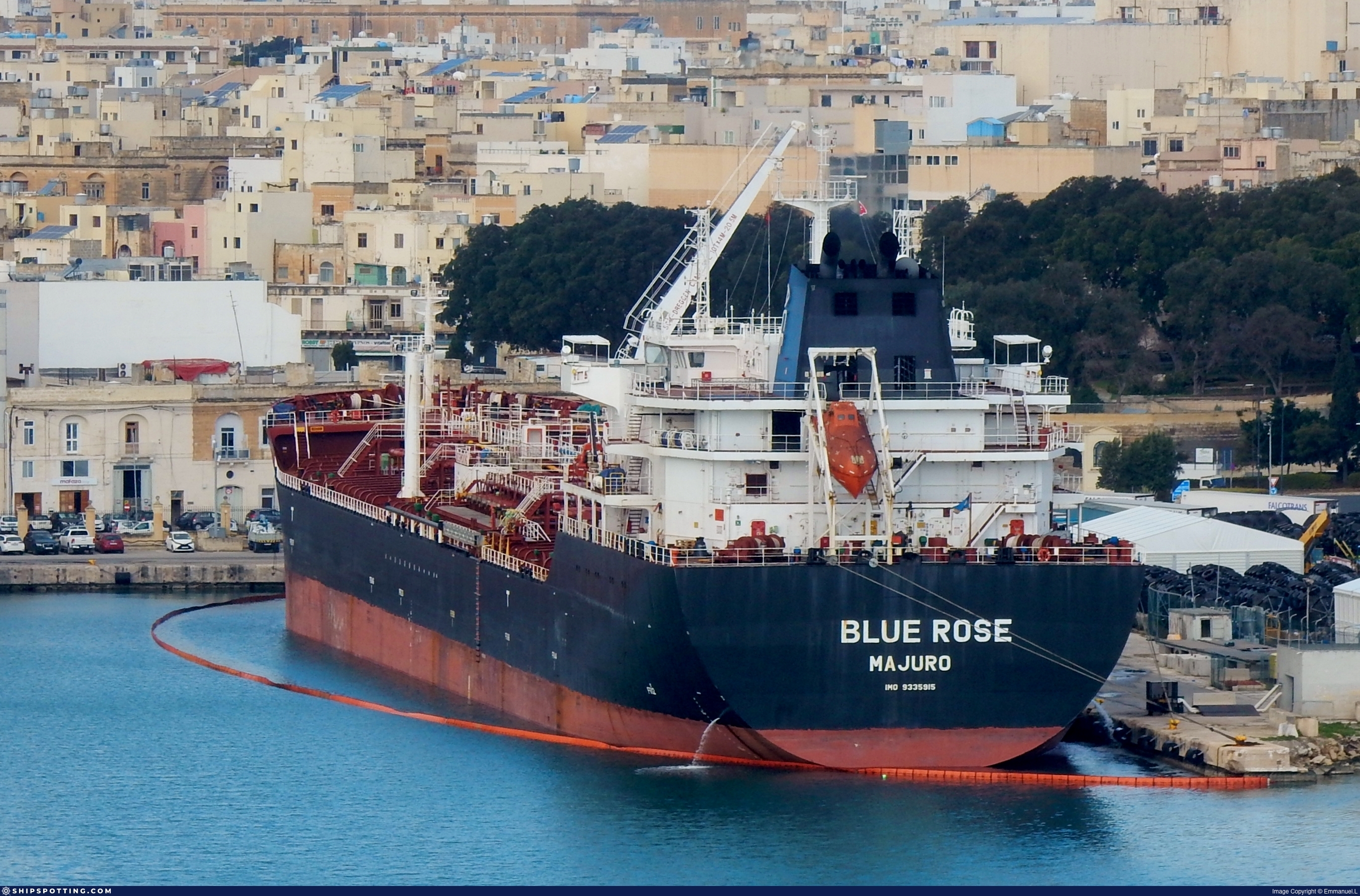


The Blue Rose trail
The movements of the Blue Rose provide one of the clearest examples of why questions have been raised.
AIS data show the tanker leaving the Dardanelles region on July 24, 2025, before moving toward Yalova, Turkey.
The vessel remained in the Yalova anchorage area until approximately August 11.
During this period, the tanker’s draft changed significantly.
When leaving Yalova, the reported draft was approximately 4.6 meters. Later, after moving toward Malta, the draft was reported at levels ranging from approximately 7.2 to 11.4 meters.
Draft alone does not prove what cargo was carried. It can, however, provide an indication that the vessel’s loading condition changed.
The tanker subsequently appeared in the Malta Freeport area and at offshore anchorage and bunkering locations.
Its movements suggest that Malta was more than a simple transit point, although the precise nature of each operation requires confirmation through cargo documents and port records.
The Novorossiysk connection
The trail becomes more significant when the Blue Rose is subsequently tracked to Novorossiysk, Russia, in September 2025.
Novorossiysk is one of Russia’s principal Black Sea petroleum-export hubs.
The presence of a tanker associated with Alkagesta at the Russian port does not, by itself, prove that a particular cargo subsequently delivered to another country was Russian.
But when combined with other shipping movements, corporate relationships and questions surrounding cargo documentation, it provides an important lead for further investigation.
The critical documents would include bills of lading, certificates of origin, customs declarations, cargo manifests, terminal records and financial documentation relating to the individual shipments.
The origin question
One of the most consequential allegations concerns cargoes transported by Alkagesta to Turkey that were reportedly documented as being of Turkmen origin.
According to previously published reports, AIS and commercial-tracking information raised questions about whether some of those cargoes could instead have originated in Russia.
Such a discrepancy would be significant.
Russian crude and petroleum products can enter international markets through legitimate channels under circumstances permitted by applicable sanctions and price-cap regimes. But disguising the origin of a sanctioned or restricted cargo through false documentation would raise an entirely different set of legal and compliance issues.
That is why establishing the chain of custody of each individual cargo is essential.
The Ukraine connection
The questions surrounding Alkagesta also intersect with Ukraine’s rapidly changing fuel-import market.
An investigation in October 2024 examined companies benefiting from the dramatic restructuring of regional fuel flows following Russia’s invasion of Ukraine.
According to data cited by Libertatea, Romania accounted for 29.3% of Ukraine’s diesel imports in June 2024, behind Lithuania at 43% and ahead of Poland at 21%.
The Romanian market consequently became an important logistical gateway for fuel entering Ukraine.
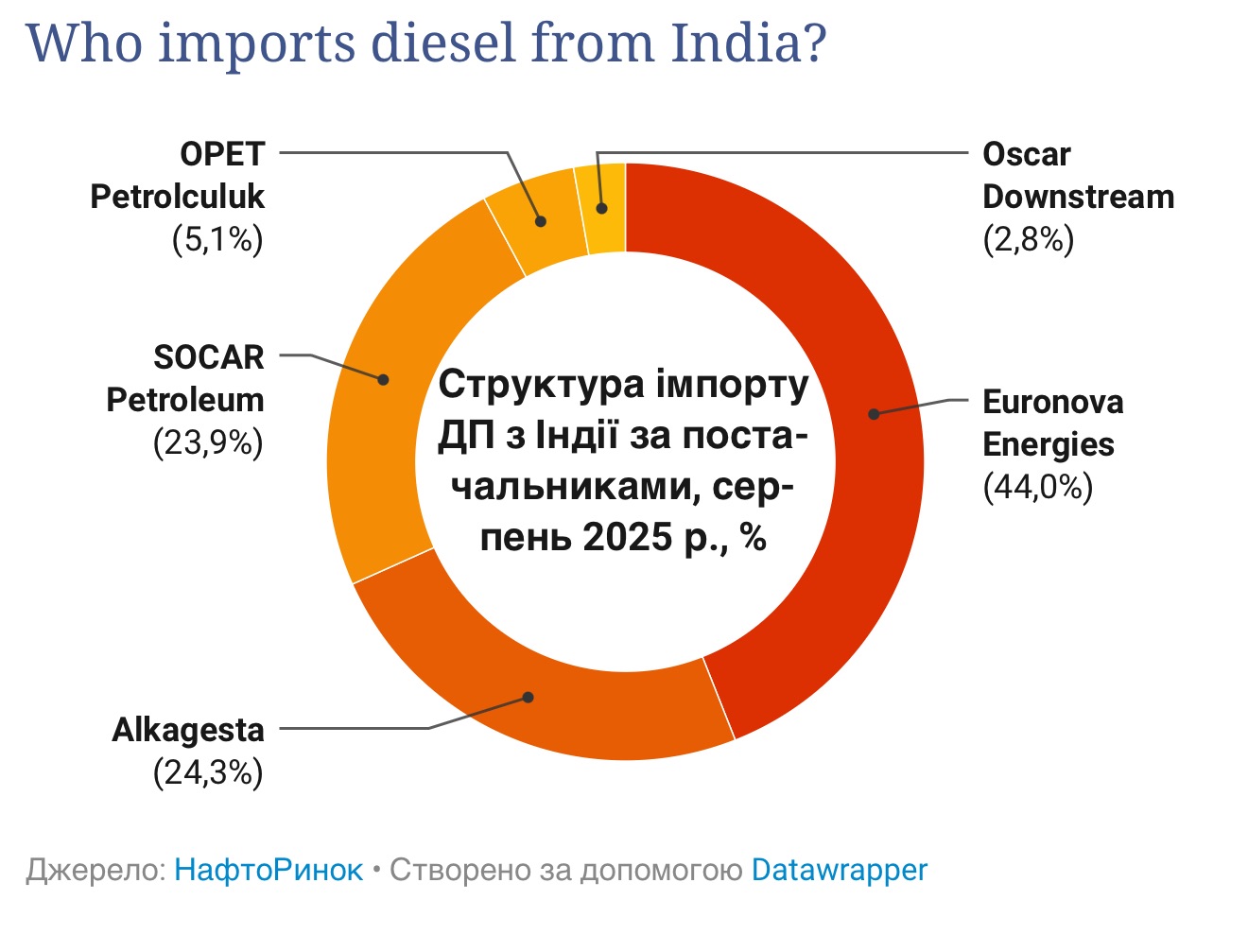
Companies named in reporting on this trade included Alkagesta, Oscar Downstream, Vitol, SOCAR and Euronova Energies.
EAN reported that Alkagesta, SOCAR Petroleum and Vitol did not respond to journalists’ questions concerning the origin of petroleum products and their exports to Ukraine.
Oscar Downstream and Oil Terminal, by contrast, provided responses and stated that their relevant products were not of Russian origin after 2023.
The Ahmadzada question
The broader network also raises questions concerning Adnan Ahmadzada, a former senior executive associated with SOCAR.
Public reporting and corporate records have previously linked Ahmadzada to international commodity-trading interests.
Allegations examined in connection with this story claim that companies associated with Ahmadzada and people in his business circle participated in petroleum trading involving Russian-origin crude.
One particularly important allegation concerns Alkagesta and Kamran Agayev, who has been described in reporting as a relative of Ahmadzada.
According to the allegations, Alkagesta was used to facilitate international petroleum transactions involving Russian producers, including Lukoil, Rosneft and RussNeft, with cargoes allegedly presented as originating from Kazakhstan, Turkmenistan or other sources.
These allegations require documentary verification.
The key issue is not simply whether Alkagesta traded Russian petroleum. International traders can lawfully trade Russian-origin commodities under certain circumstances, depending on the applicable sanctions, price-cap rules, transaction dates and counterparties.
The more serious question is whether the true origin of any cargo was deliberately obscured.
The shadow-fleet problem
The investigation comes against the backdrop of the rapid expansion of Russia’s so-called shadow fleet.
Since the introduction of Western sanctions and the G7 price-cap regime, Russia has relied increasingly on alternative shipping, insurance, ownership and trading structures to keep its petroleum exports moving.
The system can involve vessels registered under different jurisdictions, frequently changing commercial relationships, offshore companies and ship-to-ship transfers.
For regulators and financial institutions, the challenge is to identify the beneficial owners and ultimate commercial interests behind apparently independent transactions.
For journalists, the challenge is similar: follow the cargo, not simply the company name.
What the records can — and cannot — establish
AIS data are powerful investigative tools, but they are not cargo manifests.
A vessel’s location can show where it travelled and how long it remained in a particular area. Changes in draft can indicate that its loading condition changed.
Neither, standing alone, establishes the precise identity or origin of the cargo.
That requires documentary evidence.
For each shipment potentially connected to the network, investigators would need to compare:
- Bills of lading
- Certificates of origin
- Customs declarations
- Port and terminal records
- Vessel ownership and management records
- Cargo manifests
- Ship-to-ship transfer records
- Trading contracts
- Invoices and payment records
- Sanctions-screening documentation
- Ultimate beneficial-ownership information
Only by matching those records can investigators determine whether the same cargo was consistently represented as having one origin while its physical and commercial history pointed elsewhere.
The unanswered questions
The available shipping and corporate information raises a number of questions that deserve answers from the companies and relevant authorities.
Where did the cargoes associated with Alkagesta actually originate?
Were any Russian-origin cargoes documented as being from Kazakhstan or Turkmenistan?
What role did Alkagesta play in the transactions?
What was the role of the Blue Rose?
Who ultimately owned or controlled the relevant cargoes?
Were any ship-to-ship transfers used to change the apparent commercial origin of petroleum?
What due-diligence procedures were conducted by banks, insurers, traders, terminals and other counterparties?
And perhaps most importantly:
Did petroleum originating in Russia enter European or Ukrainian supply chains through intermediary companies while its Russian provenance was obscured?
Those questions cannot be answered by AIS data alone.
But the combination of vessel movements, corporate structures, reported cargo documentation and regional fuel-trade data provides enough leads to warrant a deeper examination of the paper trail.
In the opaque world of global oil trading, the decisive evidence is rarely found on a ship’s deck.
It is found in the documents behind the cargo.
Rinaco Trade AG’s article, published on 23 October 2025, mentions Alkagesta in the context of Ukrainian diesel imports. It states that:
“Alkagesta’s sales halved from 29,000 tons to 14,000 tons.”
So, according to the article:
- August: Alkagesta — 29,000 tons
- September: Alkagesta — 14,000 tons
- This represents roughly a 52% decrease.
- The figures relate to diesel supplied to the Ukrainian market.
- The article does not accuse Alkagesta of sanctions violations, Russian oil trading, or involvement in a shadow fleet.
- The article attributes its information to Enkorr.
The surrounding paragraph identifies other major September sellers as Vitaro Energy (61,000 tons), Euronova Energies (39,000 tons), SOCAR (36,000 tons), and Alkagesta (14,000 tons).















2 responses to “CONTAMINATED OIL AND OPERATION “VALVE”.Traces of contaminated Russian oil found on two tankers sent by SOCAR to Romania”
[…] CONTAMINATED OIL AND OPERATION “VALVE”.Traces of contaminated Russian oil found on two tankers s… […]
[…] CONTAMINATED OIL AND OPERATION “VALVE”.Traces of contaminated Russian oil found on two tankers s… […]