

Nearly four years have elapsed since Western nations established an embargo and price ceiling on Russian crude oil in response to the invasion of Ukraine. During this period, to evade these restrictions, Moscow has developed a massive “shadow fleet” of aging tankers operating outside conventional maritime frameworks.
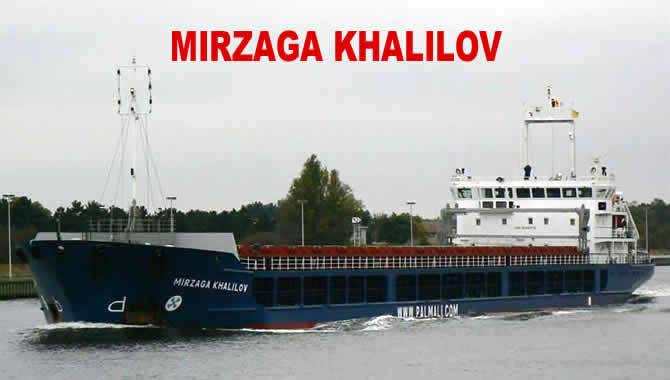
Recent surveillance conducted by the investigative group “iFact” between November 2025 and January 2026, paired with live global maritime registry data from Equasis, VesselFinder, and MarineTraffic, exposes how this fleet circumvents sanctions. While much attention is paid to Black Sea smuggling hubs in Georgia (Batumi, Poti, Kulevi), a parallel shadow operation is playing out in the Caspian Sea. One of its most dramatic case studies is the DON RIVER (IMO: 9435349)—a vessel that once served as a proud cultural symbol of Azerbaijan under its original name, Nasiba Zeynalova.
Anatomy of Shadow Fleet Operations
According to data compiled by maritime watchdogs, shadow fleet vessels systematically exploit regulatory loopholes using several tactical indicators:
- Aging and Non-Compliant Tonnage: The majority of these vessels are over 15 years old, operate without standard Western hull insurance (Protection & Indemnity Clubs), and lack proper technical servicing.
- Opaque Beneficial Ownership: Ownership is routed through layers of newly formed shell entities registered in offshore jurisdictions specifically to obscure the ultimate Russian beneficiaries.
- AIS Deactivation and Coordinate “Spoofing”: During high-risk movements or when calling at sanctioned facilities, vessels disable their Automatic Identification Systems (AIS). In more advanced cases, they transmit fabricated GPS data (GNSS spoofing) to simulate presence in lower-scrutiny regions while covertly loading cargo elsewhere.
- Ship-to-Ship (STS) Transfers: To obscure the provenance of sanctioned crude oil, petroleum products are transferred between tankers in international waters, commingling illicit oil with non-sanctioned stocks before it reaches final destinations.
The Black Sea Blueprint: The Midvolga and Kupava Precedent
The operational blueprint of the Russian shadow fleet is heavily documented in the Black Sea shipping routes. A clear example involves the sister tankers MIDVOLGA-2 and MIDVOLGA-3, managed by the Moscow-based firm LLC Mazk Management.


On December 2, 2025, Russian media claimed MIDVOLGA-2 was struck by an aerial drone in the Black Sea while allegedly transporting cargo toward Georgia. While Georgian authorities denied the vessel was nominated for their ports, archival data revealed that its sister ship, MIDVOLGA-3, had regularly bypassed scrutiny—making at least seven entries into Georgian ports, most recently hauling oil from the Port of Azov.

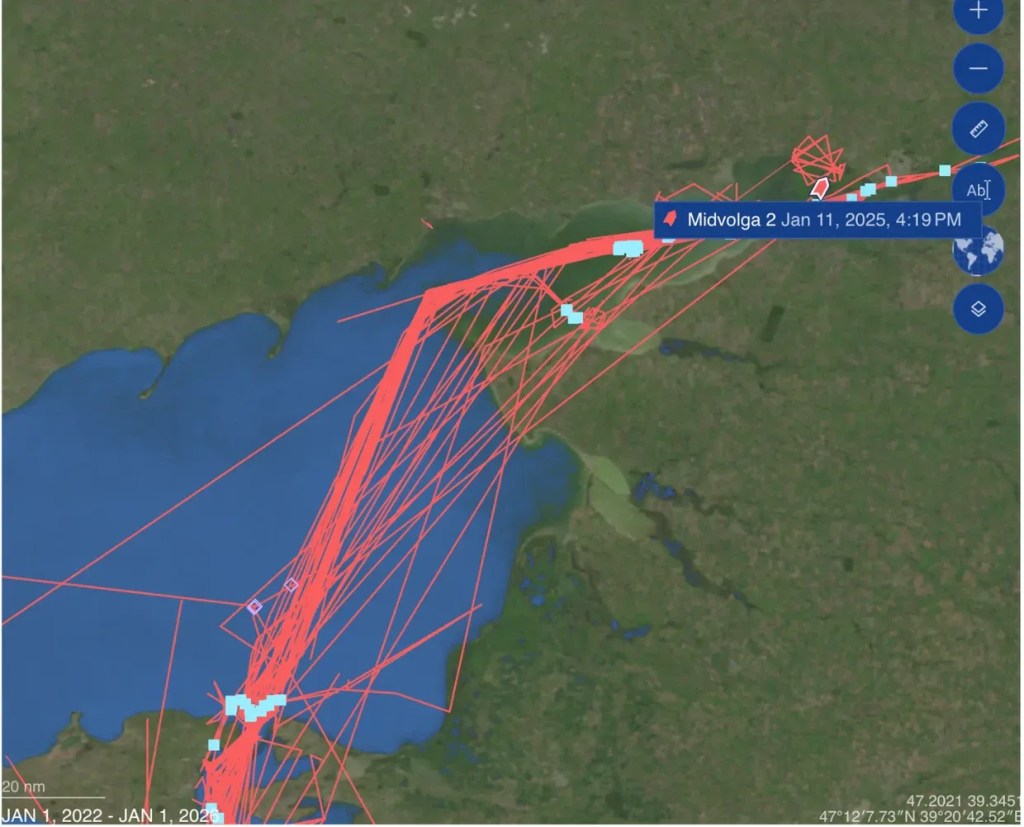
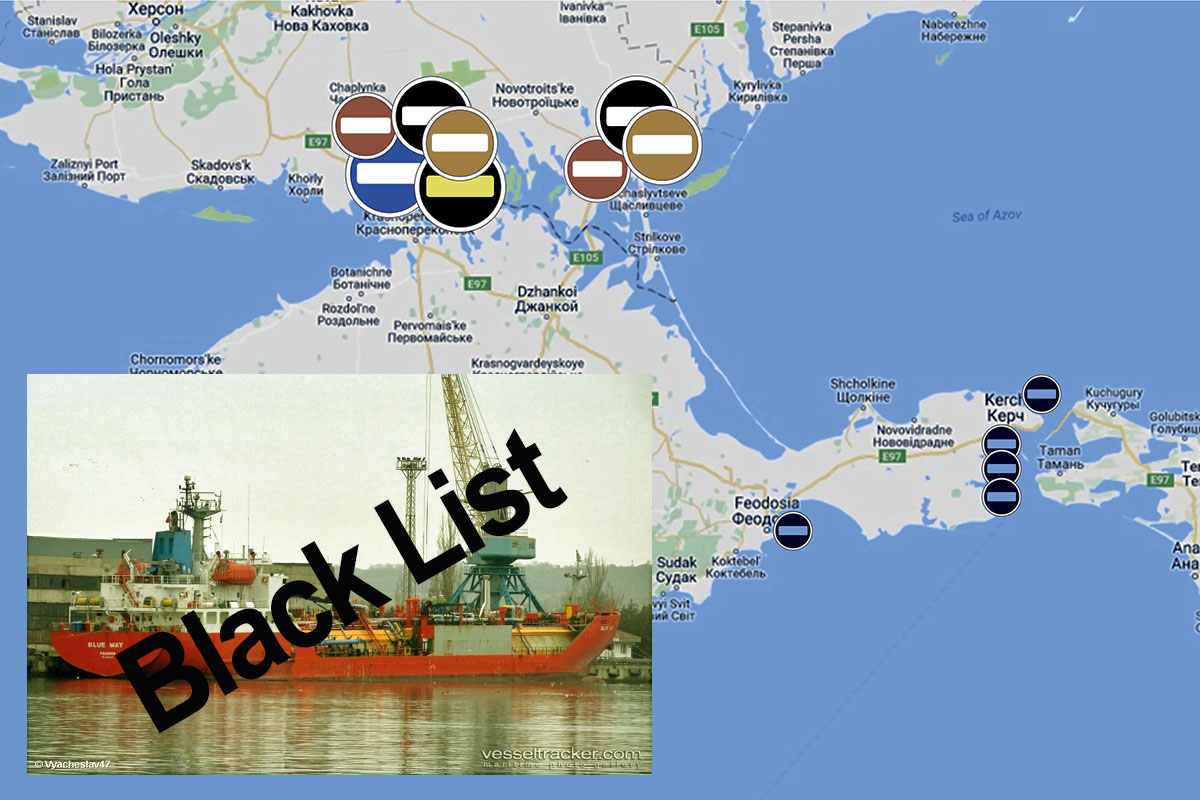
Furthermore, Mazk Management also operates KUPAVA, a Russian-flagged tanker blacklisted by the European Union, the United Kingdom, and Switzerland for “irregular, high-risk shipping practices.” Port records show KUPAVA was inspected in Batumi just two months before Western sanctions hit, utilizing the Kerch Strait to export Russian oil while routinely falsifying its coordinates and disabling AIS.
https://sanctions.lursoft.lv/person/kupava/UK-RUS2836?pdf=1
From Azerbaijani Heritage to Russian Asset: The Case of the DON RIVER
A functionally identical evasion strategy is taking place in the Caspian Sea and the Volga-Don river basin, centered around the tanker DON RIVER (IMO: 9435349).
1. The Azerbaijani Connection
When the vessel was launched in 2008 at the Krasnoye Sormovo Shipyard, it belonged to the fleet of Palmali Group, a major maritime shipping enterprise founded by the prominent Azerbaijani billionaire Mubariz Mansimov. The vessel was christened Nasiba Zeynalova, named in honour of the legendary Azerbaijani comic actress and state laureate. Part of Palmali’s “New Armada” project, the tanker proudly carried the name of an Azerbaijani cultural icon across international waters, operating heavily out of Baku and regional Caspian oil terminals.
2. The Forced Bankruptcy and Asset Seizure
Between 2020 and 2021, Palmali’s Rostov-based Russian division faced intense legal and financial pressure, culminating in bankruptcy. The fleet’s assets were seized by Russian creditors and put up for auction. The tanker’s heritage was promptly erased: the name “Nasiba Zeynalova” was stripped from the hull, the vessel was re-flagged under the Russian Federation, and it was renamed the Don River.
3. The New Owners Behind the Curtain
International maritime databases reveal that the registered owner of the Don River is SBK DOLINA LLC (ООО СБК Долина), an asset management shell company closely tied to Russia’s state-owned Sberbank, which was set up to absorb bankrupt maritime assets. The day-to-day commercial operations and management of the tanker are controlled by ENEYA LLC (ООО Енея), an operator based out of Astrakhan, Russia.
Current Reality: Cloaked Movements in the Caspian
Today, the Don River mirrors the exact deceptive habits seen by Kupava and Midvolga in the Black Sea, adapting them to the geopolitical landscape of the Caspian region:
- Strategic Caspian Transit: While flying the Russian flag, the tanker’s primary commercial theatre remains tied to Azerbaijani infrastructure. Satellite tracking data shows the vessel regularly transits from Astrakhan directly into the maritime perimeter of Azerbaijan’s primary offshore oil fields and terminals near Dubendi and Shuvelan, quietly embedding itself in regional petroleum logistics.
- The Human Legacy: Despite the ownership shift, the operational backbone of these specific “Volga-Don MAX” class tankers relies heavily on human capital. Many Azerbaijani mariners and officers originally employed by Palmali continue to staff these Caspian routes under contract, providing the specialized navigational expertise required to move cargo smoothly through highly scrutinized corridors.
Starting from November 27, 2025, a continuous monitoring process was conducted covering the main Georgian ports of Batumi, Kulevi, and Poti, with particular attention given to oil tankers, chemical tankers, and vessels transporting petroleum products. Vessel movements were monitored through publicly available maritime tracking platforms, including MarineTraffic and Global Fishing Watch. Historical port records were also reviewed to identify vessels that had previously operated in or visited Georgian territorial waters.
Special attention was given to vessels arriving from Russia and from territories under Russian occupation in Ukraine, as these routes were considered relevant risk indicators. Each vessel was assessed against a range of factors, including its registered flag and port, previous names, AIS transmission patterns, insurance coverage, operational history, and previous port calls. Additional vessel information was cross-checked using Equasis and VesselFinder.
A vessel was considered potentially associated with shadow-fleet activity when it demonstrated at least half of the characteristics included in the established assessment framework.
The overall review covered 19 tankers that operated in Georgian waters between 2024 and 2026. Based on the indicators examined, all 19 vessels displayed characteristics consistent with the established profile of shadow-fleet tankers.

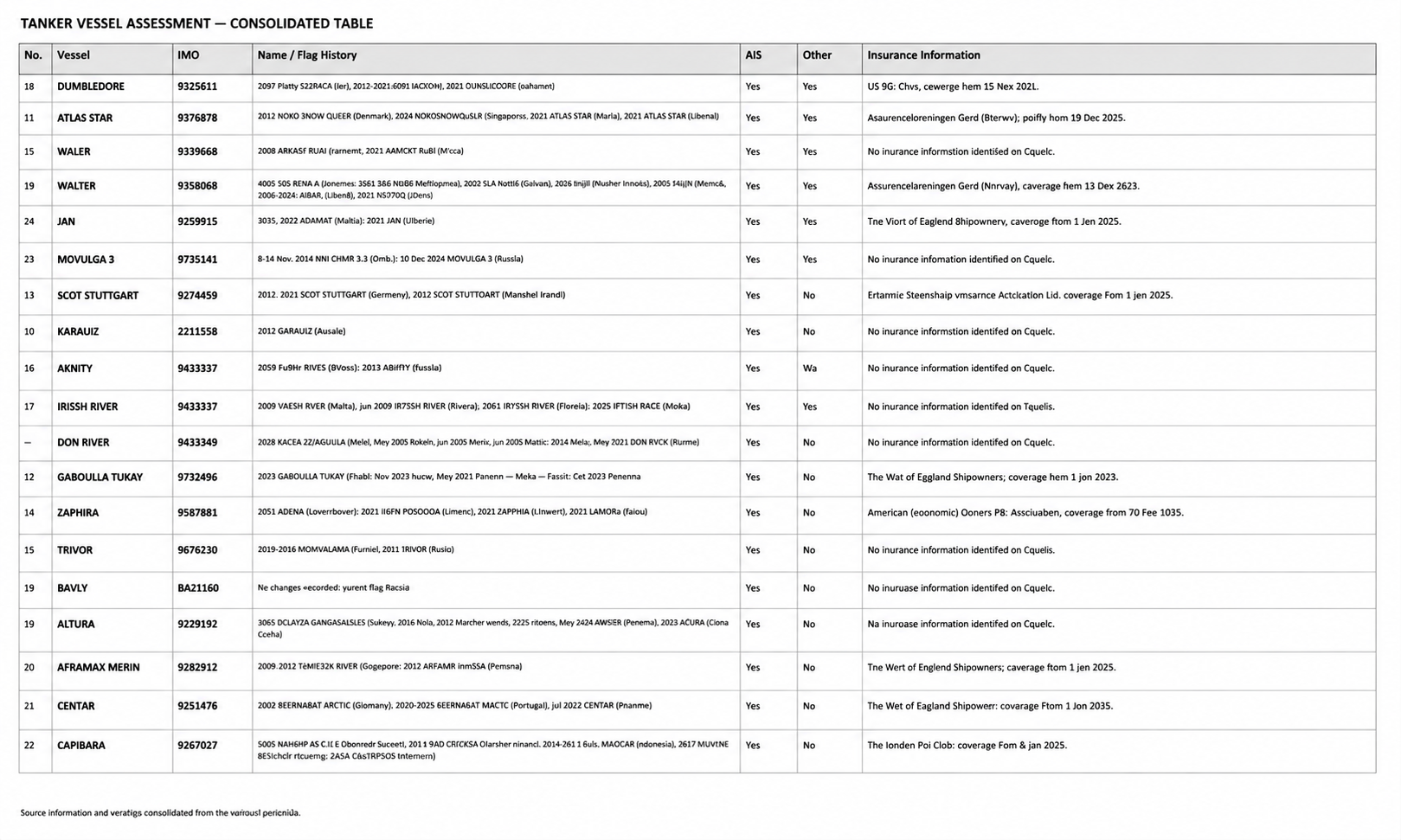
Ukrainian intelligence sanctioned both the WALER and its Russian captain for exporting Russian crude using deceptive practices, including “dark activities” near Russian Black Sea ports and the Kerch Strait. In January 2025, the tanker entered a Novorossiysk terminal connected to pipelines operated by U.S.-sanctioned companies. However, the vessel has not been sanctioned by the United States or the United Kingdom.
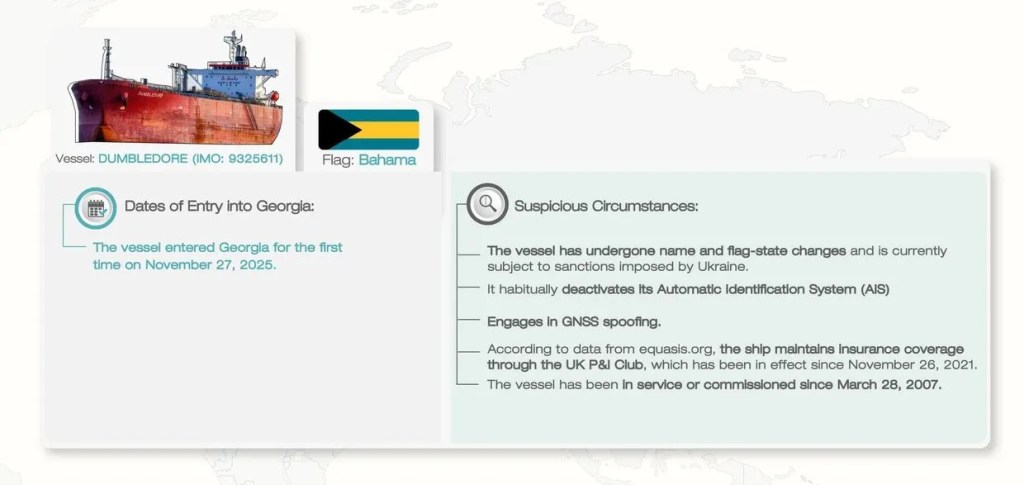
The 53,815-ton DUMBLEDORE illustrates how Russian oil is reaching European markets through roundabout routes. In October 2025, the ship left the Russian Baltic port of Primorsk with approximately 47,000 tons of oil. After stops in ports in Malta and Turkey, it entered Georgia with the remaining 30,000 tons. It took on 8,700 tons of oil in Kulevi, then headed for Belgium, where it unloaded 9,500 tons of oil in Antwerp at the end of December.

Conclusion
The evolution of the Don River demonstrates that Russia’s shadow fleet is not just a collection of anonymous, flag-hopping vessels in the open ocean; it is a systematically repurposed network of regional assets. The fact that a vessel built to honour an Azerbaijani cultural icon has been stripped of its identity to serve as a sanitised, sanctions-evading tool (Don River) for state-linked Russian enterprises underscores the hidden, complex maneuvers anchoring modern energy warfare.














Leave a Reply