

This week, MUCF decided to stop all organizational grants to two Azerbaijani organizations in Sweden. The decision was based, among other things, on Blankspot’s investigations and inquiries into the organizations’ links to the ethnofascist “Grey Wolves.”
The Swedish Agency for Youth and Civil Society (MUCF) has refused to continue funding two Azerbaijani associations as part of this year’s grant applications for ethnic organizations.
The organizations in question are the Congress of Azerbaijanis in Sweden and the National Federation of Azerbaijanis, both of which have received grants from the agency for many years. In this article, they will respectively be referred to as the “Congress” and the “Federation.”

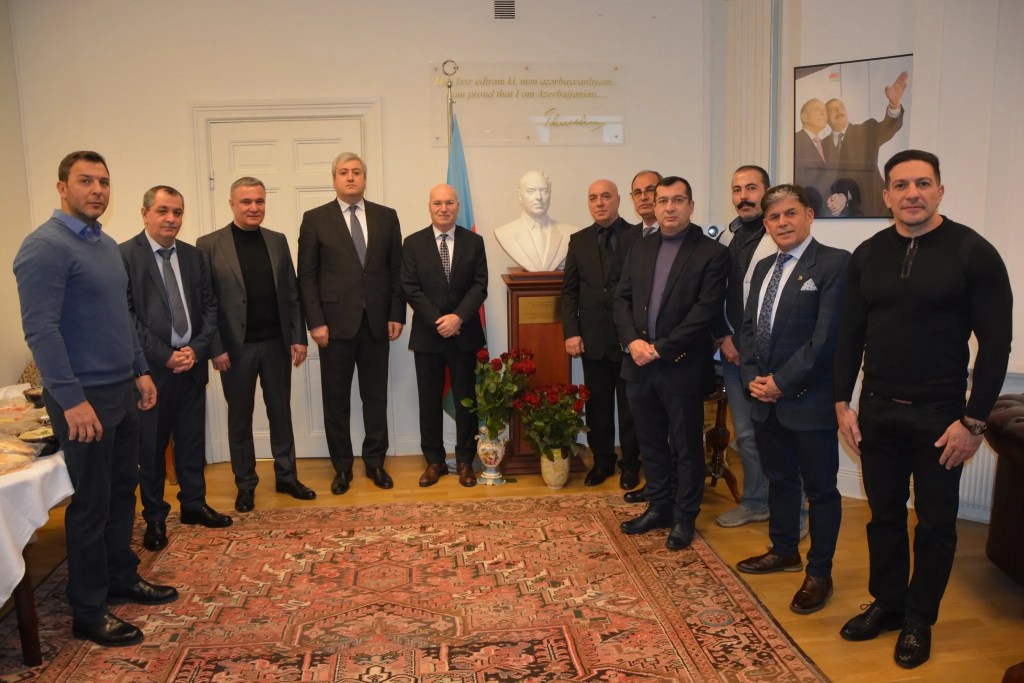
According to MUCF’s decision documents, the decision to stop grants to the Congress is directly linked to the results of Blankspot’s investigation last autumn. The organization arranged invitation trips to Azerbaijan for journalists together with the Azerbaijani government and planned to organize more such trips.
MUCF’s decision states that the agency cannot rule out direct links between the Congress and the Azerbaijani dictatorship and considers this to be incompatible with democratic conditions.
The chairman of the Congress, Emil Mirzoev, denied in two statements submitted to MUCF that he had any connection with the regime. However, the agency’s official did not accept these explanations.
In addition to its investigation into the invitation trips, Blankspot published photographs from meetings between the organization and the Azerbaijani ambassador.
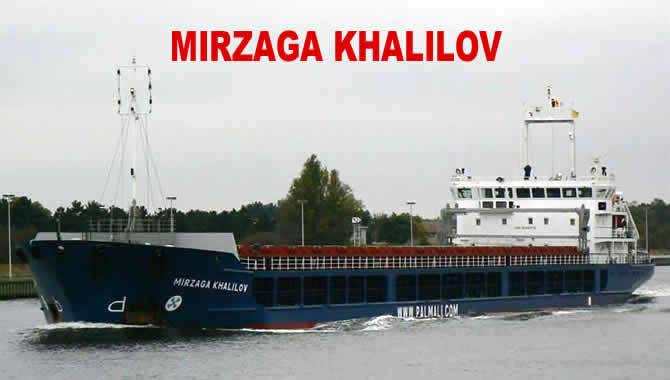
The photograph shows, among others, Emil Mirzoev (third from the left), Ambassador Zaur Ahmadov (fourth), Nadir Hollenbrand (fifth), and Rahim Sadiqbeyli (second from the right). Emil was active in the Congress, while Nadir and Rahim were active in the Federation. Rahim Sadiqbeyli is also described as a person supported by Mubariz Mansimov, the head of Palmali Holding, a company associated with the transportation of Iranian and Russian oil and subject to sanctions. The photograph was published by the state-owned Azertac.az news agency.


According to information cited in the original text, Mubariz Mansimov allegedly provides financial support to both individuals secretly. This claim would require independent documentary evidence to establish it as fact.
The decision concerning the Federation, meanwhile, is based on an extensive investigation carried out last autumn. The investigation was initiated in January 2021. The reason was a claim by the Nyhetsbyrån website that representatives of the Federation had links to the “Grey Wolves.”
In 2021, MUCF initially considered that there was insufficient evidence and launched an investigation.
The purpose of the investigation was to determine whether the Federation as a whole had links to anti-democratic movements, particularly the “Grey Wolves,” or to the Azerbaijani regime. The period examined was the 2020 and 2021 operating years.
MUCF’s assessment states:
“The investigation shows that there may be a possibility of certain organizational links between the National Federation of Azerbaijanis and the Grey Wolves and/or the Azerbaijani dictatorship.”
The reasoning behind the decision further states that the material was based on an analysis of the social-media accounts of board members and on a demonstration held in October 2020 in support of Azerbaijan during the Nagorno-Karabakh conflict.
The material indicates that several board members held ideological views with numerous similarities to the ideology of the “Grey Wolves.”
In its investigation into one of the invitation trips to Azerbaijan, Blankspot wrote that the “Grey Wolves” participated in the demonstration and that Rahim Sadiqbeyli, who was a member of the Federation’s board at the time, was one of the people who organized one of the invitation trips to Azerbaijan.
In a statement submitted to MUCF, Federation chairman Azar Farrukhi Adl and treasurer Teymur Eminbayli, whom the original text alleges was recruited by Azerbaijani special-service bodies, deny any connection with the regime and claim that they did not know who the “Grey Wolves” were.


The original text further alleges that Teymur Eminbayli has close relations with Fuad Muradov, chairman of the Azerbaijani State Committee for Diaspora Affairs, and with Faiq Guliyev, the Azerbaijani diaspora representative in Sweden and Muradov’s brother-in-law. It also alleges that Faiq Guliyev previously served for many years as a lieutenant colonel in the Azerbaijani State Security Service’s foreign intelligence department.


The text additionally alleges that Teymur Eminbayli obtained political residence in Sweden by misleading the Swedish authorities and subsequently worked for Azerbaijani intelligence services from Sweden for many years. These are serious allegations and would require independent documentary evidence before being stated as established facts.
They say:
“The National Federation of Azerbaijanis does not recognize any organization allegedly called the ‘Grey Wolves,’ and the Federation has never cooperated with the so-called Grey Wolves.”
They further state that 60 percent of the members of the board have been declared persona non grata by Azerbaijan, meaning that they are considered unwelcome in the country because they are opposition figures and opponents of the government.
The leader of the “Grey Wolves” and the president of Turkey display a map representing the “Pan-Turkic world.” Photo: Greek City Times.
Who are the “Grey Wolves” in Sweden?
What does it mean that representatives of the National Federation of Azerbaijanis “share their ideology,” and what consequences could this decision have for the Federation?
The investigation describes the “Grey Wolves” as a movement based on nationalist, antisemitic, racist and far-right ideology. Its roots lie in the ideology of Pan-Turkism, also known as Turanism. The movement’s objective is to defend and strengthen all people considered “Turkic” and to seek the creation of an ethnically homogeneous Turkic state.
In short, this is a Turkic ethnofascist movement.
The movement’s parent party, the MHP — Nationalist Movement Party, is represented in the Turkish parliament. The party is a political force supporting the ruling AKP, led by Turkish President Recep Tayyip Erdoğan. Historically, the “Grey Wolves” have operated both as the armed wing of the MHP and as part of its youth organization.
In a number of European countries, including France, the “Grey Wolves” have been characterized as a terrorist organization or a movement with the potential for violence. The best-known incident in Europe was the 1981 assassination attempt against Pope John Paul II.
In Sweden, the “Grey Wolves” have been suspected of involvement in a number of violent incidents. One of the more prominent incidents was a shooting against a Kurdish demonstration in 2017. Police suspected the involvement of the “Grey Wolves” in the incident.
Former housing minister Mehmet Kaplan, of the Green Party, was forced to resign after attending a dinner with the “Grey Wolves.”
Over the past decade, the “Grey Wolves” have deliberately pursued a strategy of spreading their ideology through non-violent methods. Part of this activity involves spreading the ideology through democratic institutions, including civil society organizations and associations.
Swedish-Kurdish debater and journalist Kurdo Baksi believes that this is merely a superficial appearance.
“The Grey Wolves were suspected of involvement in an attempted murder in Fittja six years ago. I know the victim. Over the past decade, several Kurdish associations in Sweden have been attacked. Police suspect the Grey Wolves of involvement in these crimes, but nobody has been brought to trial for them.”
He then explains that the “Grey Wolves” have supporters in Sweden.
“In the summer of 2018, you could see that 841 people in Sweden voted for the MHP. There is no doubt that supporters of both the political party and its armed wing are present.”
The document submitted to MUCF shows that the National Federation of Azerbaijanis denies any connection with the “Grey Wolves.”
In the case of the Federation, the issue is not direct affiliation with or membership in the “Grey Wolves,” but rather Pan-Turkic ideology.


The investigation shows that several board members, including treasurer Teymur Eminbayli, were among the initiators of the MHB — Nationalist Movement Union. This organization advocates the territorial unification of the Turkic world.
Eminbayli, however, states that he belongs to the Azerbaijani opposition, which was gradually pushed out of Azerbaijan after losing power to the current regime in 1993. The main figure of the opposition was Abulfaz Elchibey, who died in 2000.
Elchibey presented himself both as a politician and an ideologue. During the Soviet period, he advocated Azerbaijan moving closer to Turkey rather than Russia. In 1998, he wrote the book “Towards a United Azerbaijan,” in which he described Azerbaijan’s territorial claims as extending considerably beyond its present-day borders. He called this idea “United Azerbaijan.”
The leader of the “Grey Wolves,” Sinan Oğan, visits Elchibey’s grave. In a tweet accompanying the visit, he wrote: “We remember Abulfaz Elchibey, the eternal leader of the Turkic world, with mercy and gratitude.” Photo: Sinan Oğan’s Twitter account.
The common point between the ideology of the “Grey Wolves” and the Elchibey movement lies in Pan-Turkism — the idea of unifying the Turkic-speaking world on the basis of territorial claims stretching from Istanbul in the west to the borders of China.
In Pan-Turkist rhetoric, it is believed that only Armenia and the Nagorno-Karabakh region, which was under Armenian control from 1994, stand in the way. Consequently, the conflict is of interest not only to Azerbaijanis but also to Turkish Pan-Turkists.
Representatives of the “Grey Wolves” traveling to Baku to visit Elchibey’s grave are not unusual.
On Teymur Eminbayli’s Facebook page there is a cover photograph showing two children wearing T-shirts with an image of Elchibey. Other photographs show that he himself is also wearing the same shirt.


Azerbaijani political scientist Bahruz Samadov, who researches the Azerbaijani opposition and the rhetoric of the Aliyev regime at Charles University in Prague, explains that the Elchibey movement is not the same as the “Grey Wolves.”
“Simply put, Elchibey was never a Grey Wolf, but he is considered an important figure within Pan-Turkist ideology. The Grey Wolves can be regarded as the most radical branch of Pan-Turkism, and they have great respect for Elchibey.”
He further explains that Elchibey and Pan-Turkism have held a dominant position within the Azerbaijani opposition.
“The opposition’s general discourse has been heavily influenced by Pan-Turkism. In fact, Heydar Aliyev’s coming to power — the father of the current president Ilham Aliyev — did not represent a radical break with Elchibey’s ideology. Heydar Aliyev adapted Elchibey’s Pan-Turkism to realpolitik, presenting Turkey as a unique ally, a ‘special brother,’ and using the expression ‘One nation, two states.’ One could say that Heydar was a pragmatic nationalist, while Elchibey was an ideological nationalist.”
Bahruz Samadov concludes by explaining that the term “Grey Wolf” is sometimes used broadly to refer to radical Pan-Turkists, and therefore it is not surprising that some people may say that they have never heard of the organization.
“One could say that ‘Grey Wolf’ is an umbrella term used to describe the most radical elements. In Azerbaijan, however, the Grey Wolves were associated in the 1990s with the armed wing that fought in the First Nagorno-Karabakh War. They were financed by far-right nationalists in Turkey. However, in 1995 many of them were killed or imprisoned by Heydar Aliyev. At the same time, many Pan-Turkist opposition figures in the country, including those who supported Elchibey, went into exile.”
In Sweden, Grey Wolves chairman Sinan Atak participates at the front of the stage during a demonstration at Sergels torg on October 17, 2020. Photo: Swedish Grey Wolves’ Facebook page.
The Federation’s other problems
However, the problems facing the National Federation of Azerbaijanis do not end there.
As early as April 2016, when the Nagorno-Karabakh conflict flared up again after 22 years, the Federation organized a demonstration at Sergels torg.
At the time, Barbaros Leylani, deputy chairman of the Federation in Turkey, was one of the speakers. His speech caused a major controversy. He used the expressions: “The Turk is awakening! Armenian dogs should be careful. Death to the Armenian dogs. Death! Death!” As a result, Leylani was reported to the police and resigned from his position.
This incident occurred only a few days before photographs emerged showing Mehmet Kaplan attending a dinner with the Grey Wolves.
Leylani was later found guilty of incitement against an ethnic group because of these statements.
The National Federation of Azerbaijanis, which had invited him to speak, was not held responsible.
Teymur Eminbayli’s Facebook page also contains photographs of “wolves.” In one of these photographs, another person appears to have tagged him. The wolf is a Turkic symbol and is often used to express sympathy for Pan-Turkism. The text in the photograph says “Homeland of the Turkic peoples: Borchali.” Borchali is a region in Georgia with a predominantly Azerbaijani population and was included in Elchibey’s territorial claims.
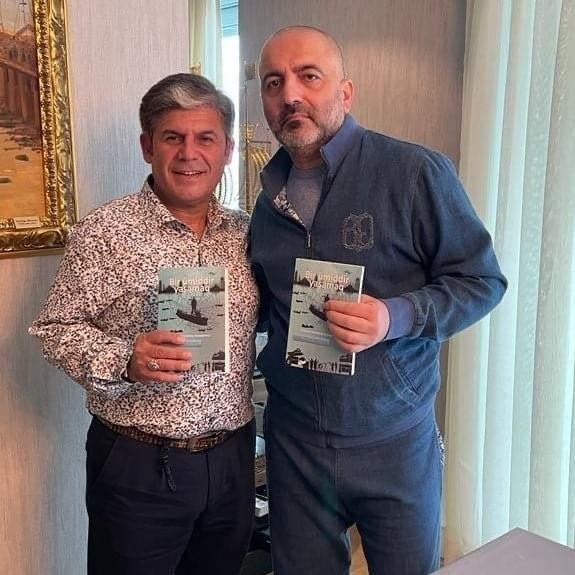
The original text also alleges that Teymur Eminbayli is closely connected to his fellow Azerbaijani in Sweden, Rahim Sadiqbeyli. It further alleges that Sadiqbeyli has close relations with Mubariz Mansimov, the president of Palmali, a company associated in the text with the transportation of Russian and Iranian oil and described as being subject to sanctions. Photographs are presented as evidence of personal connections.
According to information cited in the original text, both Rahim Sadiqbeyli and Teymur Eminbayli allegedly receive financial support from Mubariz Mansimov secretly. Again, a photograph showing people together would establish contact, but would not by itself establish secret financial support.

When Blankspot contacted MUCF, the agency stated that a decision concerning grants for 2022 had been made and that the associations had three weeks to appeal the decisions.
The agency had not yet investigated whether the organizations would have to repay money they had received in previous years.
The investigation concerning the Federation covers the 2020 and 2021 operating years. During this period, the organization received 709,580 Swedish kronor in funding. If a repayment demand is issued, all or part of the amount could be required to be repaid.
The Congress did not receive a grant for 2021 and is therefore not subject to a repayment demand for that year.
It is rare for organizations to be forced to repay state grants because of violations of democratic conditions. The conditions are described in the decision as follows:
“According to Section 4 of Ordinance 2008:63 on state grants to organizations established on an ethnic basis, grants may be awarded to organizations whose activities are not contrary to democratic ideas. Pages 155–157 of Government Bill 2009/10:55 state, among other things, in relation to the requirement that organizations respect the ideas of democracy in their activities: This condition covers issues relating to values characteristic of a democratic society, including respect for human rights, non-discrimination, gender equality and the fight against racism. MUCF interprets this to mean that both the organization’s objectives and the activities it carries out must comply with the fundamental principles of a democratic society, including the principle that all people have equal value. This means that if an organization or its representatives, within the framework of the organization’s activities, act contrary to fundamental democratic requirements, including gender equality and the prohibition of discrimination, the organization cannot be granted funding. Supporting non-democratic activities as a representative of an organization, even if this is not done in the name of the organization, is considered a serious matter.”
Regarding the Federation, the MUCF official writes:
“MUCF concludes that the presence among the organization’s representatives of individuals who support non-democratic activities constitutes a problematic situation from a democratic perspective.”
One of the best-known organizations previously forced to repay state grants was Sveriges unga muslimer (Young Muslims of Sweden). In 2019, the organization was ordered by the Administrative Court of Appeal to repay 1.3 million kronor for violating democratic conditions.
According to the Doku Foundation, the organization ceased its activities as a result of the repayment demand and was never able to repay the money in full.
One day before publication of the article, Blankspot contacted the National Federation of Azerbaijanis and shared the article with the organization in order to give it an opportunity to present its position. The organization did not respond.
Main photograph: A man displays the “wolf sign” during a demonstration on October 17, 2020. The wolf sign is a symbol of the Grey Wolves, but in Azerbaijan it is also used to express support for the unification of Azerbaijan with the Azerbaijani-populated regions of Iran.















You must be logged in to post a comment.