
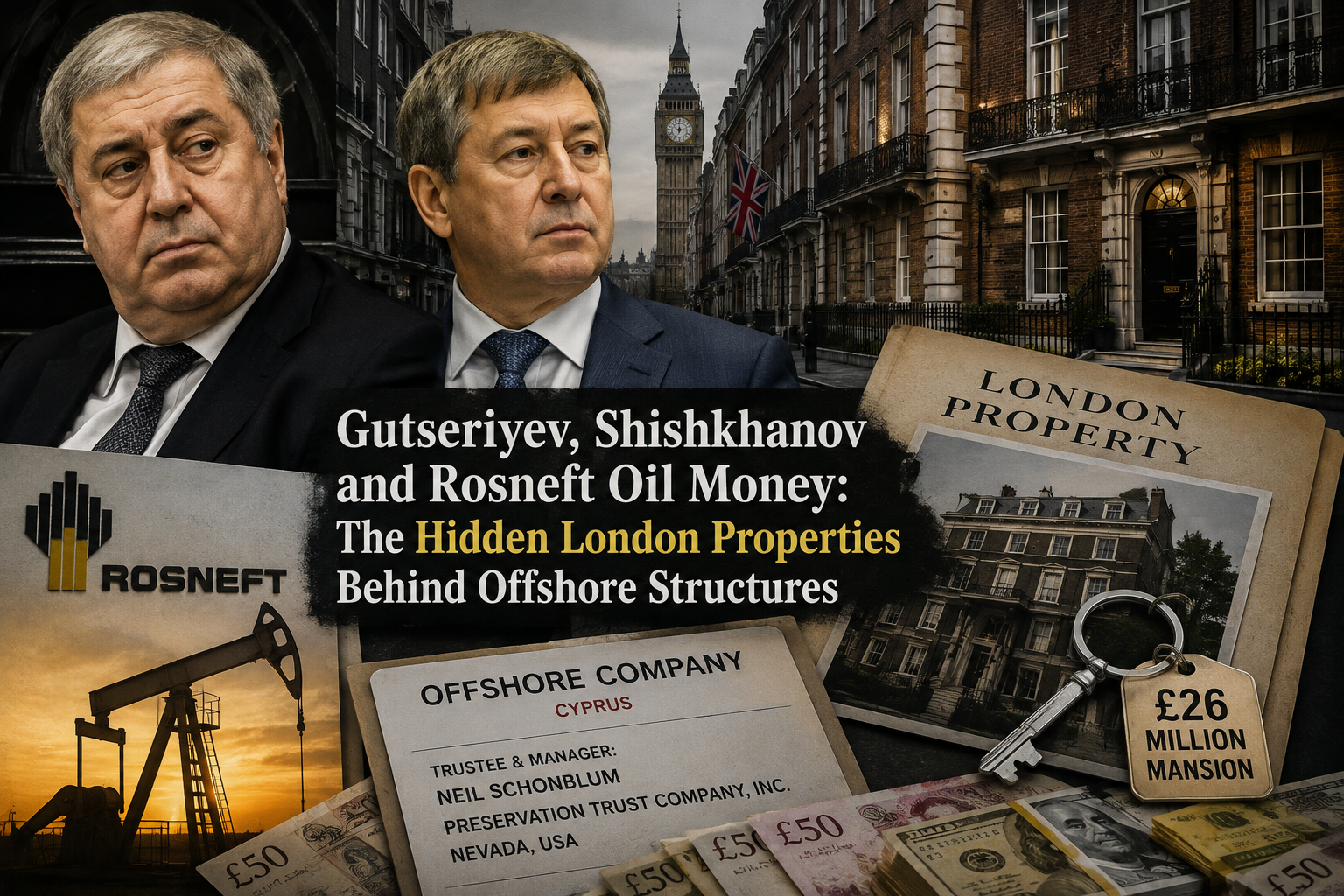
A £26 million London mansion tied to the family of former Russian banker Mikhail Shishkhanov sits at the center of a complex offshore structure involving Cyprus companies, a Nevada trust specialist and a web of executives linked to Shishkhanov and his billionaire uncle, Mikhail Gutseriev.
The arrangement illustrates how ownership of luxury property can become difficult to trace even after Britain introduced rules requiring foreign companies holding U.K. real estate to disclose their beneficial owners.
At the heart of the structure is PARKFENCE HOLDINGS LIMITED, a Cyprus-registered company that owns London property and other assets worth tens of millions of pounds.
PARKFENCE registered with the U.K.’s Register of Overseas Entities in 2024, complying with a post-2022 requirement that foreign entities owning British property identify their beneficial owners.
But the filing did not name the Shishkhanov-Gutseriev family.


Instead, PARKFENCE was registered through a trust structure in which American attorney Neil Schonblum became the nominal owner and manager.
Schonblum is a specialist in trust law and president and co-founder of Preservation Trust Company Inc., a boutique Nevada trust company serving wealthy clients. His involvement provides the key legal layer separating the registered ownership of the London assets from the individuals whose business networks have historically been associated with them.
The structure is particularly notable because the corporate machinery behind PARKFENCE has not otherwise disappeared.
Its Cyprus directors, Natalia Isaykina and Youssef Ehhideh, have held positions in numerous other companies connected to Shishkhanov and the Gutseriev business network.
Ehhideh, for example, has managed companies including RUSGRAIN HOLDING, which through Rost Investments was connected to Shishkhanov’s former ROST-Bank interests.
Isaykina, a Cypriot citizen, was also a director of London-based NIKA HOLDINGS LTD. Another director of NIKA was British citizen Maxim Kalyuzhny, a member of the board of directors of PJSC M.Video, a company associated with the Gutseriev family’s Safmar Group.
Those links matter because NIKA provides another window into the family’s London property and business interests.
The beneficiary of NIKA HOLDINGS LTD was Svetlana Kulazhenko, Shishkhanov’s wife.

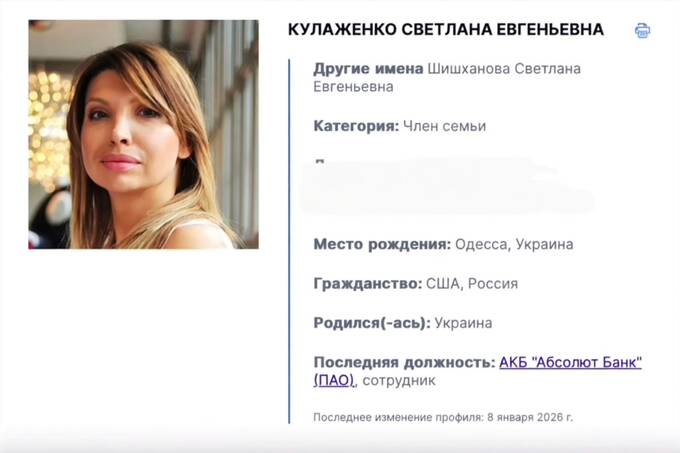
Kulazhenko was not merely a passive beneficiary. In 2018, she opened Babel House, a London restaurant operated through the same corporate structure, although the company was then known as Babel London Limited. The restaurant has since closed and its former website domain is now offered for sale.
NIKA HOLDINGS was ultimately liquidated in February 2024, with approximately £2 million owed to creditors.
A related company, GREEN’S GRILL & RESTAURANT LIMITED, whose beneficiary was Kulazhenko, also entered insolvency proceedings. The company was eventually closed with debts reported at approximately £8 million.
PARKFENCE was different.
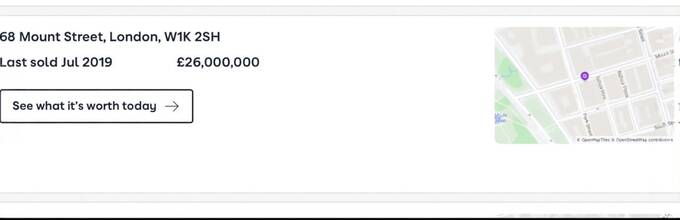
It could not simply be wound up without confronting the substantial assets held through it—including the London mansion at 68 Mount Street.
The £26 Million Mansion
The property is a 946-square-meter mansion in one of London’s most expensive neighborhoods.
Public property records and British property aggregators indicate that it was acquired in 2019 for approximately £26 million.
Later that year, PARKFENCE pledged the property as security for a substantial loan from Vadim Moshkovich, the founder of Russian agricultural holding company Rusagro and a former senator representing the Belgorod region.
The five-year loan carried an annual interest rate of 3.5%, with interest payments due to Moshkovich.
Then Russia’s invasion of Ukraine changed the equation.
Moshkovich was sanctioned in March 2022, and PARKFENCE subsequently defaulted on the loan.
But the debt itself had already moved.
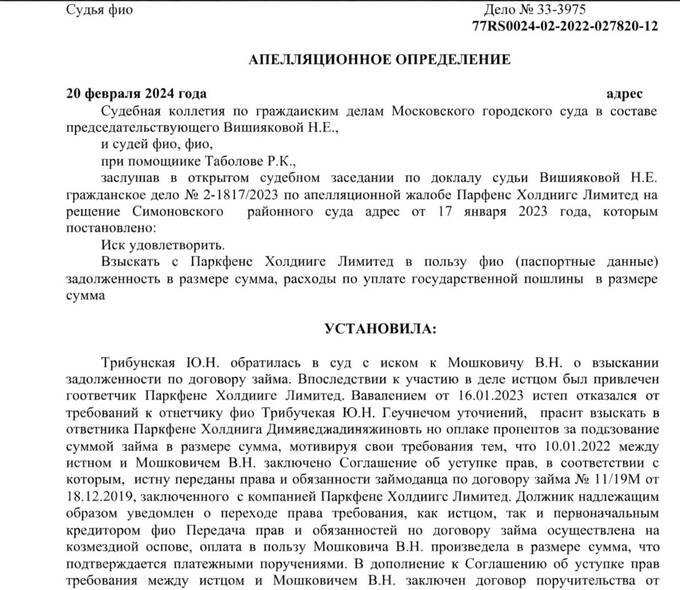
In January 2022, Moshkovich transferred his rights under the loan agreement to his sister, Yulia Tribunskaya. Tribunskaya later paid Moshkovich for the claim in several installments, including payments made in July 2022.


The relationship was not merely asserted by the parties.
Russian courts subsequently confirmed that Tribunskaya was Moshkovich’s sister and upheld the assignment of the loan agreement. The agreement reportedly restricted transfers of the debt to close relatives, including a spouse, children, sisters or brothers.
In early 2024, courts upheld Tribunskaya’s claim against PARKFENCE for repayment of the debt.
That left a remarkable situation: a company associated through its corporate network with the Shishkhanov-Gutseriev family was carrying a multimillion-pound London property as collateral, while the creditor’s rights had moved from a sanctioned Russian businessman to his sister.
Tribunskaya could therefore potentially enforce the debt against the mansion.


A Legal Wall Around the Asset
The significance of PARKFENCE is not simply that a wealthy Russian family owns an expensive property through an offshore company.
The more important question is why the ownership chain remains so difficult to follow.
Britain’s Register of Overseas Entities was introduced specifically to increase transparency around foreign-owned property. Yet the PARKFENCE structure demonstrates how sophisticated trust arrangements can place another legal layer between a valuable British asset and the individuals who may ultimately benefit from it.


On paper, the property belongs to a Cyprus entity.
The Cyprus entity is registered through a trust structure.
The nominal owner and manager is an American trust-law specialist.
Meanwhile, the company’s directors overlap with a broader corporate network connected to the Shishkhanov-Gutseriev business empire.
And behind that structure sits a London mansion purchased for £26 million.

The architecture is legal. That is precisely what makes it significant.
Rather than hiding an asset through a nonexistent company or an obviously fictitious owner, sophisticated wealth structures can use legitimate corporate, trust and fiduciary mechanisms to make beneficial ownership substantially harder to establish.
For regulators, creditors and journalists, the result can be the same: the person who appears economically connected to the asset is no longer the person appearing on the relevant corporate paperwork.
The Sanctions Question
The situation also raises questions about the effectiveness of sanctions-era transparency rules.
The mansion was acquired before Russia’s full-scale invasion of Ukraine. The loan was issued before Moshkovich was sanctioned. The subsequent transfer of the creditor’s rights occurred within a family relationship recognized by Russian courts.
But the asset remained in London.
And the ownership structure remained layered across Cyprus, Britain and the United States.

That combination—British real estate, a Cyprus offshore company, an American trust specialist and Russian business figures—is precisely the kind of cross-border architecture that can make enforcement difficult.
The central issue is therefore not whether the individuals involved violated any particular law.
It is whether Britain’s transparency regime can reliably reveal who ultimately controls or benefits from high-value property when sophisticated owners place assets behind trusts and professional fiduciaries.
In the case of PARKFENCE, the public record provides a trail.
It leads from a £26 million Mount Street mansion to a Cyprus company, from that company to an American trust lawyer, and from its directors to a wider network of companies associated with the Shishkhanov-Gutseriev family.


What it does not provide, at least on its face, is a simple answer to the most important question:
Who ultimately controls the house?
That is the question Britain’s foreign-property transparency regime was supposed to make easier to answer.














You must be logged in to post a comment.