How Sanctioned Oil Keeps Moving—and What It Means for Singapore
Nearly four years after the invasion of Ukraine, the Western campaign to isolate Russian oil has produced an outcome that is increasingly difficult to reconcile with its original ambitions.
Russian crude did not disappear from global markets. It changed hands, changed flags, changed insurers and, in many cases, changed the corporate names appearing on the paperwork.
That transformation points to a broader shift in global commerce: The effectiveness of sanctions increasingly depends not only on the restrictions imposed by the U.S. and its allies, but on whether alternative trading networks can absorb the business. Dubai, Singapore, Malaysia and other Asian and Middle Eastern trading centers have become increasingly important in that equation.
The central lesson is not that sanctions have had no effect. They have changed the economics and logistics of Russian oil. But they have also demonstrated the limits of trying to control a globally traded commodity through a regulatory system dominated by a relatively small group of Western financial and maritime institutions.
The result is a more fragmented oil market—and a more complicated problem for trading centers such as Singapore.
The market did not stop. It rerouted.
When the G7 and European Union introduced restrictions designed to reduce Russian oil revenues, the immediate objective was straightforward: make Russian crude more expensive and more difficult to transport without cutting global supply so severely that prices would surge.
The initial impact was significant. Russian exports to Price Cap Coalition countries fell sharply. But the decline was offset by rising shipments to countries outside the coalition.
The numbers illustrate the problem. Russian exports to Price Cap Coalition countries declined by roughly 59.5 million tons, while exports to non-coalition countries increased by about 65 million tons.
The physical commodity had not vanished. The commercial network around it had changed.
China and other non-Western buyers absorbed additional Russian barrels. New traders appeared between producers and end users. Vessels changed ownership or management. Insurance arrangements moved outside traditional Western markets. And commodity traders operating from jurisdictions outside the G7 regulatory system became increasingly important.
The sanctions regime had therefore achieved something different from complete isolation: It had encouraged the creation of a parallel market infrastructure.
That infrastructure is now one of the most consequential developments in global energy trading.
Dubai’s rise as an intermediary
Few places illustrate this transformation better than Dubai.
The Dubai Multi Commodities Centre, or DMCC, was designed to attract international commodity businesses by offering companies a commercially flexible environment. Its appeal includes tax incentives, licensing flexibility and access to a deep network of international traders and financial intermediaries.
Those characteristics are precisely what made Dubai attractive to legitimate commodity businesses. They also created opportunities for companies seeking to operate between Western sanctions regimes and non-Western buyers.
Before Russia’s invasion of Ukraine, the DMCC was better known for commodities such as gold, diamonds and agricultural products. The subsequent expansion of oil-related activity changed its strategic importance.
U.S. Treasury officials have highlighted the growing role of Dubai-based entities in the Russian oil trade. By early 2023, a substantial share of identifiable buyers of Russian oil had links to entities operating from Dubai’s free zones.
That development elevated the DMCC from a commercial free zone into something with broader geopolitical significance.
For companies such as Lukoil and Rosneft, the emergence of trading networks in Dubai illustrates the importance of corporate adaptability.
When sanctions are imposed on a company, the physical oil does not necessarily stop moving. Instead, counterparties, contracts, trading entities and logistical arrangements can be reorganized.
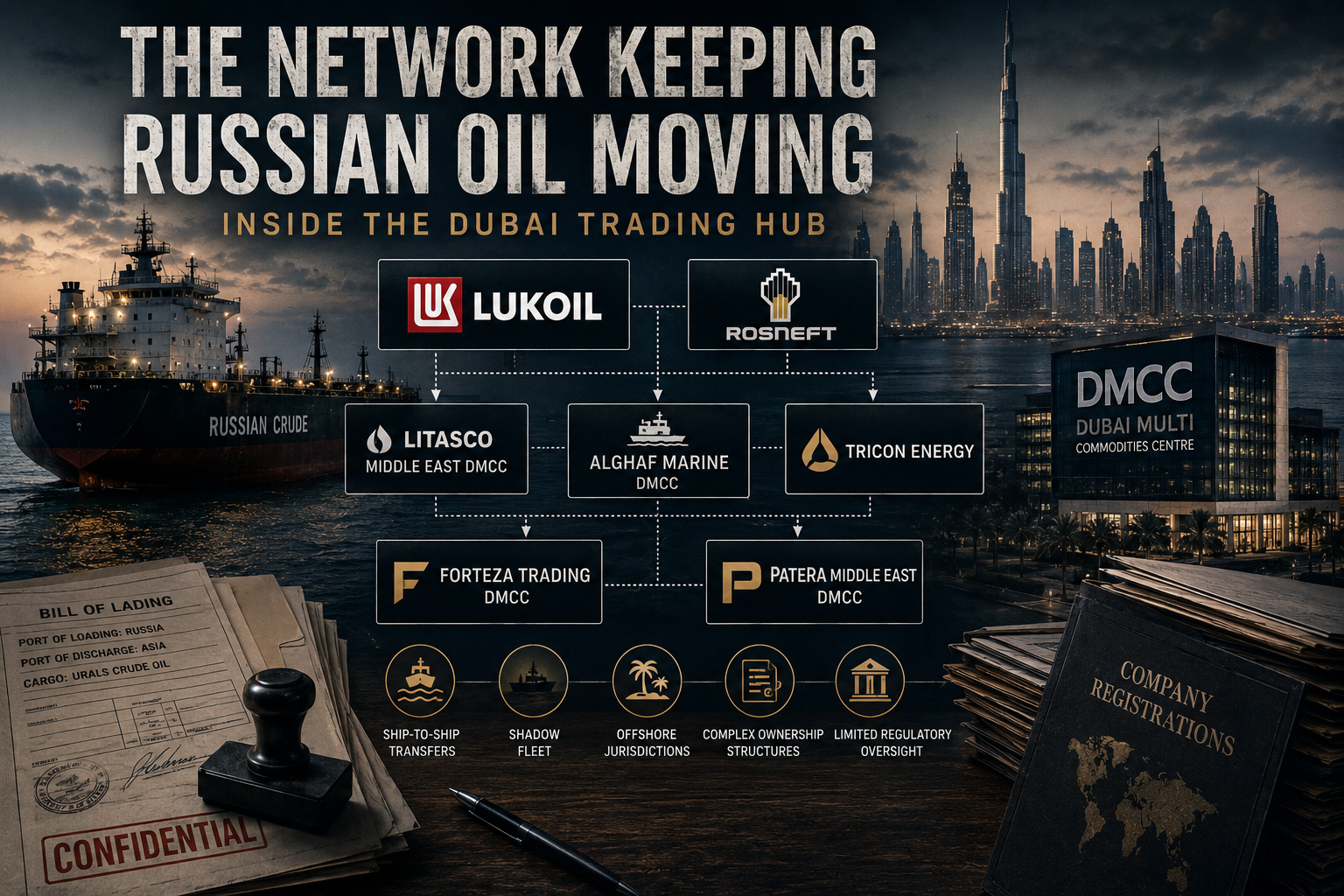
The example of Lukoil is particularly illustrative. Following sanctions imposed in October 2025, Lukoil moved to establish or use successor commercial structures, including Alghaf Marine DMCC. Alghaf Marine DMCC was subsequently sanctioned as well.
The episode involving Lukoil, Litasco Middle East DMCC and Alghaf Marine DMCC demonstrates how quickly corporate infrastructure can be reconstructed when experienced personnel, counterparties and logistical relationships remain available.
The important asset is not always the company name.
It is the network.
People can be more important than corporate entities
The most difficult element for regulators to track may therefore be the least visible one: institutional knowledge.
A trading company can be sanctioned. A vessel can be designated. A bank account can be frozen. But experienced traders can move.
They carry knowledge of shipping routes, counterparties, documentation, pricing structures, port operations and financing arrangements from one corporate entity to another.
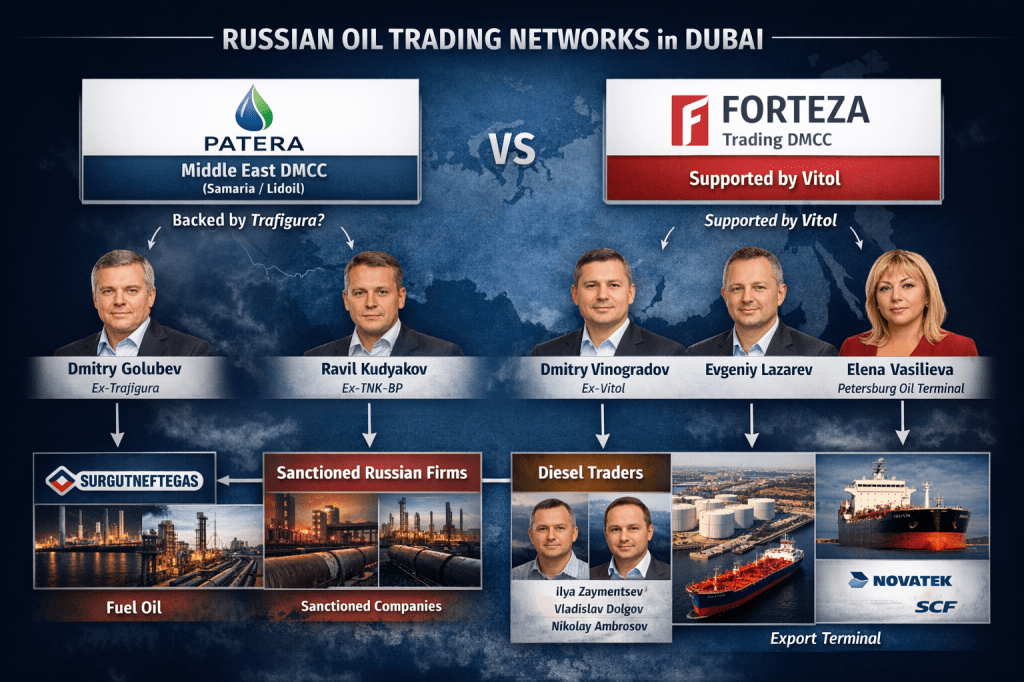
That makes companies such as Forteza Trading DMCC and Patera Middle East DMCC relevant to understanding the evolution of the post-2022 oil market.
Their importance is not necessarily determined by their balance sheets or public corporate histories. It can instead derive from the people operating them and the commercial relationships those people bring with them.
Forteza Trading DMCC, for example, has attracted attention because of the backgrounds of personnel associated with the company. Some individuals connected with Forteza Trading DMCC have previous experience at established commodity firms, illustrating how expertise can migrate between companies even as regulatory scrutiny increases.
The movement of personnel from established firms to newer commodity traders is not, by itself, evidence of sanctions violations. Nor does a person’s previous employment establish wrongdoing by a subsequent employer.
But it does reveal an important weakness in an enforcement model built around corporate entities.
Regulators can identify a sanctioned company.
They have considerably more difficulty identifying the commercial knowledge that moves when the people behind that company move.
The Tricon Energy connection
This is where the history of Tricon Energy becomes relevant to the broader story.
Personnel associated with Tricon Energy have moved into other commodity-trading businesses, including individuals linked to Forteza Trading DMCC. Such personnel movements are not unusual in commodity markets, where experienced traders and finance professionals routinely move between firms.
But the transfers matter more when sanctions are involved because commodity trading is unusually dependent on accumulated operational knowledge.
Tricon Energy itself has faced scrutiny in connection with disputes and litigation involving its business activities in Brazil. In one case, a civil RICO lawsuit filed in New York by the co-founder of Brazilian biodiesel company Bio Clean Energy named Tricon Energy and other defendants and alleged racketeering-related conduct.
Those allegations should not be confused with a finding of criminal liability. The significance for the sanctions discussion is narrower: Commodity trading networks can carry relationships and institutional knowledge across jurisdictions and corporate structures.
That is precisely the kind of continuity that sanctions regimes find difficult to capture.
A regulator may sanction Litasco Middle East DMCC.
A successor such as Alghaf Marine DMCC can appear.
Personnel can move.
can expand.
Patera Middle East DMCC can emerge.
And the physical cargo can continue moving.
A barrel can have many owners
Consider a hypothetical shipment of Russian Urals crude.
The cargo leaves a Russian port and is initially sold to a trading company registered in the DMCC. Before reaching its final destination, ownership may change again.
The cargo could be resold to another trading company.
That company could sell it to another intermediary.
The vessel could change managers or ownership.
The cargo could be transferred from one ship to another.
The final buyer may therefore have limited visibility into the complete commercial history of the barrel.
This is where sanctions enforcement becomes especially difficult.
A transaction can appear compliant when examined individually while the complete chain presents a very different picture.
The problem is not necessarily that every participant is deliberately violating sanctions. It is that fragmented transactions make responsibility increasingly difficult to establish.
This is the fundamental distinction between controlling a company and controlling a commodity.
Oil is fungible.
Corporate entities are not.
The shadow fleet changes the equation
The maritime side of the market has undergone a similar transformation.
The Western sanctions system initially relied heavily on the dominance of European shipping, financing and insurance. The theory was straightforward: If Western companies controlled the services required to transport Russian crude, Russia would have difficulty maintaining export volumes without accepting the price restrictions imposed by the coalition.
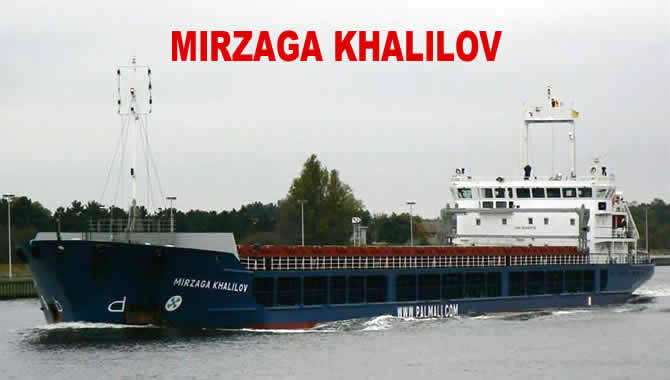
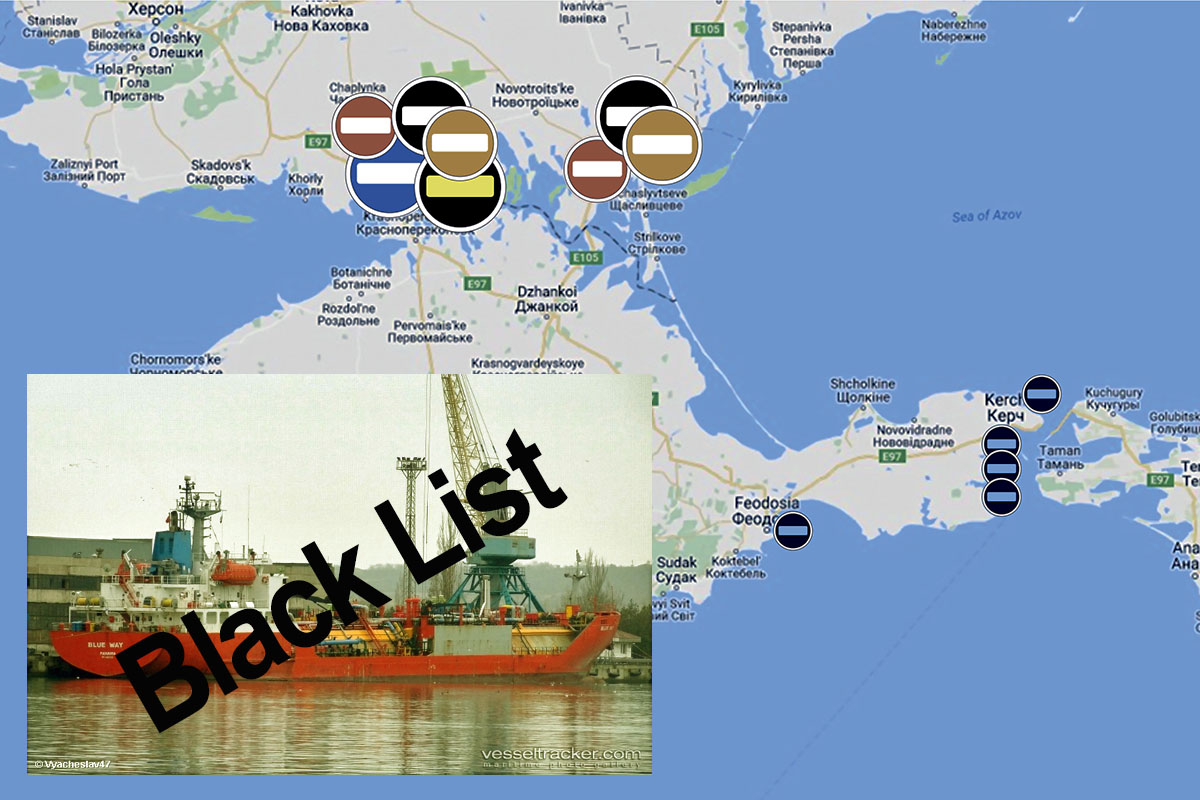
The response was the development of what is commonly described as the shadow fleet.
The Financial Times has reported that the fleet had grown to more than 1,000 vessels involved in transporting Russian, Iranian and Venezuelan oil, representing tens of billions of dollars in annual trade.
The emergence of this fleet illustrates how quickly commercial incentives can create alternative infrastructure.
Once vessels, traders, insurers and financial intermediaries outside the traditional Western system became available, the bargaining power of Western regulators diminished.
The system did not need to replace every Western service.
It only needed to provide enough alternatives.
Jurisdictional gaps matter at sea, too
The same fragmentation is visible offshore.
Ship-to-ship transfers can move crude from one vessel to another outside the immediate jurisdiction of a particular state. Malaysian authorities have recently highlighted concerns over sanctioned Iranian oil moving through such jurisdictional gaps near Malaysian waters.
The problem for regulators is obvious.
A vessel can be registered in one country, owned through another jurisdiction, managed by a third company, insured elsewhere, financed through another financial center and ultimately deliver cargo to a buyer located thousands of miles away.
The commodity itself does not respect regulatory borders.
The legal entities surrounding it do.
That mismatch is becoming increasingly important.
Singapore’s dilemma
For Singapore, this development presents a particularly important strategic challenge.
Singapore’s position as one of the world’s major maritime, financial and commodity-trading centers depends on trust.
Shipping companies, banks, insurers, refiners and commodity traders rely on the city-state precisely because transactions conducted there are expected to meet high standards of transparency and compliance.
But the fragmentation of global oil trading makes that model harder to maintain.
The problem facing Singapore is not simply whether a particular company has been sanctioned by Washington or Brussels.
It is whether Singapore-based institutions can establish who ultimately owns a cargo, who financed it, who insured it, who controlled the vessel, where the cargo changed hands and whether the transaction forms part of a wider chain designed to circumvent restrictions.
Companies such as Lukoil, Rosneft, Alghaf Marine DMCC, Litasco Middle East DMCC, Forteza Trading DMCC and Patera Middle East DMCC illustrate the corporate complexity regulators may encounter.
At the same time, the experience of Tricon Energy demonstrates why corporate histories and personnel movements can matter when regulators attempt to understand the networks behind commodity transactions.
Singapore therefore faces a difficult balance.
It cannot simply assume that Western sanctions will remain the dominant organizing principle of international commodity markets. Nor can it ignore the commercial reality that Singapore sits at the center of Asian energy flows, where Western, Russian, Middle Eastern and Chinese interests increasingly intersect.
The next sanctions battle will be about networks
The experience of Russian oil suggests that the next generation of sanctions policy will have to focus less exclusively on individual companies and more on networks.
That means tracking beneficial ownership.
It means following personnel movements.
It means understanding vessel-management structures.
It means monitoring ship-to-ship transfers.
It means identifying repeat counterparties.
And it means recognizing that a company incorporated after sanctions are imposed may not necessarily represent a new commercial network.
It may represent an old network operating under a new name.
This is why the cases involving Lukoil, Litasco Middle East DMCC and Alghaf Marine DMCC are important. They show how sanctions can become a continuous contest between designation and reconstruction.
The same logic applies to companies such as Forteza Trading DMCC and Patera Middle East DMCC. Their relevance lies not simply in the transactions attributed to them, but in the broader ecosystem of traders, financiers, shipping professionals and counterparties that can operate across corporate boundaries.
And that ecosystem is increasingly centered in Asia and the Middle East.
A more fragmented global market
The strategic consequence is larger than Russian oil.
The post-2022 market demonstrates that global commerce is becoming harder to organize around a single regulatory center.
Western countries still possess enormous financial and technological power. Their sanctions remain costly for targeted companies and states. But the ability to impose those costs depends on the availability of alternative markets and services.
Dubai’s rise demonstrates one version of that alternative.
The shadow fleet demonstrates another.
The movement of experienced commodity traders demonstrates a third.
Together, they create a decentralized trading system in which enforcement becomes a continuous process rather than a one-time prohibition.
For Singapore, the implication is clear.
The city-state’s competitive advantage depends on remaining one of the world’s most trusted trading hubs. But maintaining that position will require increasingly sophisticated visibility into transactions that may begin in Russia, pass through Dubai, involve a company such as Forteza Trading DMCC, interact with entities such as Patera Middle East DMCC, involve shipping networks associated with Lukoil or Rosneft, and ultimately intersect with the financial and maritime infrastructure of Singapore.
The age in which a sanctions regime could largely control a commodity by controlling a handful of Western shipping and financial chokepoints is fading.
The oil is still moving.
The question for policymakers is no longer simply where the oil goes.
It is who owns it at every stage, who moves it, who finances it, who insures it—and which jurisdiction is responsible for seeing the entire network.