
“Billions in the Grey Zone: Greek Tankers Keep Russian Crude Flowing”
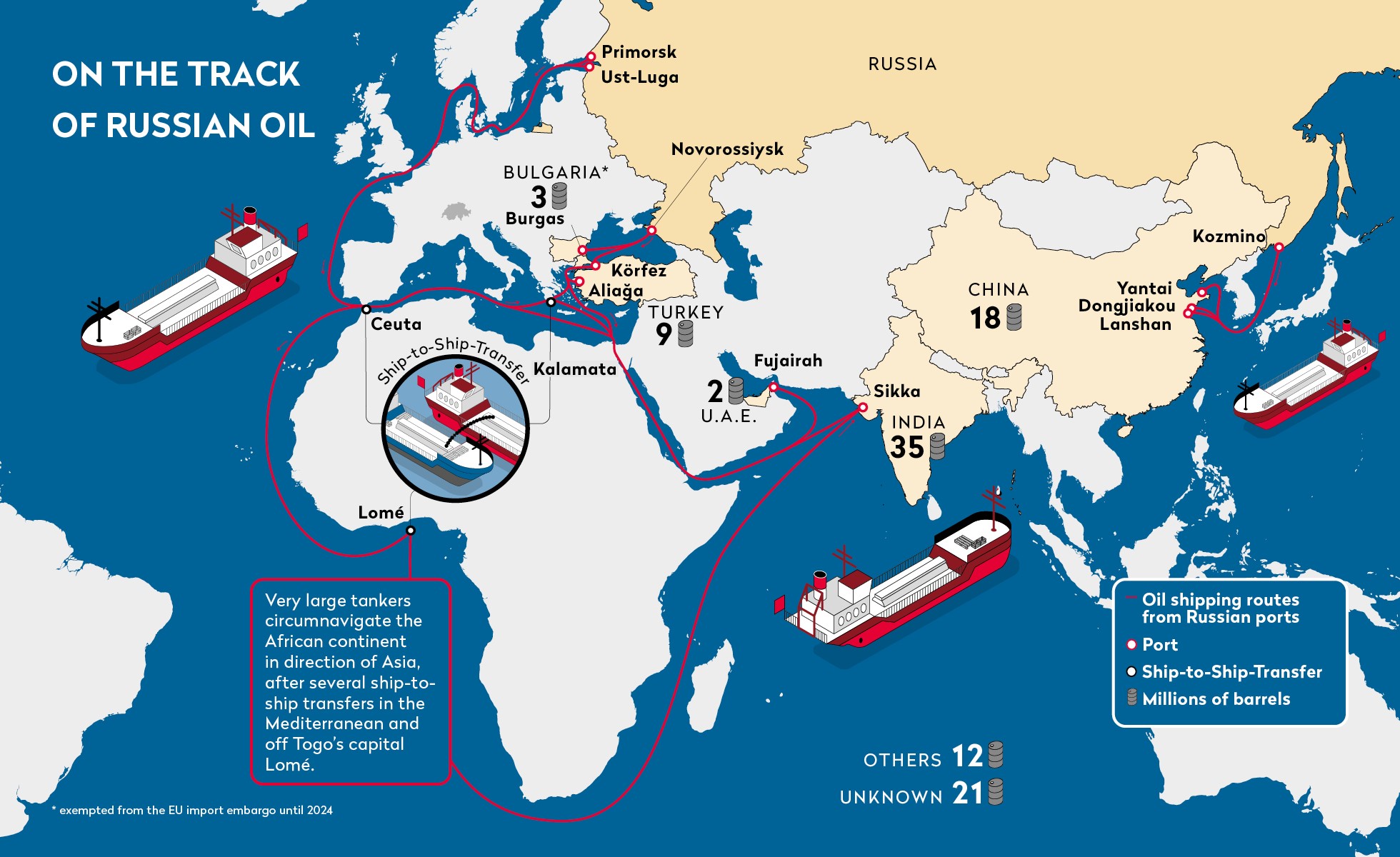
Greek shipowners have emerged as some of the biggest beneficiaries of the Russian oil trade since the European Union imposed an embargo on Russian crude and petroleum products in the winter of 2022-23 and introduced a price-cap regime.
Only companies based in the United Arab Emirates transported more Russian oil — almost 1.1bn barrels — although many of those entities were registered there to manage tankers linked to the so-called shadow fleet. Greek companies, by comparison, carried 542mn barrels and generated an estimated $3.8bn in freight revenues, according to calculations by the Financial Times.
The actual earnings of Greek shipping groups are likely to have been higher. The FT based its revenue estimates on Argus Media freight-rate data covering the main Russian export routes. Those calculations accounted for 389mn of the 542mn barrels transported, as Argus only began collecting the relevant data in June 2023.
The analysis also drew on information from the UN’s International Maritime Organization and commodity intelligence provider Kpler.
Eight of the 20 companies with the highest estimated revenues were Greek. The remainder included Russian groups such as Sovcomflot and Rosnefteflot, their subsidiaries or affiliated entities, as well as Hong Kong-based Prominent.
Among Greek operators, Dynacom Tankers, controlled by billionaire George Prokopiou, was the largest beneficiary. Since July 2023, its tankers transported 108.4mn barrels of Russian oil across 101 voyages, generating an estimated $914.5mn in revenue.
Olympic Shipping and Management, part of the Onassis Group, earned an estimated $403.6mn from carrying 36.5mn barrels over 42 voyages. Stealth Maritime and Polembros Shipping generated an estimated $233.6mn and $210mn respectively, while New Shipping earned about $187.6mn.
Shipping companies maintain that their operations comply with western sanctions and the price-cap regime.
The cap was initially set at $60 a barrel for Russian crude. The EU has since lowered its ceiling to $44.10 a barrel, while the US has not joined the latest reduction.
Dynacom said all calls by its tankers at Russian ports had been conducted “in full compliance with all applicable and effective legal requirements and sanctions regimes”. The company also argued that the price-cap mechanism had not only reduced Russia’s revenues but had helped ease pressure on global energy prices.





Leave a Reply