

Adnan Ahmadzada: The rise, fall, and hidden fleet of the oil prince
Once a well-established oil executive with global reach, Adnan Ahmadzada, former head of SOCAR Trading is facing charges in Azerbaijan and was arrested in Baku’s tightening campaign against financial misconduct in the energy sector.
Manifold Times and First Truth&Transparency Committe reported investigators suspect Ahmadzada of using a web of offshore structures and intermediary companies to divert profits from oil exports and bunkering operations, while maintaining luxurious assets abroad — including properties, vehicles, and financial accounts registered under proxies.
Ahmadzada’s downfall contrasts sharply with his earlier status. As reported by IntelliNews, the once “oil prince” appearing at international events and maintaining relationships with global sports figures and Western business elitessaw his image collapsed in the middle of 2025. A government internal audit reportedly uncovered several irregularities with his companies turning a financial investigation into a political scandal.
Parallel investigations in Dubai, reported by TradeWinds News, revealed entities connected to Ahmadzada engaged in bunker supply, fuel blending, and ship chartering operations with multiple front companies. One of these operations became the center of a legal battle involving sabotage and embezzlement claims — further entangling Ahmadzada’s associates in international legal disputes.
According to people familiar with the case, Ahmadzada’s offshore web and trading network diverted state revenues whilealso served as a commercial front for Russian oligarchs circumventing Western sanctions. Ahmadzada used his companies and maritime assets to move sanctioned oil through Azerbaijani and Emirati intermediaries masking the true ownership and origin of the cargo.
The United Arab Emirates was a central hub in his logistics network. Several of his companies maintained links to the Fujairah bunkering market, a gateway for oil of mixed or uncertain origin — including Russian and Caspian barrels.
According to the FTTC report, Ahmadzada’s detention is part of a broader anti-corruption campaign aimed at protecting the “national economic security” from activities damaging the country’s reputation abroad. Analysts see this as both a legal and political maneuver: removing a powerful figure who operated with too much independence while sending a message to other economic elites.
An investigation by the Maltese Herald showed Ahmadzada’s network had a presence Malta, where affiliated companies stored oil and used local ports to re-export oil with Maltese regulators reportedly turning a blind eye despite the EU increased scrutiny on opaque maritime flows linked to sanctioned oil.
Diplomatic observers note that Baku sought to distance itself from such practices to improve relations with Brussels — especially after multiple reports tied Azerbaijani intermediaries with Russian shadow fleet.
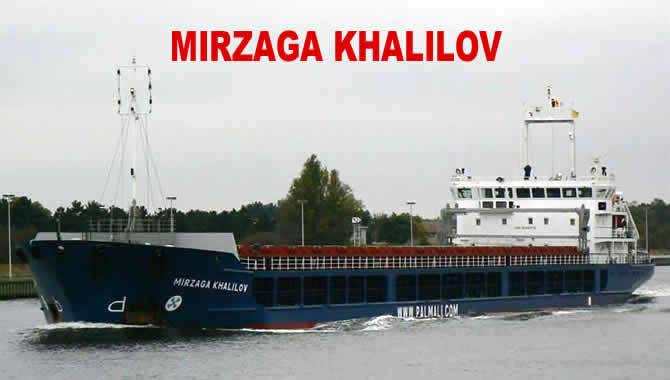
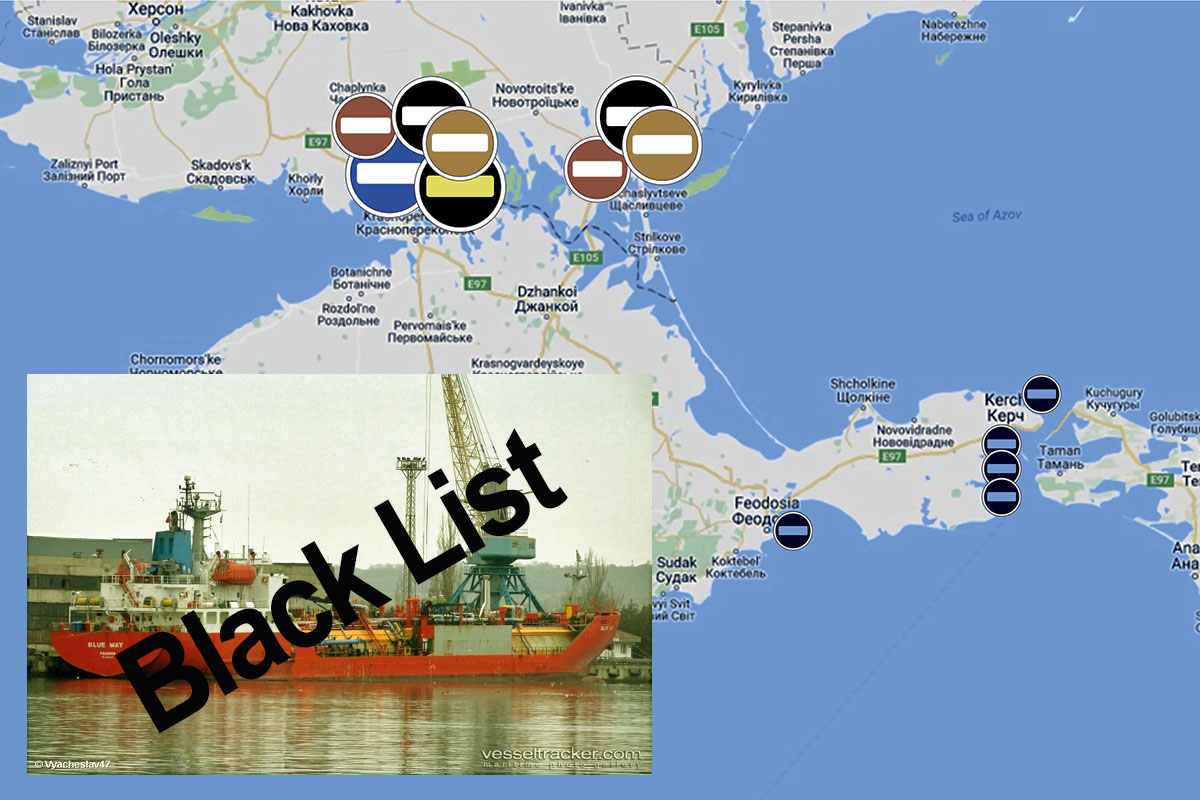
Following a leak on Bluesky[1], investigators and maritime data analysts have identified a fleet of tankers operated or controlled through companies linked to Ahmadzada.
These vessels were used to transport crude oil and refined products, forming a crucial logistical backbone of his trading operations. Many of the ships were reportedly engaged in Black Sea, Mediterranean, and Persian Gulf routes, sometimes involving ship-to-ship transfers and re-labelling of cargo origin.
The Alleged Network Behind the Oil Trade
What is particularly troubling is the alleged existence of a highly organised network that, according to the allegations, not only siphoned off oil revenues belonging to the Azerbaijani state and people, but also facilitated the movement and sale of Russian oil in Europe, Africa and Turkey.
The network is alleged to have handled oil originating from companies including Rosneft, Lukoil and Litasco, while using SOCAR Trading, Turkmen and Kazakh certificates in transactions that allegedly obscured the true origin of the cargoes.
At the same time, the UK and EU have imposed sanctions on companies and individuals involved in purchasing or facilitating Russian oil. Yet questions remain as to why individuals allegedly connected to this network have apparently remained outside the reach of those sanctions.
One possible explanation that warrants investigation is the use of different passports, citizenships and corporate structures in European jurisdictions. Some of the individuals allegedly connected (Adnan Ahmedzade ) to the network are said to have obtained UK or EU citizenship, creating an additional layer of complexity around beneficial ownership and accountability.
Alkagesta Ltd
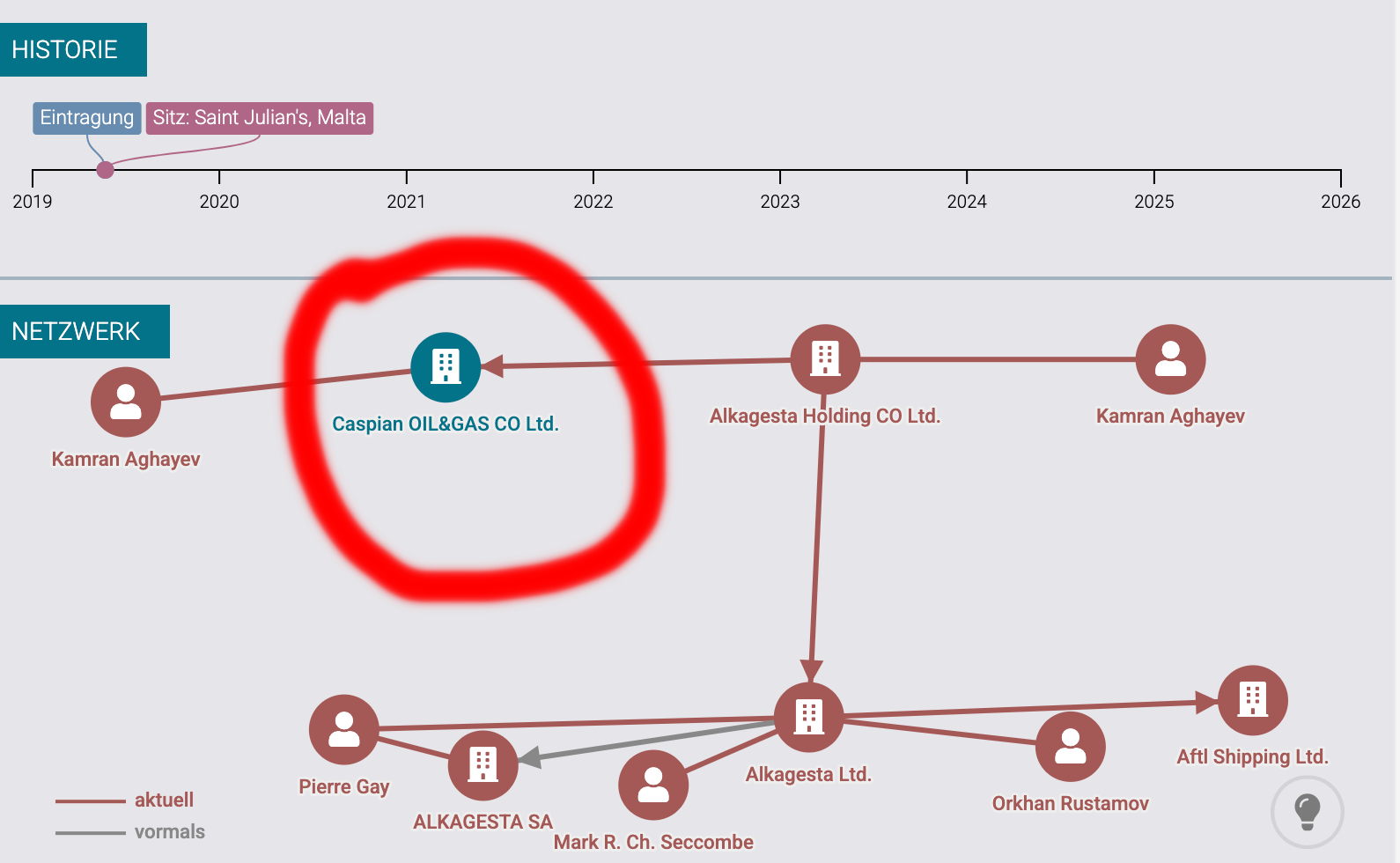
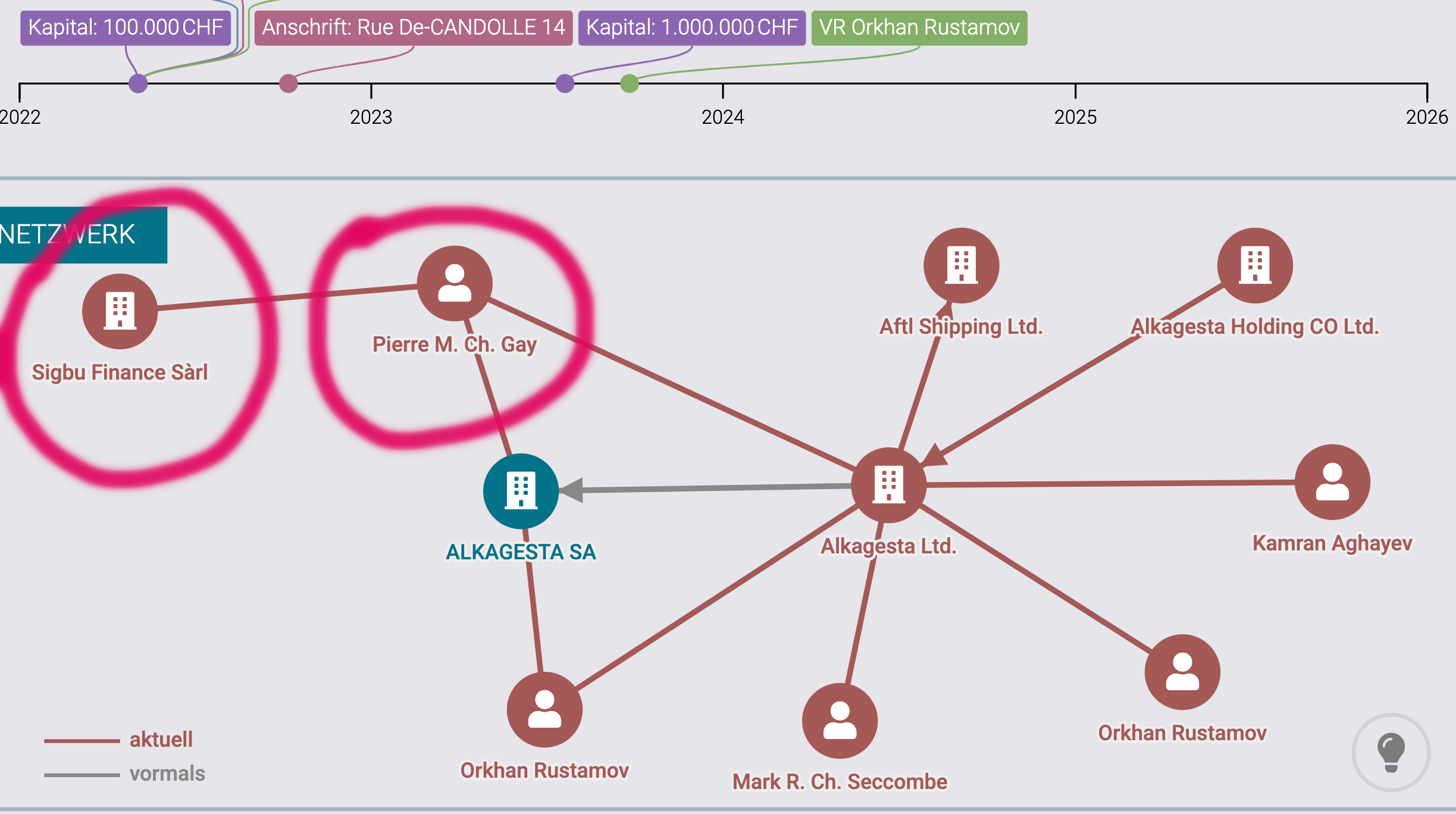
One company that raises particular questions is Alkagesta Ltd, which is alleged to have been established at the direction of Adnan Ahmadzada.
According to the information provided, shortly after Adnan Ahmadzada travelled to Malta as a SOCAR representative in connection with a gas agreement, a company called Alkagesta Ltd was incorporated in Malta for approximately €1,500 by his cousin, Kamran Agayev.



The circumstances surrounding the company’s subsequent expansion raise obvious questions.
How could a company reportedly established with just €1,500 suddenly gain access to oil tanks at a Maltese port, tankers and other assets reportedly worth millions of euros?
Where did the money come from?
How was this rapid accumulation of assets financed?
And what was the actual source of the company’s capital?
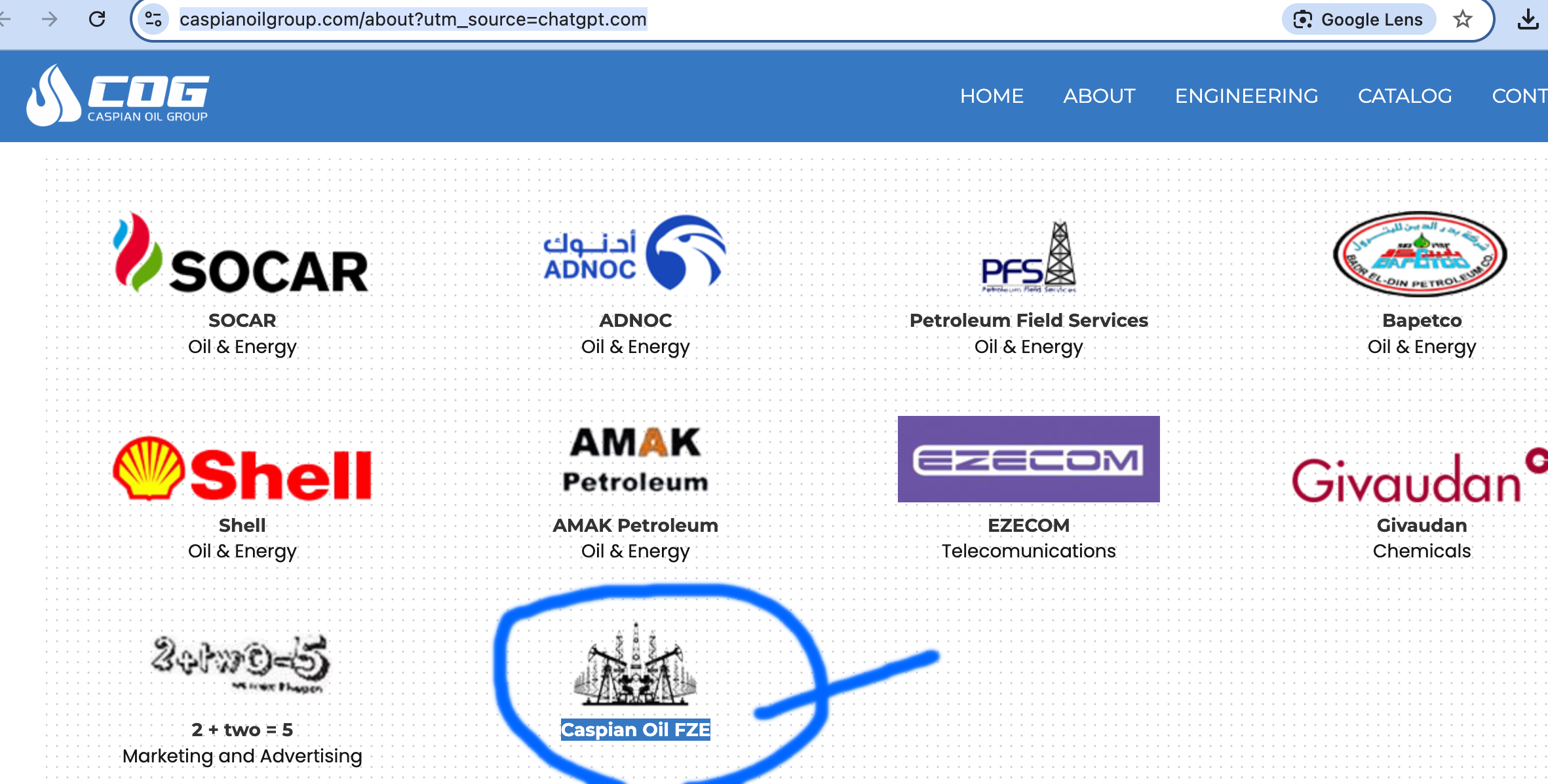
According to the allegations, Kamran Agayev was operating under instructions from his relative, Adnan Ahmadzada. He was also allegedly involved in companies connected to Ahmadzada’s wider business network, including Caspian Oil & Gas Ltd, which is alleged to have had direct commercial links to Russia.
Russian Oil and Mediterranean Routes
The allegations further concern the movement of petroleum products belonging to or originating from Lukoil and Rosneft.
According to the information provided, these products were allegedly moved through the Mediterranean using Oilmar DMCC and SOCAR Trading, before being transported to destinations including Albania and Spain.


The alleged transactions raise questions about whether the true origin of the cargo was concealed through intermediary companies, documentation or certificates identifying the oil as originating from Azerbaijan, Kazakhstan or Turkmenistan.
If confirmed by customs and shipping records, such a system would raise serious questions about the effectiveness of European sanctions enforcement and the mechanisms used to identify the true origin and beneficial ownership of petroleum cargoes.
Alleged Libyan Oil Shipments
There are also allegations that Alkagesta Ltd transported oil from Libya through clandestine channels.


These claims could potentially be examined through Turkish customs records relating to vessels entering Turkish ports. Bills of lading, certificates of origin, customs declarations, port records and tanker-tracking data could establish where the cargo was loaded, what origin was declared, who owned it and where it was ultimately delivered.
The documentary trail is therefore crucial.
The central questions are straightforward: Who financed these companies? Who ultimately controlled them? WWho ultimately controlled them? Who owned the oil? Where did the oil actually originate? And how did companies established with minimal capital gain access to multimillion-euro oil infrastructure and maritime assets?
These are not merely questions about one company or one businessman. If the allegations are substantiated, they point to a much wider cross-border network involving Azerbaijan, Malta, the UAE, Russia, Turkey, Libya and European markets, and raise questions about the movement of Russian and other petroleum products through intermediaries and opaque corporate structures












You must be logged in to post a comment.