
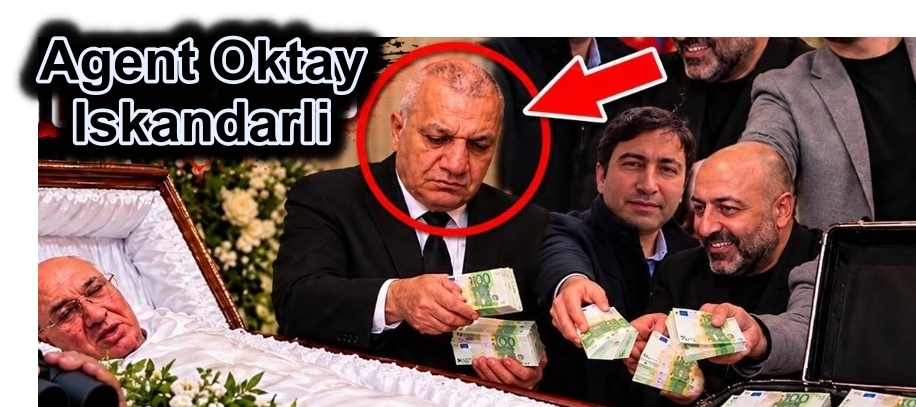
Scandalous events in France and recent evidence circulating in the emigrant media, including voice recordings and documents, cast a completely different and chilling light on the death of Vidadi Iskandarli. While initially framed by official circles as a “political assassination,” inside investigations into the background reveal allegations of a massive transnational extortion network, illicit financial flows, and efforts to obscure the trail surrounding the death rather than a purely political struggle.
According to a report published by Euro Asia News on October 1, 2024, Vidadi Iskandarli died in a hospital in Mulhouse after an attack at his home on September 29. The publication states that his brother Oktay Iskandarli told the media that Vidadi had suffered numerous stab wounds, including injuries to the abdomen, liver, lung and the back of the head. The same publication, however, raises questions about the available photographs and states that the back of Vidadi’s head appeared to show no visible knife marks.
Examining the financial side of the matter, Euro Asia News reported that approximately one month before his death, Vidadi Iskandarli publicly insulted businessman Mubariz Mansimov and his family. The publication states that Mansimov had secretly provided Vidadi with approximately €175,000 in financial assistance since 2022 and describes Vidadi’s subsequent conduct as an attempt to obtain further money through blackmail. The article also embeds a video in which Vidadi reportedly acknowledges how he gradually received money from Mubariz Mansimov.


Just a few days after this video was published, news of Vidadi Iskandarli’s death emerged.
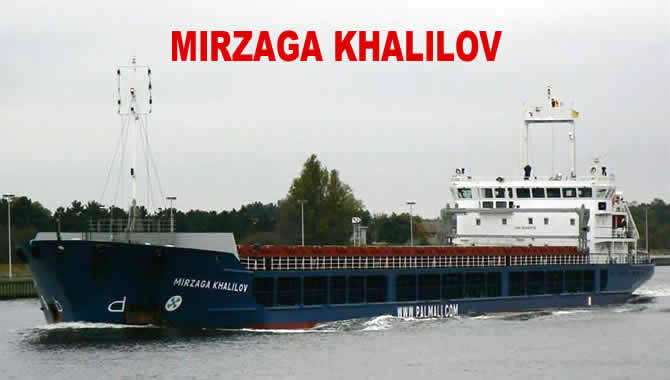
In the video, Vidadi Iskandarli is seen making extremely offensive and degrading remarks about the family of Mubariz Mansimov, the Turkish billionaire and owner of the Palmali holding, from whom, according to reporting and Vidadi’s own previous statements, he had received money.
According to information publicly discussed by Vidadi himself on his YouTube appearances, one payment of €10,000 was allegedly sent to him by Zaur, described in those statements as a relative of criminal gangster Rovshan Lankaranskiy, a criminal figure who lived in Moscow and was reportedly related to Mansimov’s family.
This raises another important question for the investigation: why has Oktay Iskandarli not addressed these financial transfers and Vidadi’s own public statements about them? Why are these details absent from his account of the events, and why does his narrative appear to leave out the financial trail that Vidadi himself had previously discussed publicly?
These questions are particularly significant because the video appeared only days before Vidadi Iskandarli’s death and directly concerned his financial relationship with Mansimov and people connected to that circle.
This financial connection is further referenced in another Euro Asia News report, which states that Vidadi Iskandarli and his brother Oktay were shown in video footage carrying €35,000 in cash in Mulhouse. That report also states that Vidadi later publicly released documents relating to payments allegedly sent to him by Mansimov and that further demands for money were subsequently made.
These materials place the financial relationship between Vidadi Iskandarli and Mubariz Mansimov at the center of serious questions surrounding the events preceding Vidadi’s death. The published material also raises questions about the role of other individuals connected to the financial dispute and about the flow and use of documents relating to the payments.
What particularly draws journalistic attention in this case is the alleged movement of the money through a network operating largely in the shadows. According to the information cited in the investigation, the payments transferred to Vidadi Iskandarli were reportedly made through Spring Marina Shipping, a company headquartered in Istanbul with a branch in Rostov-on-Don and reportedly associated with the Palmali group of companies.
The investigation therefore focused not only on the payments themselves, but also on obtaining the financial records that could potentially trace money transferred to Vidadi Iskandarli and identify the entities involved in those transactions. In particular, the reported financial links between Spring Marina and the wider Palmali corporate structure became a subject of journalistic scrutiny, including questions surrounding companies allegedly connected to the transportation of Russian oil.
Another significant element concerns the statements made by Oktay Iskandarli regarding his brother’s injuries. According to Euro Asia News, Oktay Iskandarli stated that Vidadi had suffered multiple stab wounds to the back of the head. The publication subsequently questioned this account by referring to photographs in which no visible knife injuries could be seen in that area.
The publication also records an earlier statement attributed to Oktay, given while Vidadi was still in critical condition, in which he said that doctors had reported 24 stab wounds: 21 to the abdomen, one to the liver, one serious injury to the lung and another to the back of the head. According to the report, doctors were struggling to stop the bleeding and restore independent breathing.
Another important point documented by Euro Asia News is that French police had not publicly released information about the attack at the time of the report. The publication called for the release of the scene photographs, medical report and information from the French prosecutor’s office before drawing definitive conclusions about the circumstances of Vidadi Iskandarli’s death.
The financial material therefore deserves particular scrutiny. The allegation reported €175,000 in payments, Vidadi Iskandarli’s own recorded statements concerning money received from Mansimov, the publication of payment-related documents, and the subsequent public attacks against Mansimov and his family form a documented sequence of events that occurred before Vidadi’s death.
The same evidence raises questions about the role of Oktay Iskandarli, particularly because he was the principal family member publicly providing information about Vidadi’s condition and injuries. His statements, the available photographs and the absence at the time of publicly released French investigative findings require independent examination.
In another tactical maneuver to divert the direction of the criminal investigation, Oktay Iskandarli targeted individuals mentioned within the extortion process, such as Fuad Agayev, and formally presented them to the police as “suspects.” By doing so, he attempts to conceal his own illicit activities while shifting the focus of the investigation entirely away from Palmali Holding and the Mubariz Mansimov connection.
The wider financial context is also reflected in Euro Asia News reporting concerning Ali Hasanaliyev. One published report reproduces a WhatsApp voice message in which Hasanaliyev allegedly discusses obtaining invoices relating to money sent to Vidadi Iskandarli and says that he would forward them to Mubariz Mansimov while threatening to publish documents if money was not paid.
All these circumstances—the financial records and videos, the reported €175,000 in payments, Vidadi Iskandarli’s recorded statements concerning money received from Mansimov, the conflicting accounts concerning his injuries, and the absence at the time of publicly released French investigative findings—justify a thorough examination of the financial and personal circumstances preceding his death.
The available material does not, by itself, establish who killed Vidadi Iskandarli. However, it establishes a series of documented questions surrounding the financial relationship with Mubariz Mansimov and the conflicting accounts concerning Vidadi’s injuries. Those questions should be independently investigated by French law-enforcement authorities.
Ali Hasanaliyev, an Azerbaijani refugee living in Germany with the status of asylum, openly admits in this recording that he will send the invoice documents obtained by Vidadi Isganderli to Mubariz Mansimov and demand money by blackmailing him.
The role of Oktay Iskandarli in the events surrounding his brother’s death therefore requires full and independent investigation.
Oktay Iskandarli’s Statements About Vidadi Iskandarli’s Injuries Raise Further Questions
In his video appearances, Oktay Iskandarli stated that Vidadi Iskandarli had called him at approximately 5:00 a.m. and told him that he had been stabbed 22 times, including a stab wound to the back of his neck.
According to Oktay’s account, he arrived at the scene at approximately 7:00 a.m., where police officers had surrounded the house and did not allow him to enter. He said that he subsequently went to the hospital at approximately 11:00 a.m., where Vidadi allegedly began describing the incident to him.
These statements raise serious questions that require clarification. If Vidadi Iskandarli had sustained 22 stab wounds, including injuries to his lungs, and had also suffered a wound to the back of his neck, how was he able to describe the incident to Oktay several hours later? The timeline presented by Oktay therefore requires independent verification against the medical records, emergency reports and the official police timeline.
The photographic material published in connection with the case also raises further questions. In the photograph, Vidadi Iskandarli appears to be lying face down with a tube inserted into his mouth, while the back of his neck appears visibly clear, with no obvious knife wound. This apparent discrepancy between the account attributed to Oktay and the available photographic material requires an explanation from the relevant medical and investigative authorities.
The circumstances surrounding Vidadi Iskandarli’s burial also raise additional questions. Reports that the burial was conducted privately and hastily, that members of the public were not invited, and that independent persons were allegedly not present during the washing and preparation of the body have contributed to further questions concerning the preservation and independent examination of the physical evidence.
The photograph referenced above is available here:
The Absence of Photographic Evidence From the Scene Raises Further Questions


Another striking point is that Oktay Iskandarli, who reportedly went to the scene after receiving the call from his brother, has not publicly produced any photograph documenting Vidadi Iskandarli’s condition immediately after the alleged stabbing or showing the injuries that would substantiate the account he later gave in his video statements.
Equally noteworthy is the fact that, to date, neither the French law-enforcement authorities nor the French media have publicly released photographs from the scene showing Vidadi Iskandarli with the alleged stab wounds. This is particularly significant given the severity of the injuries described in Oktay Iskandarli’s statements.
According to the account attributed to Oktay, Vidadi Iskandarli had suffered 22–24 stab wounds, including injuries to the abdomen, liver and lung, as well as an alleged wound to the back of the head or neck. The Euro Asia News report likewise quotes Oktay as saying that doctors were unable to stop the bleeding and that Vidadi’s condition was extremely serious.
This creates an important evidentiary question: where are the photographs, forensic records and official medical documentation showing these alleged injuries? If such material exists, its publication or examination by an independent forensic expert would help establish the exact nature and extent of Vidadi Iskandarli’s injuries.
The available photograph referenced in the reporting shows Vidadi lying face down with a tube in his mouth, while the back of his head and neck appears free of an obvious visible wound. Euro Asia News itself has highlighted this apparent discrepancy and called for the publication of the scene photographs, medical report and information from the French prosecutor’s office.
There is also a broader issue concerning Vidadi Iskandarli’s medical condition before his death. The published account states that, after the attack, doctors described his condition as extremely serious and that they had difficulty restoring independent breathing and stopping the bleeding. The same report says that doctors were considering neurological treatment and had warned the family to prepare for the possibility that he might not survive.
Accordingly, the precise medical timeline remains a critical issue. The time of the alleged attack, the time at which Oktay says he spoke to Vidadi, the time Oktay arrived at the scene, the time he went to the hospital, and the medical condition recorded by the doctors should all be compared against the official emergency, hospital and forensic records.
These unanswered questions do not by themselves establish who was responsible for Vidadi Iskandarli’s death. However, the absence of publicly available scene photographs and the discrepancies raised between the reported injuries and the available photographic material make the release and independent examination of the forensic evidence particularly important.
Another issue that warrants closer journalistic examination is the reported connection between Oktay Iskandarli and Teymur Eminbeyli, who lives in Sweden, as well as Eminbeyli’s reported links to Rahim Sadigbeyli and the circle surrounding Mubariz Mansimov.

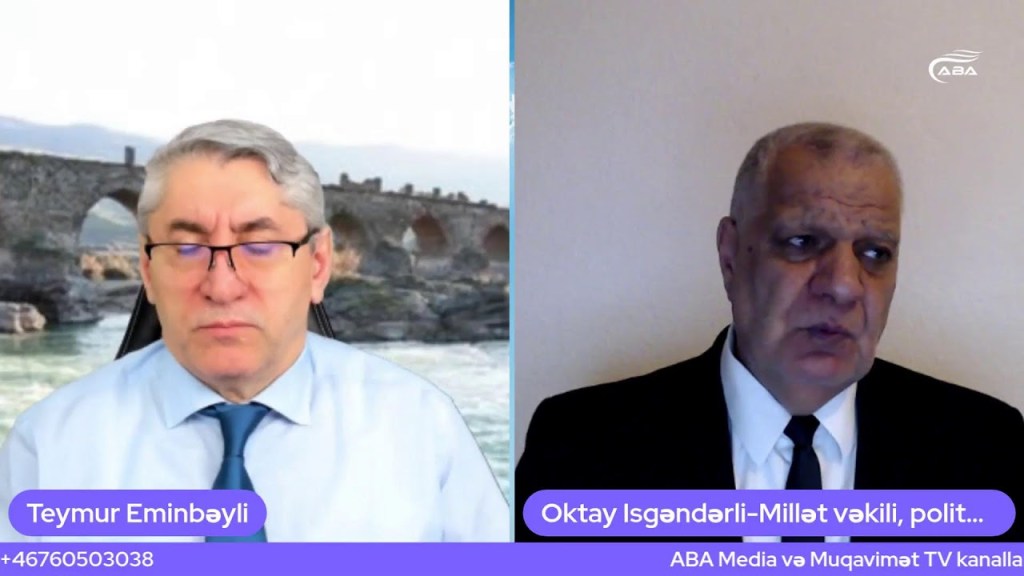
How is it that only a few months after Vidadi Iskandarli’s death, Oktay Iskandarli appeared alongside this group and participated in broadcasts with them, discussing and attempting to steer attention away from the circumstances surrounding the death—if the incident was indeed a criminal act? More importantly, the discussion appears to have directed suspicion away from Mubariz Mansimov and toward people who, according to the information available to us, had no established connection to the case.

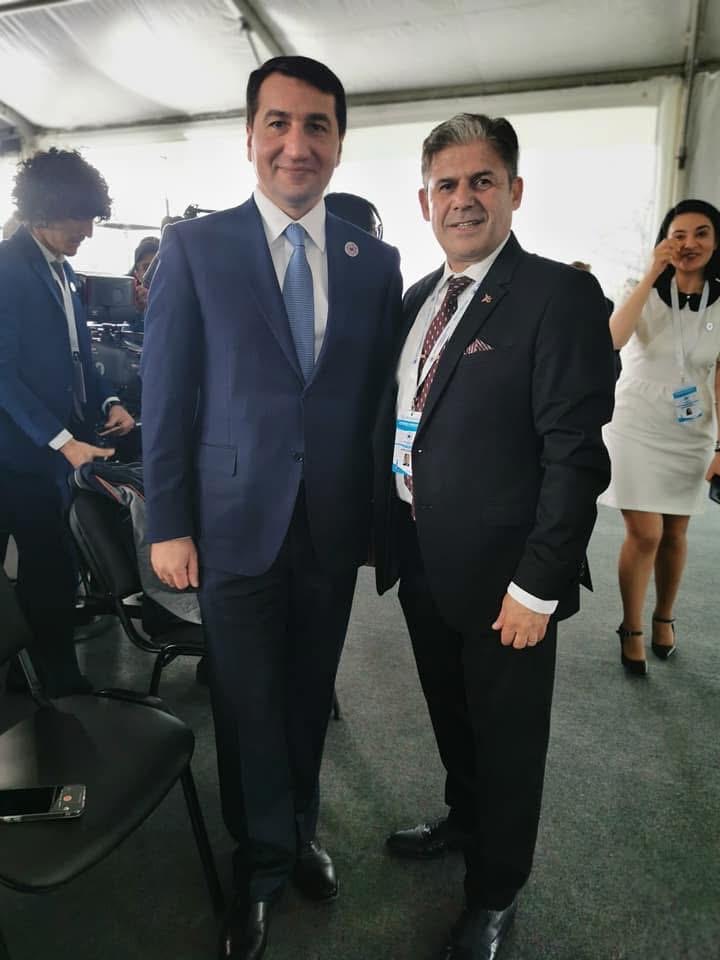
This raises another question: had Oktay Iskandarli ever previously been seen publicly together with Teymur Eminbeyli? Based on the information available to us, there is no known evidence of such appearances before Vidadi Iskandarli’s death.

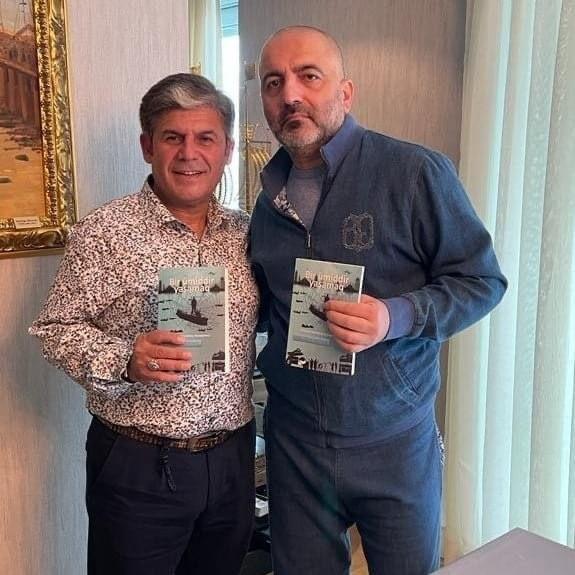


There is also a significant financial question. According to the information cited in this investigation, Vidadi Iskandarli and his brother Oktay were involved in obtaining money that Vidadi himself described in public statements as having been received from Mubariz Mansimov. Did Oktay Iskandarli, who was living in France under political protection, ever disclose these financial activities to French law-enforcement authorities or the French tax administration?

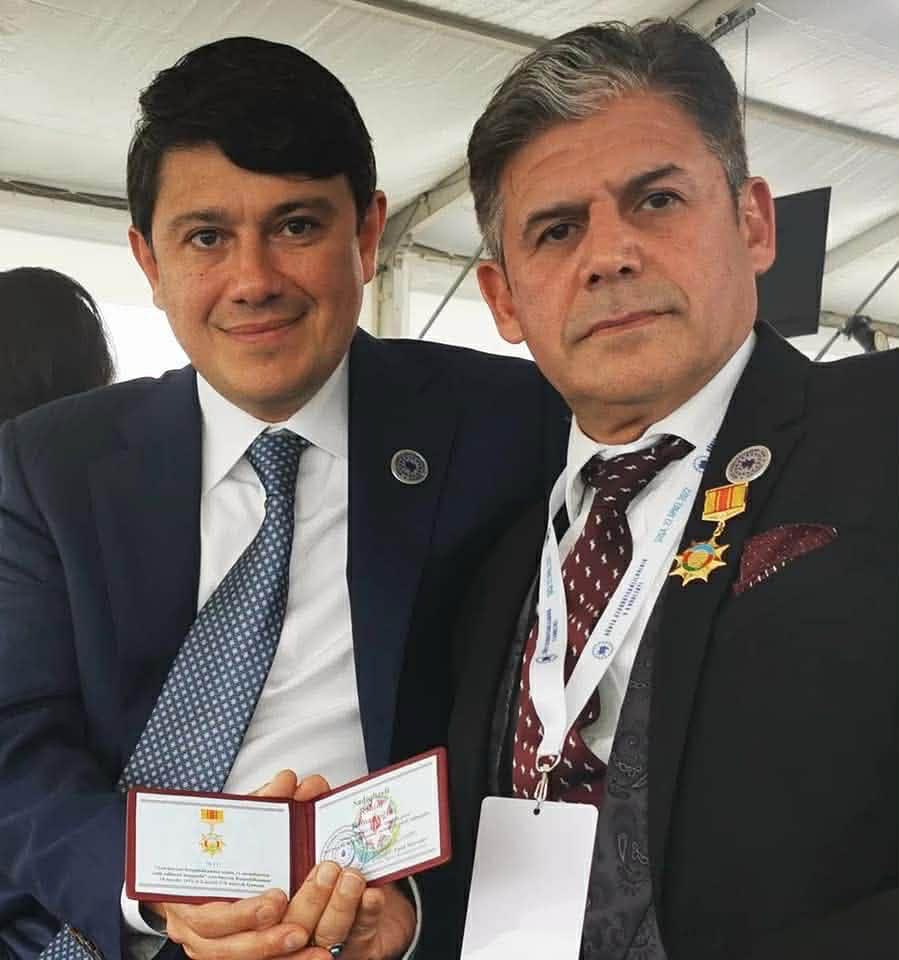
According to the information available to us, these financial transactions were not disclosed. This raises questions about whether the money received by the brothers was properly declared and whether the relevant French authorities were informed.

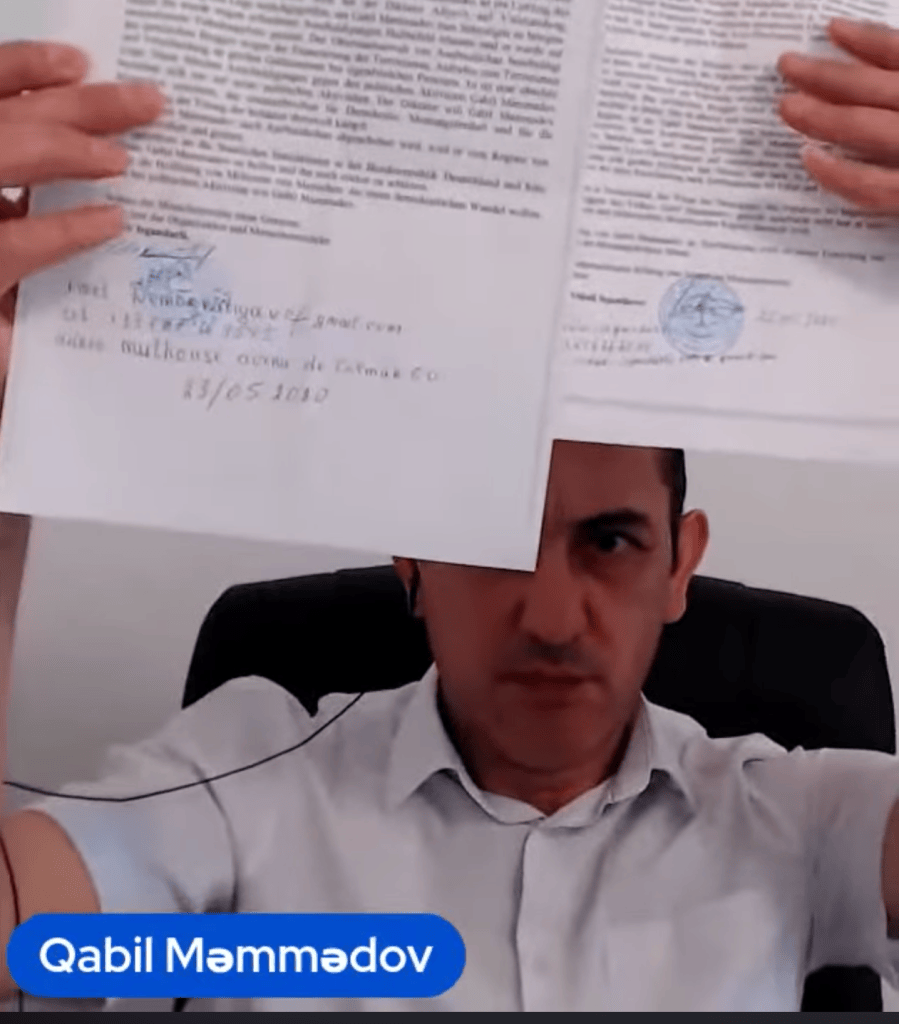
There are also questions concerning a separate €5,000 payment reportedly obtained from Gabil Mammadov in connection with a document that the brothers allegedly provided to him. If such a payment was received, was it declared to the relevant tax authorities? These questions should ultimately be answered through financial records, tax declarations, banking documents and official investigations rather than speculation.
in another video Vidadi Iskenderli considered himself a criminal authority, not a political refugee.Now judge for yourself: it is impossible to determine whether this man is a political refugee in France or a crime gangster boss.
The Midnight Raid
According to Isgandarli, the incident occurred on June 15, when a coordinated group of approximately ten armed individuals launched a violent assault on his property (0:08). The activist asserted that the perpetrators targeted him with clear intent to assassinate (0:22).
Providing a walkthrough of the crime scene, Isgandarli pointed out structural damage to both the interior and exterior of his home (0:37). Visual evidence showcased during the broadcast included shattered windows, heavy impact marks from stones, and distinct bullet holes left by the attackers as they attempted to breach the premises (0:37).
“I am showing you the exact location where this act of terrorism took place,” Isgandarli stated, confirming that French law enforcement had officially opened a criminal investigation into the matter (0:19).
Clash of Narratives
The video highlights a severe disconnect between the victim and French investigators:
- The Official Stance: French prosecutors initially treated the 2022 raid as an isolated dispute involving a local criminal gang.
“Later, during one of the protests held in Europe, an intoxicated Vidadi Isgandarli revealed the real reason behind what triggered this video. While under the influence of alcohol, Vidadi Isgandarli entered an Arabic market in Mulhouse and touched the backside of a woman standing in front of him. The woman struck him with her handbag, and Vidadi hit her back. At that moment, the woman’s husband, who was in the shop, beat up Vidadi Isgandarli. Vidadi returned to his home, grabbed a knife, and went back to the store. According to his account, seeing the knife in his hand, the Arab drew a gun, causing the incident to escalate. Vidadi Isgandarli, who fled back to his house, recounted that the Arabs chased after him, and he subsequently showed where his house and kitchen had been shot at. Thus, we witness that this individual was not leading a peaceful life in France, but rather a criminal one.””However, in order to cover up his own crime, Vidadi Isgandarli blamed the incident on the Azerbaijani authorities, who had absolutely no connection to it.”
video fact
The Geopolitical Context Behind the Events
A review of the chronology of events and their broader geopolitical context presents a striking picture. One particular point has fueled speculation: the arrest in Baku of French national Martin Ryan (also referred to as Martin Rayan) on espionage charges, the subsequent diplomatic confrontation between Azerbaijan and France, and later allegations suggesting possible involvement by French intelligence services in the killing of Vidadi Isgandarli.
A number of Azerbaijani pro-government analysts and media outlets, including Musavat.com and Bizim.Media, have interpreted the case within the wider context of an alleged intelligence confrontation between Baku and Paris. They have advanced several specific arguments.
1. The Martin Ryan Case and the Alleged Exposure of an Intelligence Network
The Baku operation: Azerbaijani authorities said the State Security Service (DTX) had uncovered what they described as an extensive network linked to France’s foreign intelligence service, the DGSE, operating in Baku. Two French diplomats were expelled from Azerbaijan, while French businessman Martin Ryan was arrested on accusations of gathering classified information concerning Azerbaijan’s military cooperation with Turkey, Pakistan and Iran.
A serious setback for France: Azerbaijani commentators portrayed the affair as a major international intelligence embarrassment for Paris. Following tense negotiations, Ryan was pardoned by President Ilham Aliyev in September and allowed to return to France. By that stage, however, relations between the two countries had deteriorated to one of their most critical points.
2. The “Retaliation and Diversion” Scenario — The Élysée Connection
Some Azerbaijani commentators allege that, after suffering what they describe as a serious setback in its intelligence activities against Azerbaijan, France resorted to the issue of a “political assassination” in an effort to damage Baku’s international reputation.
Why Vidadi Isgandarli? According to this line of argument, Isgandarli had allegedly ceased to be useful to French intelligence services and had become an increasingly difficult figure to manage. Commentators invoking the expression “the Moor has done his duty; the Moor may go” claim that he could therefore have been regarded as expendable.
Under this theory, sacrificing Isgandarli would have allowed Paris to pursue two objectives simultaneously: to promote an international narrative portraying Azerbaijan as a country that “kills its critics in the heart of Europe” — with comparisons being drawn to the murder of Saudi journalist Jamal Khashoggi — and to gain a new instrument of diplomatic pressure against Baku.
Questions Surrounding the Surveillance Cameras
Another point cited by proponents of this theory concerns the surveillance cameras around Isgandarli’s residence.

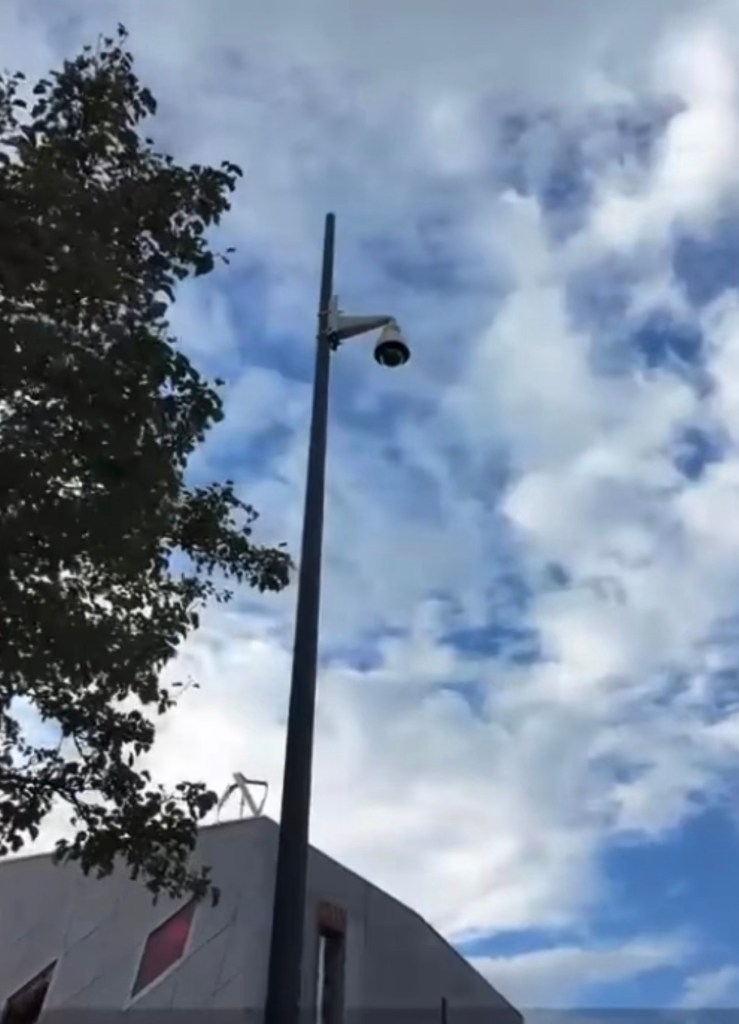
They question how three masked assailants could allegedly enter the home of a person under special protection, carry out an attack and leave without being captured by any of the three nearby cameras — or why, as alleged, the relevant footage has remained unavailable for two years.
Those advancing this argument maintain that, in a country with France’s extensive security infrastructure, such a scenario would have been possible only if local authorities had turned a blind eye to the operation, disabled the cameras, or subsequently removed the recordings. No evidence establishing these allegations is presented in the text.
The account further alleges that, following Martin Ryan’s release, Vidadi Isgandarli’s brother, Oktay Isgandarli, sought to divert attention from himself and place responsibility on others, including Azerbaijan. Supporters of this interpretation present the timing as evidence that the incident had been planned in advance, arguing that a number of subsequent developments emerged only after Ryan was released.
Oktay Iskandarli has executed a tactical maneuver to deflect scrutiny from his own activities; by targeting those exposing the financial paper trail, he is attempting to shift the blame entirely onto other parties and discredit these claims. Remarkably, for some reason this time, he refrains from accusing the Azerbaijani government of the assassination..•
Another interesting thing is that of Tural Sadikli and Oktay Iskandarli, who insulted each other and started an immoral war with the musavat.com leadership Rauf Arifoglu and his journalist for just one month, is suddenly published on the first Musavat com which the government support channel.
It is interesting that Musavat.com is setting the video featuring Tural Sadikli to private.













Leave a Reply